- +86 136 8127 5833
- [email protected]
- Shunyi, Beijing, China
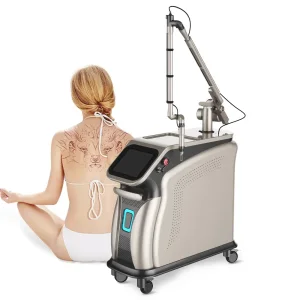
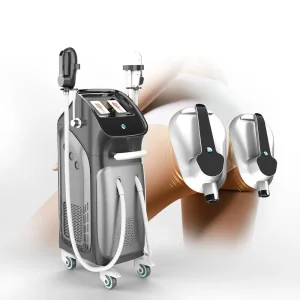
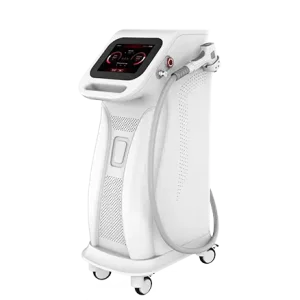
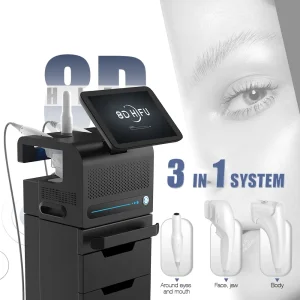
The international medical aesthetic landscape has experienced a monumental paradigm shift over the last decade. As patient demand transitions away from aggressive thermal ablative lasers toward ultra-short pulse photo-acoustic interventions, the OEM Pico Laser Machine has emerged as the definitive gold standard for benign pigmented lesion removal, stubborn multi-color tattoo clearance, melasma management, and non-ablative dermal remodeling. However, for clinical directors, aesthetic chain operators, and regional distributors, navigating the market landscape of Pico Laser Machine Price variances presents significant technical and economic challenges.
Factory-direct pricing for picosecond medical platforms varies dramatically globally—ranging from $3,500 for entry-level desktop units up to $45,000+ for enterprise-grade, clinical dual-rod electro-optically Q-switched systems. Understanding the engineering variables, optical physics, laser bar sourcing, cavity design, pulse duration reality (true picoseconds vs. simulated nanosecond Q-switched outputs), and total cost of ownership (TCO) is crucial for securing a competitive advantage in today's high-yield aesthetic market.
When evaluating proposals from an OEM Pico Laser Machine Manufacturer, procuring managers often ask why two visually similar platforms carry price differentials of several thousand dollars. The cost architecture of a true medical-grade picosecond platform is governed by five key photonics engineering modules:
True picosecond delivery relies on active electro-optical Pockels cell modulators combined with active seed lasers. Cheap imitators utilize passive dye Q-switching that degrades under high thermal loads, resulting in pulse width broadening from sub-nanosecond range back to 6-10 nanoseconds. Active EO components increase factory manufacturing cost but guarantee photomechanical pressure shockwaves over thermal heating.
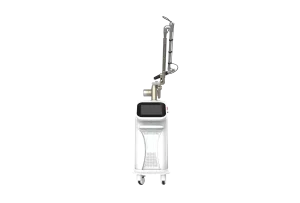
Delivering high-energy optical pulses without energy drop-off or beam distortion requires a precision-engineered 7-joint articulated arm with high-grade reflective dielectric mirrors (imported from South Korea or Germany). Low-cost alternatives use 5-joint domestic arms with inferior coatings that suffer mirror burn within 500,000 shots.
Dual-rod Nd:YAG cavities powered by pre-ignited xenon flashlamps double the optical amplification length. This enables peak power outputs reaching up to 2.0 Gigawatts (GW) at 1064nm and 532nm. Dual-cavity setups require specialized high-capacity power supplies (up to 2000W OPT/Simmer power supply modules), directly impacting hardware assembly pricing.
Advanced honeycomb MLA focus array handpieces concentrate picosecond energy into concentrated micro-spots, creating Laser-Induced Optical Breakdown (LIOB) in the dermis while preserving the epidermis. Precision optic fabrication for MLA tips adds to initial procurement, but commands premium treatment pricing in clinical practice.
Medical-grade platforms integrate inner-cavity energy sensors that auto-calibrate energy fluence on every shot. Coupled with industrial TEC (Thermoelectric Cooling) and closed-loop compressor water circulation systems, these components ensure continuous 24-hour operation without thermal laser power decay.
Over the past decade, Chinese medical optical equipment manufacturing hubs—specifically centered in Beijing, Guangdong, and Shandong—have matured into high-precision photonics ecosystems. Procurement officers from North America, Europe, the Middle East, and Latin America increasingly bypass legacy western distributors to partner directly with an established Pico Laser Machine Manufacturer in China. Here is why:
China’s complete industrial chain for optical mirrors, laser power modules, structural chassis molding, and ARM-based control systems enables rapid prototyping and full-scale production. This ecosystem reduces manufacturing lead times from months to 7-14 days.
By leveraging factory-direct OEM/ODM manufacturing, international buyers eliminate multi-tier regional distributor markups (often 300% to 500% over FOB manufacturing cost). A hospital-grade picosecond platform costing $120,000+ from legacy brands can be procured at OEM specification for $8,000 - $18,000.
Leading OEM manufacturers offer comprehensive customization: custom sheet-metal outer shell design, specialized paint finishes, personalized UI/UX software in 15+ languages, custom spot-size handpieces, and private-label firmware integration tailored to your brand identity.
The aesthetic laser industry is advancing beyond basic Q-switched technology. To maintain market leadership, modern clinics and enterprise procurers must align their capital expenditure with key technology trends shaping the next decade:
| Feature Category | Legacy Q-Switched Nd:YAG (Nanosecond) | Modern OEM Picosecond Laser (Sub-Nanosecond) | Next-Gen AI-Integrated Pico Platforms |
|---|---|---|---|
| Pulse Duration | 5 ns – 20 ns (Nanoseconds) | 350 ps – 750 ps (Picoseconds) | 300 ps – 450 ps (Ultra-Short Adjustable) |
| Primary Mechanism | Photothermal (Thermal Heating) | Photomechanical (Pressure Shockwave) | Photomechanical + LIOB Micro-Cavitation |
| Pigment Fragmentation | Pebble-sized fragmentation | Fine dust-like fragmentation | Micro-particulate pulverization |
| Risk of PIH (Hyperpigmentation) | Moderate to High (Thermal damage) | Extremely Low | Near-Zero with real-time epidermal monitoring |
| Average Tattoo Sessions | 10 – 16 Treatments | 4 – 6 Treatments | 3 – 5 Treatments |
| Multi-Wavelength Versatility | 1064nm / 532nm basic | 1064nm / 532nm / 585nm / 650nm / 755nm | Dynamic Multi-Wavelength + Auto-Recognized Tips |
Investing in a high-performance Pico Laser Machine yields strong financial returns across diverse clinical settings. Below are the primary revenue drivers for modern medical aesthetic practices:
Epidermal and dermal hyperpigmentation—including recalcitrant Melasma, Nevus of Ota, Freckles, Age Spots, and Post-Inflammatory Hyperpigmentation (PIH)—require precise targeted photo-acoustic shockwaves. The 1064nm picosecond beam shatters deep melanin structures without damaging surrounding tissues, drastically lowering recurrence rates.
Tattoo removal specialists face challenging multi-color ink pigments (black, dark blue, red, green, sky blue). Integrating 1064nm, 532nm, and optional 585nm/650nm dye handpieces allows complete ink spectrum breakdown. Rapid clearance times allow clinics to double patient volume while charging premium per-session fees.
Utilizing Fractional Honeycomb MLA tips, operators create localized Laser-Induced Optical Breakdown (LIOB) in the papillary dermis. This triggers a powerful collagen regeneration wave, smoothing fine lines, tightening enlarged pores, and remodeling acne scars with virtually zero downtime—making it ideal for luxury Medspas.
For chain medspas, hospital purchasing boards, and regional device importers, evaluating an OEM pico laser machine price requires looking beyond the initial purchase price to perform a comprehensive Total Cost of Ownership (TCO) calculation.
| Procurement Cost Factor | Legacy Western Brands (e.g., Cynosure, Candela) | Low-Tier Non-OEM Suppliers | SANO Laser Factory Direct (Medical Grade OEM) |
|---|---|---|---|
| Initial Capital Expenditure (CapEx) | $120,000 – $220,000 USD | $2,500 – $4,500 USD | $7,500 – $18,500 USD |
| Annual Service Contract / Warranty | $12,000 – $25,000 / year | No direct support / Third-party only | 2-Year Factory Warranty included + Free Spare Parts |
| Consumables / Shot License Fees | High per-shot cost / Locked per-card | Low quality / High failure rate | Zero Shot-Limit Lock / Low-Cost Replacement Optics |
| Optical Arm Longevity | High quality, expensive replacement | Fragile 5-joint domestic arm | Korean 7-Joint Dielectric Coated Optical Arm |
| Compliance & Certification | FDA, CE, Health Canada | Basic CE / Minimal testing | Medical CE, ISO13485, Full Technical Dossier |
| 3-Year Estimated TCO | $160,000 – $270,000 USD | $10,000 – $15,000 (High Downtime) | $8,500 – $21,000 USD (High Profitability) |
By securing a high-spec platform directly from a verified Pico Laser Machine Manufacturers partner, clinics can amortize equipment cost within 3 to 6 months of clinical operation, generating high profit margins and expanding service offerings.
True picosecond pulse duration (typically 300ps - 450ps) cannot be accurately measured with low-speed silicon photodiodes. Verification requires a ultra-fast optical streak camera or a high-bandwidth autocorrelation system paired with a 10 GHz oscilloscope. Legitimate OEM manufacturers provide official third-party optical laboratory testing reports documenting true full-width at half-maximum (FWHM) pulse duration across energy levels.
High-grade UK-imported xenon flashlamps integrated into SANO Laser cavities are rated for 3,000,000 to 5,000,000 shots under standard operating parameters. The dielectric mirrors in the Korean 7-joint articulated arm maintain alignment and reflection efficiency past 10,000,000 shots, provided closed-loop water filters are maintained according to factory protocols.
OEM options include custom injection-molded or sheet-metal body colors, laser-engraved corporate branding, custom startup screen animations, custom UI layout design, pre-programmed clinical protocols, and custom software language packs. Hardware modifications—such as custom spot-size handpieces or specialized foot-pedal assemblies—are also routinely accommodated.
Every export platform undergoes rigorous 48-hour burn-in and vibration stress testing. Internal laser cavities are mounted on shock-absorbing aircraft-grade aluminum alloy sub-chassis. Units are packed in custom flight cases with high-density EVA shock-foam liners, ensuring optical alignment remains intact across sea, air, and express transport.
All medical platforms come standard with a 2-Year Comprehensive Factory Warranty. In the rare event of a component failure, replacement modules (power boards, cooling pumps, control screens) are dispatched via DHL/FedEx express within 24-48 hours. Remote video technical support is directly accessible with senior photonics engineers.