- +86 136 8127 5833
- [email protected]
- Shunyi, Beijing, China
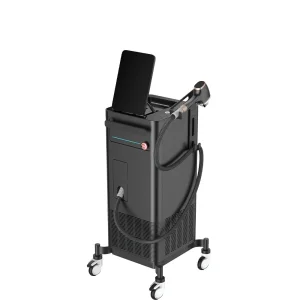
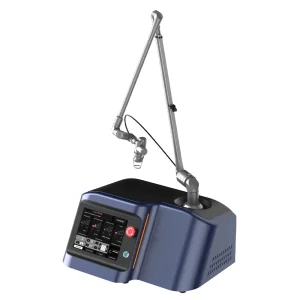
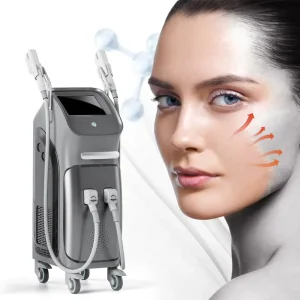
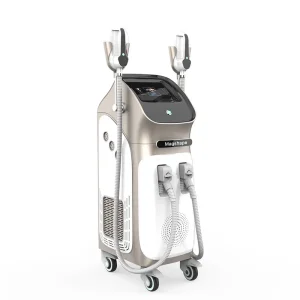
Explore our primary OEM manufacturing line engineered for high-volume dermatological clinics, medical spas, and international laser equipment distributors.
An exhaustive analysis of thermodynamic heat decay, epidermal pain management, and custom manufacturing standards for high-energy medical lasers.
In modern aesthetic medicine, the delivery of high-energy photons or radiofrequency currents to dermal targets—such as hair follicles, micro-vascular networks, tattoo pigments, or structural collagen—inevitably generates transient hyperthermia in the superficial epidermal layers. Uncontrolled epidermal heat accumulation leads to adverse events, including thermal blistering, dyschromia, post-inflammatory hyperpigmentation (PIH), and severe patient discomfort. As an OEM manufacturer of advanced thermal management systems, our engineering imperative is to maintain the basal layer of the skin below the thermal injury threshold (<43°C) while enabling clinicians to utilize peak energy fluences required for therapeutic efficacy.
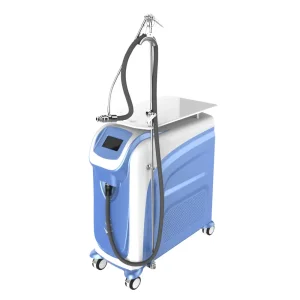
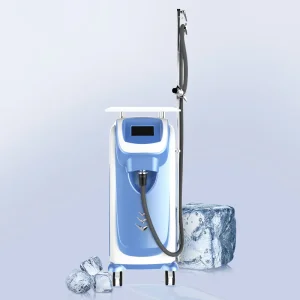
Traditional cooling modalities, such as contact cooling via integrated sapphire tips or cryogen spray bursts, present significant physical and clinical limitations. Contact cooling relies on physical conduction, which degrades rapidly as the laser handpiece glides over variable anatomical contours, leading to thermal hot spots. Cryogen sprays provide instantaneous temperature drops but introduce expensive ongoing consumable costs, risk chemical cryo-burns, and interfere with light delivery due to mist condensation. forced cold air skin cooling systems solve these structural inefficiencies by projecting a continuous, regulated stream of sub-zero air (-20°C to -35°C) directly onto the treatment zone before, during, and immediately after energy emission.
OEM Engineering Insight: Continuous forced cold air provides a dynamic boundary layer of convective thermal dissipation. By neutralizing transient thermal energy at an air displacement rate up to 1500 liters per minute, the COOL Skin Cooling System lowers epidermal skin temperature by 15°C to 20°C within seconds, reducing pain nerve conduction velocity by over 60% without interrupting optical beam propagation.
To assist medical device brand owners and distributor technical desks in evaluating thermal management options, our R&D team has synthesized empirical data comparing forced air cooling with legacy contact and cryogen methodologies:
| Thermal Management Parameter | Sub-Zero Forced Air (OEM COOL System) | Integrated Sapphire Contact Cooling | Dynamic Cryogen Spray (R134a) |
|---|---|---|---|
| Cooling Mechanism | Continuous Convective Air Displacement | Conductive Thermal Exchange | Evaporative Liquid Phase Change |
| Minimum Output Temperature | -30°C to -35°C (Adjustable Flow) | 4°C to -4°C (Tip Boundary) | Transient -20°C Burst |
| Treatment Zone Pre-Cooling | Simultaneous & Continuous (Hands-Free) | Sequential (Requires Tip Contact) | Pre-Pulse Millisecond Burst |
| Consumable Overhead | Zero (100% Ambient Air Conversion) | Zero (Requires Gel Coupling) | High (Recurring Canister Replacement) |
| Beam Path Interference | None (Optically Transparent Air Stream) | Medium (Refractive Index of Coupling Gel) | High (Aerosol Mist & Plume Scattering) |
| Epidermal Safety Margin | Maximum (Prevents Bulk Heat Stagnation) | Moderate (Risk of Tip Decoupling) | Moderate (Risk of Cryo-Necrosis) |
The neurophysiology of laser-induced pain is mediated by A-delta and C nociceptive fibers embedded within the papillary dermis. Rapid thermal spikes above 45°C trigger immediate action potentials that cause patient movement, treatment involuntary pauses, and reduced compliance. By maintaining a continuous forced air stream at -30°C, the skin's surface temperature is depressed to a safe baseline prior to energy pulse delivery. The subsequent thermal relaxation time (TRT) of the epidermis is drastically shortened, preventing heat accumulation between high-frequency laser pulses (such as 10Hz diode laser hair removal or ultra-fast picosecond scans).
We engineer complete chilling platforms tailored to integrate seamlessly with your brand identity, cabinet dimensions, and proprietary clinical protocols.
Equipped with ultra-quiet, industrial-grade variable displacement compressors. Utilizes eco-friendly R404A/R290 refrigerants to achieve continuous sub-zero chilling without system icing or thermal drift during 12-hour continuous clinic operations.
Multi-stage active desiccant filtration traps environmental moisture and airborne particulates. Guarantees 100% dry cold air output, eliminating water droplet deposition or frost buildup on patient skin and laser optics.
Full-color touchscreen interface supporting 6-level fan speed control, temperature presets, and automated defrost cycles. Optional RS232/CAN-bus interface enables direct handpiece sync with host laser consoles.
Fully compliant with IEC 60601-1 electrical safety standards. Anti-static medical tubing with 360-degree flexible articulated support arms ensures effortless positioning over any treatment bed without mechanical drag.
We provide bespoke sheet-metal tooling, custom ABS mold injection, pantone color matching, private label silkscreening, and personalized GUI software themes for global aesthetic brands.
Includes specialized nozzle attachments: focused round tips for small vascular sites, wide planar adapters for body contouring, and clip-on laser handpiece brackets for single-operator clinical workflows.
Integrating sub-zero air cooling elevates therapeutic outcomes, accelerates patient recovery, and expands the safe operational window across diverse aesthetic disciplines.
Photomechanical acoustic shockwaves create significant superficial heat accumulation. Pre-chilling and continuous forced air output clear epidermal heat pockets, preventing micro-vesicle formation, edema, and post-procedural scarring during high-energy ink clearance sessions.
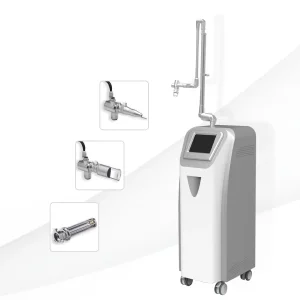
Micro-ablative columns created by 10,600nm CO2 lasers generate intense localized heat radiation. Continuous cooling during ablative scanning mitigates collateral thermal damage, decreases erythema duration by up to 50%, and significantly enhances patient tolerance without topical numbing agents.
During fast in-motion hair reduction protocols (10Hz+), repeated thermal deposition can compromise darker skin phototypes (Fitzpatrick IV-VI). Sub-zero air cooling provides continuous surface protection, allowing practitioners to safely increase laser fluence for superior follicular destruction.
Transcutaneous vascular treatments require selective hemoglobin absorption at high energy densities. Focused cold air streams restrict perivascular dermal heating, preventing epidermal burns while localized intravascular coagulation takes place.
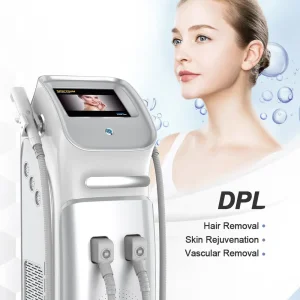
Broadband light pulses dissipate energy across a wide wavelength spectrum. Forced air cooling neutralizes nonspecific superficial light absorption, minimizing discomfort during full-face photo-facial protocols and acne inflammation therapies.
Sub-dermal thermal coagulation points created by insulated needle arrays generate radiant epidermal heat. Post-treatment air cooling rapidly calms inflammation, soothes sensory nerve endings, and eliminates the need for messy post-procedure ice packs.
As a direct manufacturer, our facility operates under rigorous international medical quality systems, supporting global distribution partners with full technical documentation.
We maintain comprehensive CE technical files under EU Medical Device directives, EMC electrical compatibility reports, and RoHS material safety verifications. Complete OEM test dossiers are supplied to accelerate local market registrations across North America, Europe, and Asia-Pacific.
Engineered for global deployment with dual-voltage internal transformer configurations (110V 60Hz / 220V 50Hz). Internal electrical systems are shielded against electromagnetic interference (EMI), ensuring stable operation alongside high-frequency RF and laser devices.
Our modular interior chassis design allows quick modular swapping of compressors, air pumps, mainboard PCBs, and filter canisters. We provide global distributor partners with spare part buffer inventories, video diagnostics, and 24/7 engineering support desk access.
Our Beijing R&D center is actively pioneering intelligent, closed-loop cooling technologies to redefine the future of medical thermal management.
Delivering stable -30°C output with multi-tier desiccant drying and 6-level user-adjustable fan controls across universal chassis designs.
Integrating non-contact IR thermal sensors into the air nozzle to automatically adjust fan speed dynamically based on real-time skin temperature readings.
Establishing direct wireless IoT communication between cooling systems and master laser generators to synchronize air pulse bursts with laser fire triggers.
Detailed answers addressing technical integration, clinical safety, shipping logistics, and manufacturing options.
Discover our comprehensive range of body slimming, vascular clearance, and advanced skin resurfacing systems available for OEM wholesale supply.