- +86 136 8127 5833
- [email protected]
- Shunyi, Beijing, China
Explore our precision-manufactured aesthetic platforms, fully compatible with advanced forced-air Zimmer cooling systems for maximum clinical thermal protection and patient comfort.
In contemporary dermatological, aesthetic, and therapeutic laser medicine, forced cold-air skin cooling technology—widely referenced under the landmark industry term Zimmer Cooling System—has established itself as an indispensable non-contact epidermal protection standard. Unlike traditional contact cooling (sapphire tips) or dynamic cryogen spray cooling (DCD), continuous forced cold air systems deliver a steady stream of sub-zero air (-30°C to -45°C) directly to target tissue before, during, and after thermal energy emission.
As high-power medical laser systems—including 808nm/755nm/1064nm diode lasers, 980nm vascular lasers, picosecond Nd:YAG platforms, and high-intensity fractional CO2 devices—shift toward higher energy densities and faster repetition rates, the demand for industrial-grade OEM Zimmer cooling units has surged worldwide. Medical facilities across North America, Western Europe, the Middle East, and Asia-Pacific require continuous-duty chillers capable of operating 10 to 14 hours daily without defrosting downtime or thermal capacity degradation.
From a global OEM manufacturing perspective, our facility bridges the gap between high manufacturing costs in Western Europe and the need for medical-grade reliability. By leveraging ISO 13485 cleanroom assembly lines, dual-stage rotary compressors, and proprietary dynamic defrost algorithms, our Zimmer air cooling systems offer world-class thermal exchange efficiency at factory-direct wholesale parameters.
The global thermal regulation landscape for dermatological and physical therapy devices is undergoing three pivotal technological transitions:
Strict adherence to EU F-Gas regulations and US EPA SNAP rules has accelerated the phase-out of legacy R134a refrigerants. Modern Zimmer system factories are re-engineering compressor circuits for green refrigerants such as R290 (propane) and R454C, achieving low Global Warming Potential (GWP < 150) without loss of BTU efficiency.
Next-generation chillers integrate infrared skin temperature sensors built directly into the air delivery nozzle. The system automatically modulates air velocity (1–9 speed levels) dynamically based on real-time epidermal thermal elevation, mitigating frostbite risks while maintaining optimal analgesic efficacy.
Rather than relying on bulky standalone carts, major device manufacturers are seeking OEM customized internal cooling modules. Compact compressor architectures permit direct integration into high-power diode laser and picosecond workstations, streamlining clinic footprints.
The application of forced cold air is not uniform across aesthetic procedures. Different dermatological wavelengths present unique absorption profiles, tissue depths, and thermal damage thresholds. Below is an engineering overview of clinical integration:
| Clinical Modality | Target Chromophore | Cooling Objective | Recommended Air Temp | Flow Velocity |
|---|---|---|---|---|
| 808nm / Triple Wave Diode Laser | Melanin (Hair Shaft/Follicle) | Prevent epidermal basal layer burn; localized anesthesia | -28°C to -35°C | Level 4–6 (800–1000 L/min) |
| 980nm Vascular Laser | Oxyhemoglobin / Blood Vessel | Constrict superficial capillary plexus; limit purpura | -20°C to -25°C | Level 3–4 (600–800 L/min) |
| CO2 Fractional Laser (10,600nm) | Tissue Water | Mitigate residual thermal spread; accelerate recovery | -30°C to -38°C | Level 6–8 (1100–1400 L/min) |
| Picosecond Nd:YAG (1064/532nm) | Exogenous Tattoo Ink / Melanosomes | Blunt shockwave pain & immediate erythema | -32°C to -40°C | Level 7–9 (1300–1500 L/min) |
| Photodynamic & Cryo Surgery | Target Lesions / Topical Actives | Temporary numbing prior to needle insertion or lesion therapy | -15°C to -25°C | Level 2–4 (400–700 L/min) |
Clinical studies measuring pain via Visual Analog Scale (VAS 0–10) demonstrate that continuous pre-cooling of the stratum corneum for 15 seconds prior to laser firing reduces perceived pain from an average score of 7.4 down to 2.3. Because cold air reduces nerve conduction velocity in A-delta and C fibers, patients experience immediate relief without the mess of topical anesthetic gels or risks of skin contact contamination.
As a leading OEM manufacturer, our R&D department has mapped out four key technical advancements currently being integrated into our next-production run Zimmer cooling machines:
Traditional chillers run fixed-speed compressors that cycle on and off, leading to temperature fluctuations of ±5°C. Our upcoming inverter series provides continuous PID power regulation, locking output temperatures at a constant -35°C (±0.5°C) while cutting power consumption by 38%.
High-humidity environments frequently cause frost buildup on cooling coils. By incorporating reverse hot-gas bypass valves governed by micro-pressure differential sensors, our system executes a 15-second defrost sequence automatically without interrupting clinic operations.
Operator fatigue is a critical challenge in high-volume clinics. We are introducing ultra-flexible, counterbalanced silicone air conduits with magnetic quick-dock laser handpiece adapters, enabling single-handed operation for dermatologists.
Our Beijing-based manufacturing facility spans dedicated CNC sheet metal processing, precision refrigeration assembly bays, automated electrical safety test benches, and a certified clinical testing room. We provide comprehensive OEM/ODM customization services for global aesthetic device brand owners, distributors, and large medical groups.
Contact sapphire cooling requires direct contact with skin, which can smudge gel, impair visibility during precise vascular treatments, and become insufficient during high-frequency firing. Cryogen spray (DCD) incurs high ongoing consumable costs per treatment session and carries hyper/hypo-pigmentation risks if misdirected. Forced cold air delivers continuous pre-, parallel-, and post-cooling with zero consumable cost, zero skin contact contamination, and total visibility of the treatment zone.
For high-fluence diode laser treatments (e.g., 20J/cm² to 40J/cm² at 10Hz), an output air temperature between -28°C and -35°C with an airflow volume of 900–1200 L/min is recommended. This maintains epidermal surface temperature below 15°C throughout energy delivery, blocking pain transmission while allowing deep hair follicle thermal coagulation.
Our factory integrates a specialized dual-chamber moisture separator combined with an automatic thermal bypass system. Excess environmental humidity is condensed and drained automatically into an internal evaporation tray, preventing ice buildup on heat exchanger fins even under continuous 12-hour clinic usage.
Routine maintenance is straightforward: 1) Clean or replace the washable air intake dust filter monthly; 2) Check the HEPA bio-filter every 6 months to ensure sterile air output; 3) Inspect the flexible silicone air hose for damage annually. No refrigerant refilling is required under sealed-loop operation.
Yes. We manufacture customized, lightweight 3D-printed or injection-molded handpiece brackets for standard diode, Nd:YAG, Alexandrite, and IPL handpieces. This ensures the cold air stream is automatically aligned 1–2 cm ahead of the laser spot for perfect synchronous cooling.
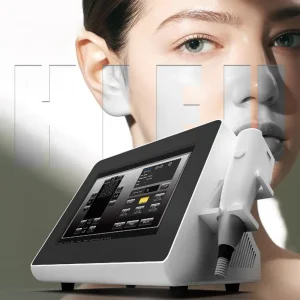
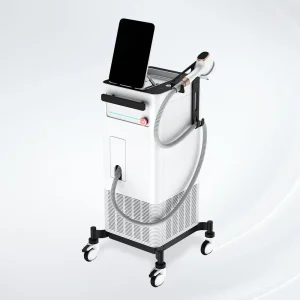
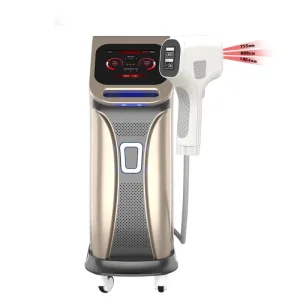
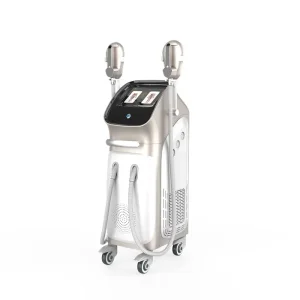
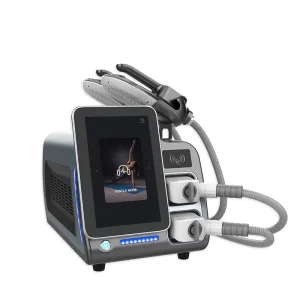
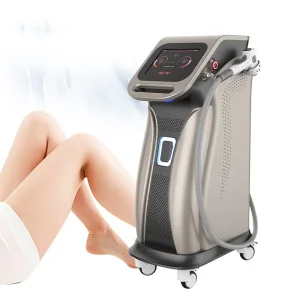
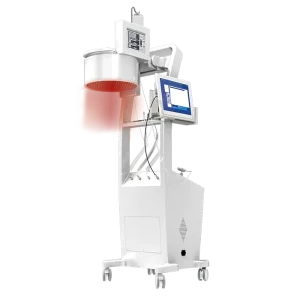
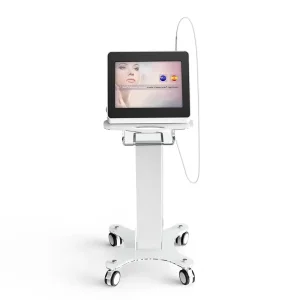
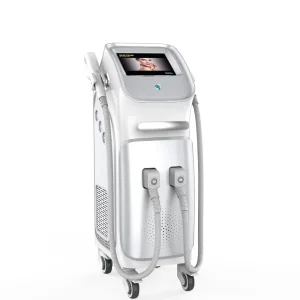
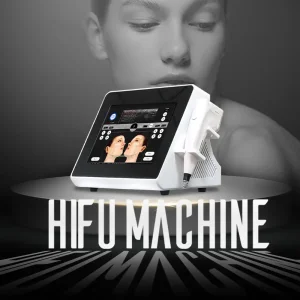
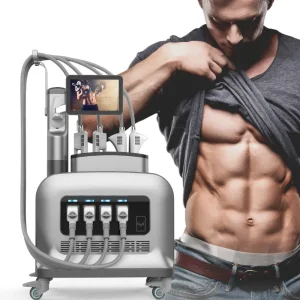
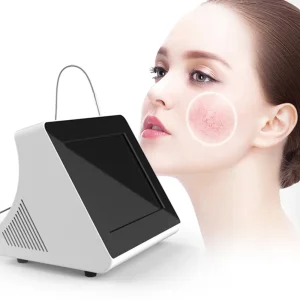
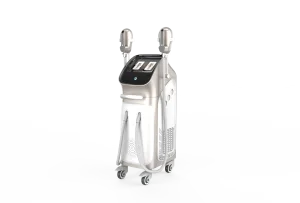
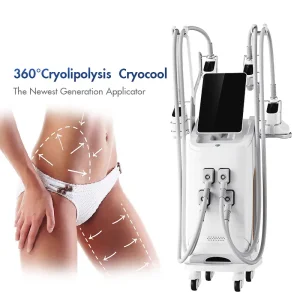
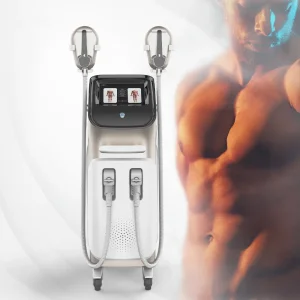
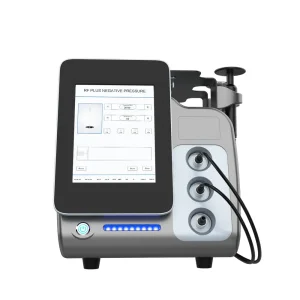
Discover additional industry-leading medical aesthetic systems designed and manufactured at our Beijing factory headquarters:
Every Zimmer cooling system leaving our production lines undergoes a rigorous 4-stage quality assurance testing procedure before final crate packaging and dispatch:
High-pressure helium testing verifies zero refrigerant leakage across copper joints and compressor valves under 3.5 MPa test pressure.
Chillers are subjected to continuous 72-hour operational cycles in controlled environmental chambers (35°C ambient temperature) to ensure compressor stability.
Digital anemometers and calibrated thermal sensors verify air output speed (Levels 1–9) and sub-zero target temperatures (-30°C to -40°C).
Ground bond leakage and high-voltage isolation tests ensure strict compliance with IEC 60601-1 medical electrical safety standards.
Partner with a Leading OEM/ODM Zimmer Cooling System Manufacturer
Contact our engineering export desk today for direct factory price quotes, technical dossiers, and custom branding options.