- +86 136 8127 5833
- [email protected]
- Shunyi, Beijing, China
Direct from factory: CE-certified precision platforms for clinical aesthetic applications

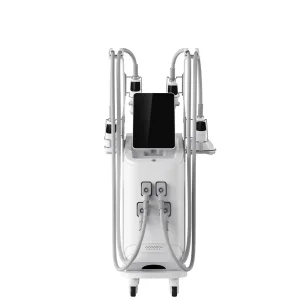
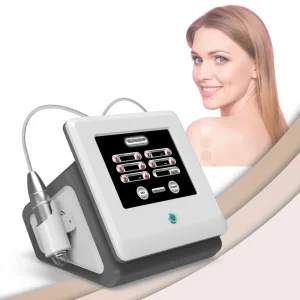
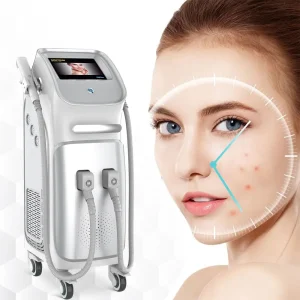
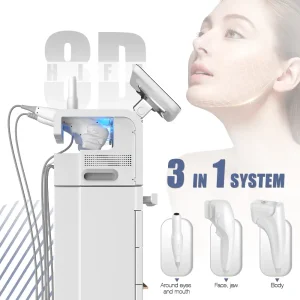
Transitioning aesthetic dermatology from subjective consultation to quantitative multispectral diagnostic precision
In the rapidly expanding medical aesthetic and clinical dermatology sectors, the reliance on manual tactile examination and subjective visual assessment is obsolete. Modern dermatology practices, cosmetic surgery centers, and premier medspas demand objective, standardized, and repeatable sub-dermal diagnostic benchmarks. As an industry-leading Skin Diagnostic Machine Manufacturer & Supplier, we engineer clinical-grade diagnostic platforms that bridge the gap between optical imaging physics and deep-learning algorithmic scoring.
State-of-the-art skin diagnostic platforms utilize multi-spectral lighting modalities—spanning RGB white light, cross-polarized illumination, parallel-polarized filters, UV fluorescence (365nm Wood's light), and localized red/brown chromophore separation. By capturing high-definition optical signatures across distinct epidermal and dermal depths, diagnostic hardware exposes sub-surface pathologies long before they manifest visually on the stratum corneum.
Combines standard light with cross-polarized and UV bands to isolate epidermal sebum, porphyrin bacterial clusters, baseline vascular erythema, and deep dermal hyperpigmentation.
Trained on millions of clinically annotated dermatological images to automatically calculate pore matrix index, wrinkled depth indices, collagen degradation, and cellular photo-aging.
Ensures 100% positional alignment between baseline baseline scans and post-procedure follow-ups via automatic 3D landmark mesh matching algorithms.
Distinguishing medical-grade skin analyzers from consumer imaging devices through sensor science
The efficacy of an advanced skin diagnostic machine relies fundamentally on its optical hardware assembly and chromatic separation fidelity. Industrial OEM manufacturing demands zero optical aberration, uniform light-emitting diode (LED) color rendering index (CRI > 97), and ultra-stable light intensity control over time.
Using RBX (Red/Brown/eXplorer) optical mapping technology, light backscattering is split into distinct chromophore vectors. Red images isolate hemoglobin density, micro-capillary telangiectasias, rosacea flares, and acne inflammation. Brown images expose localized epidermal melasma, solar lentigines, and deep dermal hyperpigmentation clusters, giving clinicians absolute diagnostic clarity.
Under calibrated 365nm ultraviolet excitation, Propionibacterium acnes bacteria emit characteristic orange-red fluorescence due to coproporphyrin synthesis within hair follicles. The system quantifies active clogged pores, sub-surface comedones, lipid excretion rates, and moisture barriers without invasive skin scraping.
OEM Manufacturing Standard: All SANO optical hoods are constructed with optical-grade anti-reflection coated glass and medical-grade ABS-PC housing, mitigating ambient light leakage to ensure zero calibration drift under diverse clinical lighting environments.
Navigating global procurement, distributor ROI, and OEM customization protocols
The global market for diagnostic skin analysis machines is expanding at a compound annual growth rate (CAGR) exceeding 11.4%. Driving this surge is the rapid commercialization of non-invasive aesthetic treatments—such as picosecond laser pigment removal, fractional RF microneedling, cryolipolysis body shaping, and high-intensity focused ultrasound (HIFU). Clinical operators require diagnostic instruments to prove treatment efficacy and drive skincare product upsells.
We provide full white-label hardware, custom industrial design colorways, specialized software UI localization, and private SDK integration for global medical equipment brands.
Statistically, clinics utilizing standardized baseline skin diagnostics achieve a 38% higher conversion rate on multi-session treatment packages and a 45% increase in homecare product sales.
Every diagnostic unit undergoes 72-hour continuous LED thermal burn-in, optical focal alignment verification, and camera sensor dead-pixel screening before export packaging.
Tailored operational blueprints across diverse aesthetic healthcare environments
Before initiating ablative CO2 laser resurfacing, DPL photofacial treatments, or vascular 980nm diode laser procedures, surgeons map sub-dermal integrity. Post-treatment scans accurately document epidermal healing, collagen remodeling progress, and pigment resolution over 3, 6, and 12-month clinical milestones.
Estheticians utilize 3D pore depth analysis and hydration barrier assessment to curate personalized skincare regimens. The machine’s automated report generator highlights micro-wrinkles, UV damage spots, and vascular sensitivity, giving patients clear, visual justification for prescribed interventions.
Meeting medical-grade standards across North American, European, and Asia-Pacific markets
Patient optical records and diagnostic metadata are secured via AES-256 cloud encryption and localized zero-trust database protocols, ensuring total patient privacy compliance.
Engineered under ISO 13485 quality management systems, compliant with Medical CE directives and international electromagnetic compatibility (EMC) regulations.
Solid-state LED lighting modules with over 50,000 hours operational lifespan eliminate the continuous bulb replacement costs associated with legacy xenon diagnostic systems.
Pioneering the future of non-invasive dermatological diagnosis and AI cloud analytics
The roadmap for skin diagnostic machinery is shifting toward deeper tissue optical coherence tomography (OCT) integration, hyperspectral imaging, and cloud-synchronized diagnostic ecosystems. Our R&D facility in Shunyi, Beijing is currently driving innovations across three core pillars:
Expanding beyond traditional 8-spectrum imaging to 32 discrete spectral bands, allowing precise cellular-level mapping of dermal water content, lipid bilayers, and micro-collagen crosslinking density.
Utilizing generative adversarial networks (GANs) to accurately project 5-to-10 year skin aging trajectories based on current UV damage indices, lifestyle variables, and oxidative stress scores.
Enabling enterprise medspa networks to centrally manage patient diagnostic histories across global locations, synchronizing treatment protocols and baseline progress tracking in real time.
In-depth technical answers for distributors, medical directors, and purchasing managers
High-quality diagnostic units utilize calibrated multispectral optical arrays (cross-polarized, parallel-polarized, UV fluorescence, and RBX light separation) coupled with ultra-high resolution CMOS sensors (>36MP). Unlike basic 2D photography systems, medical-grade skin analyzers measure light extinction coefficients, scattering patterns, and polarized light extinction to quantitatively measure sub-surface melanin, vascular erythema, porphyrin density, and deep dermal structural integrity.
Our software incorporates automated 3D facial landmark mesh matching algorithms. During patient follow-ups, the software detects anatomical control points (canthus, nasal tip, tragus) and adjusts image scaling and spatial orientation. This ensures that baseline and post-treatment region of interest (ROI) comparisons evaluate identical pixel regions down to micro-millimeter precision.
Yes. As an established OEM/ODM manufacturer, Beijing SANO Laser Development S&T Co., Ltd. provides comprehensive white-label customization. This includes custom hardware casing, branded software user interfaces (UI), customized report headers, localized multi-language database options, and custom product recommendation software engines.
Our systems utilize medical-grade solid-state LED light arrays with an operational lifespan exceeding 50,000 active scan cycles. Automatic optical energy auto-calibration is integrated into every startup sequence, eliminating the manual calibration cards and frequent lamp replacements required by legacy systems.
Objective sub-dermal imaging provides verifiable, tamper-proof baseline documentation before performing invasive procedures (such as high-fluence laser resurfacing, deep chemical peels, or RF microneedling). Clear baseline evidence of pre-existing melasma, vascular fragility, or sub-clinical hyperpigmentation protects clinics against unjustified post-procedure liability claims.
Explore our complete manufacturing spectrum for aesthetic clinics and medical distributors