- +86 136 8127 5833
- [email protected]
- Shunyi, Beijing, China
Engineered for High-Throughput Clinics, Commercial Spas, and International Distributors
Analyzing Search Intent, Information Gain, and Supply Chain Benchmarks for B2B Buyers
In the modern dermatological and medical aesthetic landscape, searching for High-Quality q switch nd yag laser tattoo removal Suppliers & Factories represents far more than a basic product inquiry. From the perspective of search intent mining and semantic SEO analysis, B2B procurement professionals—ranging from medical spa chains and hospital purchasing committees to white-label distributors—are seeking high information gain. They require granular technical clarity regarding pulse duration, peak power delivery, beam homogeneity, spatial energy distribution, and long-term optical cavity stability.
The global demand for non-invasive tattoo removal and benign pigmented lesion treatments has witnessed an unprecedented surge. Driven by shifting social demographics, career adjustments, and the evolution of multi-colored cosmetic tattooing, the laser pigment clearance market requires industrial-grade machinery capable of operating continuous daily schedules without energy thermal decay. When evaluating certified manufacturers, enterprise buyers focus heavily on the underlying physical architectures: distinguishing between budget Passive Q-Switching (passive dye sheet or saturable absorber) and advanced Active Electro-Optic (EO) Q-Switching (Pockels cell driven by high-voltage pulse generators).
Information Gain Metric: Traditional SEO articles focus on superficial marketing claims. True B2B E-E-A-T (Experience, Expertise, Authoritativeness, Trustworthiness) demands technical disclosure—evaluating Nd:YAG crystal rod purity, optical resonator length, xenon flashlamp lifespan, and water-to-air heat exchange efficiency.
Incorporates Pockels cells with electro-optic crystals (KD*P/RTP) to switch optical polarization within nanoseconds, achieving peak power exceeding megawatts without energy leakage.
Native 1064nm fundamental wavelength for deep black/blue ink fragmentation combined with frequency-doubling KTP crystal optics generating 532nm for red and orange chromophores.
Utilizes articulated optical arms with internal zoom lenses to convert raw Gaussian laser beams into Top-Hat spatial profiles, eliminating localized hot spots and epidermal scarring.
Understanding the Chromophore Destruction Mechanism and Hardware Components
The operational foundation of a medical-grade Q-Switched Neodymium-doped Yttrium Aluminum Garnet (Nd:YAG) laser relies on the principle of selective photothermolysis, accelerating into the domain of photo-acoustic shockwave fragmentation. When tattoo pigment granules (ranging from 10 to 100 nanometers in diameter) reside within dermal macrophages, they possess a thermal relaxation time (TRT) of less than 10 nanoseconds.
If a laser pulse exceeds this TRT window, thermal energy diffuses into the surrounding healthy dermis, causing thermal necrosis, blistering, and scarring. High-quality Q-Switch Nd:YAG systems engineered by leading OEM factories deliver pulse widths between 3.5 ns and 6 ns. This ultra-short pulse duration induces acoustic shockwaves—shattering exotic ink heavy metals (such as titanium dioxide, iron oxide, and copper phthalocyanine) into microscopic debris that the lymphatic system phagocytizes over 4 to 8 weeks.
Inside an OEM factory cleanroom, the core optical engine represents the ultimate differentiator between commercial-grade and clinical-grade lasers. A premium Q-Switched assembly comprises:
| Engineering Attribute | Active Electro-Optic Q-Switch (Industrial Factory Grade) | Passive Q-Switch (Entry-Level Portable Systems) |
|---|---|---|
| Pulse Width (Duration) | 3.5 ns – 6 ns (True Nanosecond Domain) | 10 ns – 25 ns (Thermal Spillover Risk) |
| Peak Power Delivery | 200 MW – 500 MW (High Photo-Acoustic Action) | 10 MW – 30 MW (Primarily Photo-Thermal) |
| Beam Profile Geometry | Top-Hat Flat-Top Spatial Distribution | Gaussian / Peak-Centered Distribution |
| Energy Stability over Time | < ± 3% Fluence Drift over 8 Continuous Hours | > ± 15% Thermal Decay after 30 Minutes |
| Clinical Efficacy & Safety | Fewer sessions required; near-zero hyper-pigmentation risk | Extended session protocols; elevated risk of scarring |
Mitigating Supply Chain Risk and Ensuring Technical Integrity for International Buyers
When sourcing high-value laser equipment from overseas manufacturing hubs, purchasing directors must execute rigorous technical due diligence. Relying solely on catalog specifications or digital marketing collateral often leads to hardware failure, thermal optical misalignment, and regulatory impoundment at regional customs checkpoints.
Demand unedited video proof of output energy using certified thermal power sensors (e.g., Ophir or Coherent meters). Verify real single-pulse energy at 1064nm (at least 800mJ to 1200mJ) rather than accumulated total energy claims.
High-power Q-Switch lasers require dedicated compressor-based water chillers or high-capacity copper radiators with DC brushless water pumps maintaining flow rates above 3.5 L/min.
Ensure the supplier supports custom graphical user interfaces (GUI), localized software languages, chassis mold alterations, and dedicated firmware updates for commercial brand identity.
The global aesthetic laser industry is undergoing a structural transition toward hybrid pulse-width platforms. While traditional nanosecond Q-Switched Nd:YAG lasers remain the indisputable foundation for primary black and dark blue pigment clearance, the integration of Picosecond (ps) sub-nanosecond technology is establishing new clinical standards.
Looking toward the next decade, key technological innovations from tier-1 Chinese manufacturers include automated beam-diameter recognition, integrated real-time melanin concentration sensors, and IoT-enabled predictive maintenance systems. These connected platforms monitor flashlamp voltage depletion and optical mirror degradation in real-time, alerting distributors to send replacement modules before field failure occurs.
Ensuring Seamless Import Clearance and Clinical Risk Management Worldwide
For medical equipment distributors across North America, the European Union, the Middle East, and Asia-Pacific, regulatory compliance is the ultimate benchmark of manufacturer authority. A high-quality supplier must demonstrate comprehensive adherence to global standards:
Factory After-Sales Service Level Agreement (SLA): Leading manufacturing partners provide a minimum 24-month comprehensive warranty, 24/7 engineer-level technical assistance, complimentary component replacement shipping, and structured clinical training modules for operational personnel.
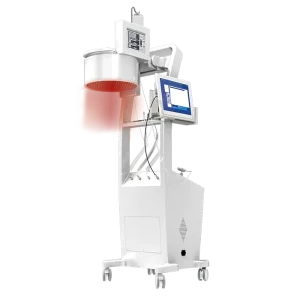
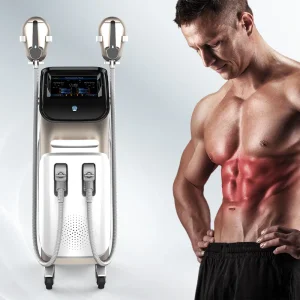
Explore Synergistic Modalities for Body Contouring, Facial Rejuvenation, and Hair Removal
Engineering and Commercial Clarifications for International Equipment Importers
Active Q-Switched lasers utilize an electro-optic Pockels cell (voltage-controlled polarization crystal) to store and release optical energy, generating single ultra-short pulses (3.5ns–6ns) with high peak power. Passive Q-Switched machines use saturable absorber sheets, resulting in wider pulse durations (15ns–25ns), lower peak power, and higher thermal dissipation that increases epidermal damage risks.
The 1320nm wavelength is specifically used for non-ablative carbon peel rejuvenation (the "Hollywood Carbon Peel"). When a liquid carbon solution is applied to the epidermis, the 1320nm laser target explodes the micro-carbon particles inside pores, inducing pore constriction, sebum reduction, and superficial dermal collagen remodeling.
Laser scattering within dermal tissue obeys optical physics laws: larger spot sizes (e.g., 8mm to 10mm) decrease photon scattering angles, allowing deeper light penetration into the deep dermis where stubborn ink resides. Smaller spot sizes (2mm to 4mm) concentrate energy superficially and increase effective fluence but have shallower depth profiles.
For the European Union, devices must possess Medical CE documentation under MDR/MDD guidelines along with ISO 13485 quality system compliance. For the United States, FDA 510(k) clearance along with CDRH (Center for Devices and Radiological Health) laser product accession numbers is required for legal commercial distribution.
A premium xenon flashlamp sourced from leading optical component manufacturers delivers between 3,000,000 and 5,000,000 shots before energy degradation occurs. Single-crystal Nd:YAG rods have an unlimited operational lifetime provided the internal deionized water cooling system maintains pure water flow without mineral calcification or optical face contamination.