- +86 136 8127 5833
- [email protected]
- Shunyi, Beijing, China
Direct OEM/ODM Supply Chains for Dermatology Clinics, MedSpas, and Global Medical Equipment Distributors
An Analysis of Technical Evolution, Clinical Intent Shift, and Manufacturing Supply Chain Standards
The global demand for high-quality picosecond laser machines has reached a pivotal juncture. Driven by an expanding patient demographic seeking rapid pigment clearance, refractory tattoo removal, and non-ablative dermal remodeling with zero downtime, medical aesthetic procurement departments are re-evaluating their capital equipment sourcing strategies. Traditional nanosecond Q-switched lasers, while historically effective, rely primarily on photothermal energy deposition. This mechanism frequently induces thermal collateral damage to surrounding tissues, triggering prolonged recovery periods and elevating the risk of post-inflammatory hyperpigmentation (PIH), particularly in Fitzpatrick IV–VI skin types.
Picosecond laser technology fundamentally transforms this dynamic. Operating with pulse durations typically measured between 300 to 800 picoseconds ($1 \text{ ps} = 10^{-12} \text{ seconds}$), these high-energy optical systems deliver gigawatt peak power outputs within a timeframe shorter than the thermal relaxation time of microscopic target chromophores. The primary mechanism of action transitions from thermal destruction to pure photo-acoustic fragmentation. Melanocytes, ink particles, and pigmented lesions are shattered into micro-particulate dust through intense acoustic pressure waves, allowing rapid clearance by the body's lymphatic scavenging system.
For B2B buyers—including medical equipment distributors, corporate medspa networks, and hospital purchasing consortia—identifying reputable OEM/ODM picosecond laser machine manufacturers is critical. Key manufacturing differentiators include optical cavity alignment stability, pulse energy repeatability, articulated light delivery arm precision, dual-rod optical configurations, and strict adherence to international electrical and laser safety frameworks (IEC 60601-1 / IEC 60601-2-22).
Engineering Principles That Define Information Gain and E-E-A-T Superiority in Picosecond Optics
By compressing laser energy into sub-nanosecond intervals (300ps–600ps), peak power increases dramatically. This confines energy delivery strictly to the targeted chromophore, preventing heat diffusion to peripheral epidermal structures.
Utilizing specialized Diffractive Lens Array (DLA) or Fractional Focus Arrays, the system creates micro-cavitation zones in the dermis. This stimulates neocollagenesis and elastin formation without breaking the stratum corneum.
Integrated native 1064nm and 532nm outputs, paired with optional 585nm, 650nm, or 755nm dye handpieces, ensure complete absorption spectra coverage for multi-color tattoo removal and deep dermal nevus clearance.
| Technical Parameter | Standard Q-Switched Nd:YAG | Enterprise Picosecond Laser Platform | Clinical Advantage & ROI Impact |
|---|---|---|---|
| Pulse Duration | 5.0 ns – 10.0 ns | 300 ps – 800 ps | 7x faster delivery, minimizing thermal spread and tissue charring |
| Primary Energy Effect | Photothermal (Heat Accumulation) | Photomechanical (Stress Waves) | Shatters pigment into fine micro-particles for faster macrophage digestion |
| Peak Power Output | 200 MW – 400 MW | 1.2 GW – 2.0 GW | Substantially higher pulse energy to break deep-seated refractory pigment |
| Average Treatment Sessions | 10 – 14 Sessions (Tattoo) | 4 – 6 Sessions (Tattoo) | Increases clinic turnover rate and boosts patient satisfaction scores |
| Epidermal Recovery Time | 5 – 7 Days Downtime | 24 – 48 Hours Downtime | Ideal for busy lifestyle patients seeking zero-disruption aesthetic care |
| PIH Risk Rate | Moderate to High (Skin Type IV-VI) | Negligible / Extremely Low | Safe treatment protocol expansion for global, multi-ethnic patient bases |
Inside the Assembly Line: Optical Precision, Power Supplies, and Quality Control Protocols
A high-reliability medical laser machine is defined by the quality of its sub-assemblies. Premier manufacturers construct picosecond devices around five critical structural pillars:
Top-tier factories provide extensive private-label manufacturing options for global brands:
Expanding Aesthetic Service Offerings Through Advanced Photomechanical Science
Shatters stubborn black, dark blue, green, red, and yellow ink particles. The ultra-short pulse eliminates recalcitrant tattoos that have plateaued under standard nanosecond treatment regimes.
Treats complex pigmentary disorders including Melasma, Nevus of Ota, Horis Nevus, Freckles, Solar Lentigines, and Post-Inflammatory Hyperpigmentation with precise energy calibration.
Fractional picosecond toning creates intra-dermal micro-explosions (LIOB), triggering a natural healing response that tightens pores, smooths acne scars, and eliminates fine lines.
Assuring Operational Safety, Regulatory Clearance, and Long-Term Capital Protection
When procuring medical laser equipment internationally, buyers must ensure compliance with rigorous regulatory frameworks. Recognized manufacturers maintain comprehensive quality management systems accredited under ISO 13485, alongside CE Medical Devices Directive (MDD/MDR) compliance and FDA 510(k) clearances.
Every production unit undergoes burn-in testing prior to dispatch. Verification includes measuring fluence output uniformity using external power meters, optical beam divergence checks, emergency shutoff response validation, and high-voltage insulation tests compliant with IEC 60601-1 safety standards.
Leading OEM suppliers offer comprehensive engineer-led after-sales care. This includes remote diagnostics via telemetry-enabled control boards, direct dispatch of modular replacement optical modules, and extensive clinical application training for staff members.
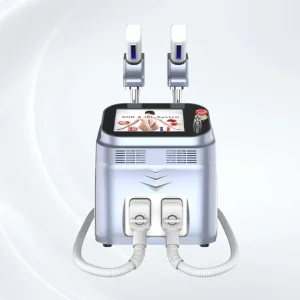
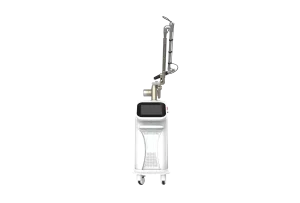
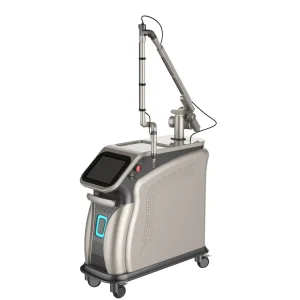
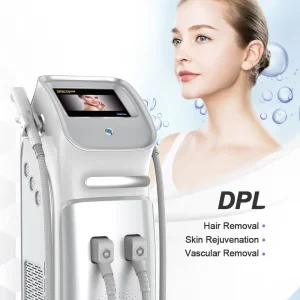
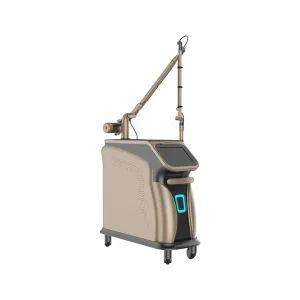
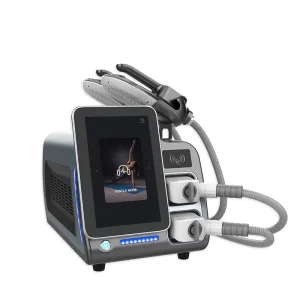
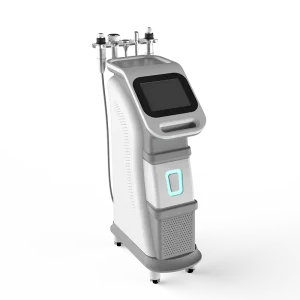
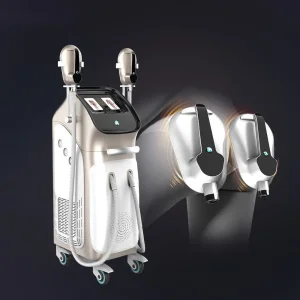
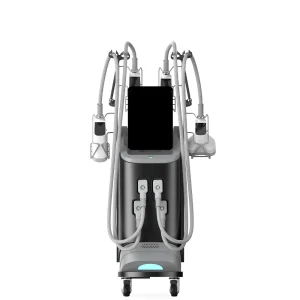
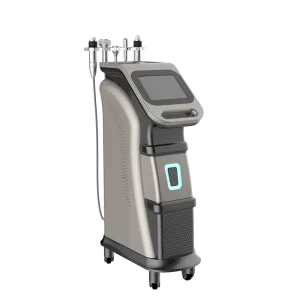
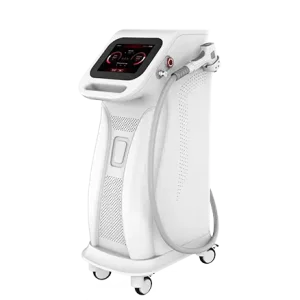
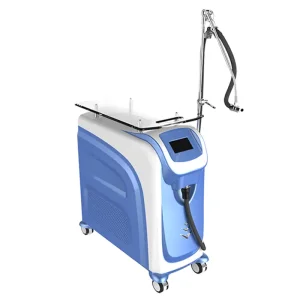
Explore Direct Factory Offerings Across Laser, RF Microneedling, Cryolipolysis, and Vascular Modalities
Detailed Engineering Answers addressing Buyer Intent, Device Maintenance, and Clinical Safety
A genuine picosecond laser must deliver pulse durations beneath 1 nanosecond (typically 300ps to 800ps), confirmed via an oscilloscope and fast photodiode detector. Pseudo-picosecond devices often utilize standard Q-switched optical cavities that output 2ns to 5ns pulses under load. Real sub-nanosecond pulse delivery is required to trigger true Laser-Induced Optical Breakdown (LIOB) and photomechanical pigment destruction rather than simple heating.
Picosecond lasers operate at gigawatt peak power outputs. Transmitting high-peak-power energy through flexible glass fibers frequently causes non-linear self-focusing, resulting in fiber burn-out, power degradation, and distorted beam profiles. A 7-joint articulated arm uses coated mirrors to reflect the beam with minimal attenuation (< 5%), delivering a consistent, high-uniformity flat-top beam profile directly to the clinical target.
Absorption spectrum targeting is essential. The native 1064nm wavelength is heavily absorbed by black, dark blue, and dark green pigments and penetrates deeply into the dermis. The frequency-doubled 532nm wavelength targets red, orange, and reddish-brown pigments in upper dermal layers. Specialized 585nm and 650nm dye handpieces or a 755nm Alexandrite option effectively address sky blue and bright green inks that resist 1064nm light.
Routine maintenance includes using deionized pure water in the cooling loop (changed every 1 to 3 months depending on usage), regularly cleaning protective optical windows on handpiece tips, monitoring internal room ambient temperatures (keeping facilities between 20°C and 25°C to avoid optical cavity thermal stress), and scheduling annual optical alignment inspections by certified technicians.
Reputable Chinese OEM manufacturers offer complete customization suites: personalized chassis shell design, custom color coats, branded touch-screen interfaces (logo integration and localized UI language support), tailored software parameter presets, customized outer packaging, and full technical documentation support to assist in obtaining local medical device registrations (e.g., ANVISA, TGA, Health Canada, or local Ministry of Health filings).