- +86 136 8127 5833
- [email protected]
- Shunyi, Beijing, China
Explore medical-grade laser platforms directly engineered and assembled in our state-of-the-art Beijing facility.
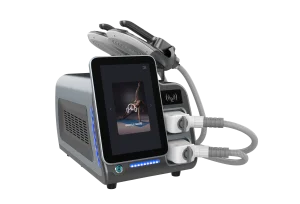
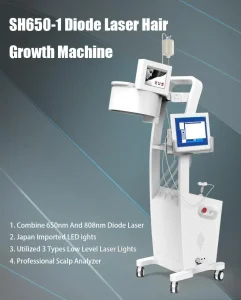
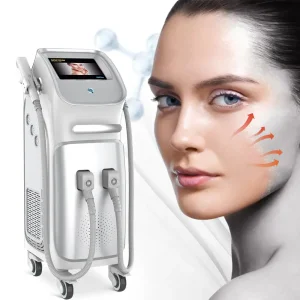
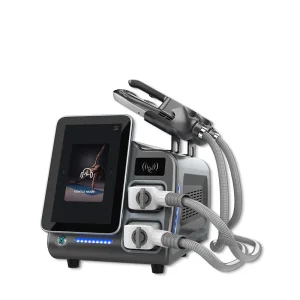
An authoritative analysis of market mechanics, chromophore photo-acoustic disruption, and strategic procurement for medical aesthetic distributors.
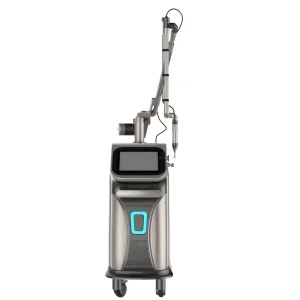
In the contemporary domain of energy-based aesthetic devices (EBD), the decision to buy Q Switch laser platforms represents a pivotal operational milestone for aesthetic clinics, dermatology centers, and regional equipment distributors. Unlike continuous-wave or long-pulsed lasers that rely heavily on thermal diffusion, Q-Switched (Quality-Switched) Nd:YAG lasers operate on the principle of selective photothermolysis combined with photo-acoustic impact.
By compressing laser energy into ultra-short nanosecond (ns) or sub-nanosecond pulse durations—typically ranging from 3.5ns to 10ns—the peak power output reaches gigawatt scales. This rapid acoustic shockwave shatters exogenous tattoo inks and endogenous melanin into microscopic particulates without causing thermal necrosis to surrounding epidermal structures.
According to global medical aesthetic industry metrics, the market for Q-Switched Nd:YAG platforms is experiencing an annual compound growth rate (CAGR) exceeding 9.4%. This surge is driven by three distinct consumer demands:
Quantifiable performance verified through rigorous ISO 13485 quality protocols.
Understanding Electro-Optic Pockels Cells, Beam Profile Engineering, and Wavelength Dynamics.
When evaluating a reliable Q Switch Laser factory, discerning buyers must scrutinize the Q-switching mechanism itself. Cheap passive Q-switched lasers rely on saturable absorbers (such as Cr:YAG crystals), which suffer from pulse-to-pulse energy instability and rapid thermal degradation.
In contrast, our industrial-grade manufacturing utilizes Active Electro-Optic Q-Switched Pockels Cells (KDP/KD*P crystals driven by high-voltage fast electronic switches). This ensures pinpoint timing, consistent megawatt peak power, and ZERO energy drift during prolonged clinical sessions.
Traditional laser cavities often produce a Gaussian energy distribution—where the center of the beam carries excessive fluence (risking skin blistering and scarring), while the margins fall below the therapeutic threshold.
Our OEM manufacturing integrates an advanced optical homogenizer that converts output energy into a Flat-Top (Top-Hat) Beam Profile. Fluence is uniformly distributed across the entire spot area, ensuring homogeneous dermal breakdown, predictable clinical endpoints, and dramatically lower rates of post-treatment PIH.
A comprehensive professional Q-switched system must provide versatile chromophore targeting across various tissue depths:
| Technical Parameter | Standard Commercial Q-Switch | SANO Industrial Electro-Optic Q-Switch |
|---|---|---|
| Q-Switching Mechanism | Passive Cr:YAG Crystal (High Energy Drift) | Active EO Pockels Cell (KDP Crystal) |
| Pulse Width | 10ns - 20ns (Higher Thermal Damage) | < 5ns - 8ns (Maximum Photo-Acoustic Shock) |
| Beam Profile | Gaussian (Center Hot Spots) | Flat-Top / Top-Hat Homogenized Output |
| Laser Crystal Rod | Synthetic Nd:YAG (4mm x 80mm) | Imported High-Purity Nd:YAG (7mm x 100mm) |
| Cooling Circuit | Single Radiator Air Cooling | Dual TEC Semiconductor + Water Cooling System |
How aesthetic operators in North America, Europe, Asia-Pacific, and Latin America deploy Q-Switched technology.
In medical spas and specialized laser tattoo removal clinics across the US, Canada, UK, and Germany, operators prioritize high repetition rates (up to 10Hz) and multi-pass protocols (such as R20 and R0 methods). The focus is on clearing recalcitrant dark inks and multi-colored artwork with minimal patient visits.
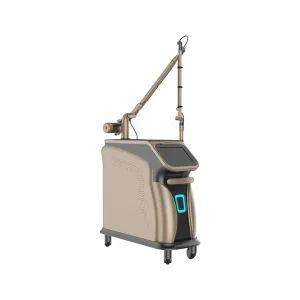
Our OEM machines incorporate articulated 7-joint Korean light guide arms with adjustable spot sizes (2mm-10mm), allowing laser technicians to quickly dial in spot size without recalibrating laser energy manually.
In Asian skin types (Fitzpatrick Types III–V), laser treatment carries a significant risk of Post-Inflammatory Hyperpigmentation (PIH) if thermal energy is excessive. Clinics in East Asia, Southeast Asia, and the Gulf region utilize low-fluence, large-spot 1064nm Q-switched toning protocols ("Laser Toning").
By delivering sub-thermolytic pulses, our systems gently disperse melasma granules and dermal pigment without disrupting basal membrane integrity, protecting delicate skin profiles from rebound hyperpigmentation.
MedSpas throughout Brazil, Mexico, Colombia, and Turkey rely heavily on the non-ablative 1320nm carbon lotion facial ("Hollywood Spectra Peel"). This treatment cleanses pores, exfoliates dead stratum corneum, regulates oil output, and stimulates collagen remodelling with zero downtime.
Our factory supplies specialized carbon peel handpiece tips with anti-backfire optical windows, ensuring long-term optic lens cleanliness even under dusty salon environments.
Why sourcing directly from a leading Beijing laser factory maximizes profitability, quality, and business stability.
Choosing a reliable buy Q Switch Laser supplier requires understanding the optical supply chain geography. Beijing's Shunyi Industrial Zone houses China's premier optoelectronic research institutes and precision optical fabrication hubs. This strategic proximity grants our facility immediate access to high-purity laser crystals, high-voltage pulse capacitors, and precision optical coating labs.
By eliminating third-party component markups and broker delays, we pass a direct 40%–60% cost advantage to global B2B buyers without compromising component specification.
Every single machine passing through our assembly lines undergoes a non-negotiable 100-hour continuous burn-in procedure. Our quality assurance protocol includes:
Empowering international buyers with regulatory dossiers, spare parts logistics, and 24/7 technical hotline access.
Navigating medical device import regulations can be daunting. As a dedicated OEM/ODM manufacturer, SANO provides complete technical construction files (TCF) supporting Medical CE (MDR 2017/745), ISO 13485 quality system standards, and electrical safety certifications (IEC 60601-1, IEC 60601-2-22). We assist regional distributors in completing local health authority registrations smoothly.
Downtime in an aesthetic clinic directly destroys revenue. Our Q-switched laser chassis is engineered with a modular "Plug-and-Play" architecture. High-voltage power supplies, water pumps, cooling fans, and main control boards feature isolated quick-connect harnesses. In the rare event of component fault, replacement modules ship via DHL express within 24 hours.
Every purchase includes a standard 2-year warranty backed by direct engineer access. Furthermore, we provide customizable software UI branding (supporting over 12 global languages), master operator protocol manuals, clinical treatment parameters, and HD video training courses for your sales team and client practitioners.
Expert technical answers to essential questions asked by medical aesthetic buyers before placing orders.
The core distinction lies in the pulse duration. A Q-Switched Nd:YAG laser operates in the nanosecond range (typically 3.5ns to 10ns), producing a combination of photothermal and photo-acoustic effects ideal for dark tattoo inks and stubborn dermal pigment. A Picosecond laser operates in the picosecond range (375ps to 750ps), generating a pure photo-acoustic shockwave with virtually no thermal diffusion. Q-switched systems remain the most cost-effective workhorse platform for general clinics, while picosecond platforms serve high-budget specialty centers.
Active Electro-Optic Q-switching utilizes a driven Pockels Cell crystal triggered by microsecond-accurate electronics. This yields perfectly consistent energy pulses, ultra-high peak power, and negligible thermal degradation over long treatment sessions. Passive Q-switches rely on saturable absorbers that drift in power as the handpiece heats up, leading to unpredictable clinical endpoints and higher risks of skin complications.
Tattoo clearance typically requires 4 to 8 sessions spaced 6 to 8 weeks apart, depending on ink density, depth, age, color, and patient immune response. Black, dark blue, and red inks clear most rapidly, while green and light blue inks may require specialized dye-pack handpieces (e.g., 585nm or 650nm optical converters).
Yes. We specialize in OEM/ODM customization for global equipment distributors. We offer custom chassis paint colors, logo silk-screening, custom startup screen graphic interfaces, localized software translations, and modified handpiece configurations with flexible Minimum Order Quantities (MOQs).
Routine maintenance includes replacing the internal deionized water filter every 3 to 6 months, using distilled/deionized water in the cooling loop, and keeping handpiece optical lenses clean from carbon residual dust. Our sealed optical cavity design prevents ambient dust ingress into the internal laser rod chamber.
Discover our full catalog of high-performance laser, RF, and body contouring platforms.