- +86 136 8127 5833
- [email protected]
- Shunyi, Beijing, China
Featured energy-based devices utilizing advanced cold-air epidermal protection integration.
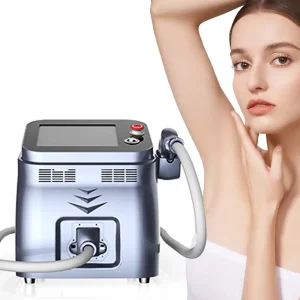
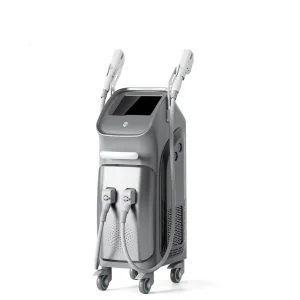
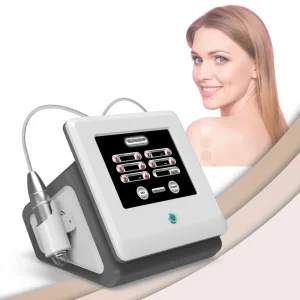
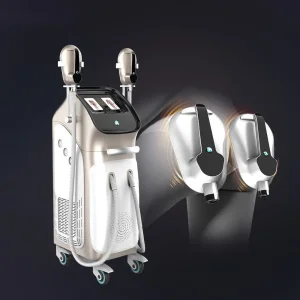
Analyzing thermal relaxation time (TRT), heat dissipation kinetics, and clinical safety thresholds in dermatological laser interventions.
In modern aesthetic medicine and dermatological laser therapy, thermal management of the epidermis represents the definitive variable governing both clinical efficacy and patient compliance. As photon fluences elevate across high-power 808nm diode hair removal, picosecond tattoo clearance, and ablative CO2 fractional resurfacing, the risk profile for epidermal thermal injury—manifesting as post-inflammatory hyperpigmentation (PIH), erythema, blistering, and thermal scarring—escalates exponentially. High-quality air skin cooling machines engineered by leading specialized manufacturers mitigate these risks through continuous, non-contact convective thermodynamic transfer.
Unlike contact cooling methods (such as sapphire crystal tips) which rely on conductive surface contact, or liquid cryogen sprays which apply transient, localized evaporative bursts, dedicated cold air cooling devices maintain a continuous stream of sub-zero refrigerated air (ranging from -20°C to -35°C) before, during, and immediately after target energy delivery. This continuous convective airflow dramatically alters the boundary layer thermal resistance of the human stratum corneum.
Core Thermodynamic Principle: Air skin cooling systems extract caloric energy from the cutaneous tissue at a rate exceeding the heat dissipation speed of epidermal melanin, establishing a protective thermal buffer without attenuating target chromophore absorption in the deep dermis.
The mathematical reality of air cooling efficiency hinges on optimizing the convective heat transfer coefficient ($h$). Advanced manufacturers optimize internal compressor compression ratios, heat exchange coils, and aerodynamic nozzle dynamics to elevate $h$ values from standard ambient air (approx. 10–25 W/m²K) to forced sub-zero convective levels exceeding 180 W/m²K. This rapid thermal extraction maintains epidermal temperatures strictly below the 43°C cellular denaturation threshold, even when delivering laser fluences upwards of 40 J/cm².
Evaluating enterprise adoption, total cost of ownership (TCO), and global supply chain shifts.
Unlike cryogen spray systems requiring ongoing, costly chemical canister replacements and hazardous storage protocols, compressor-driven air cooling platforms operate purely on standard electrical power, dropping per-treatment consumable operational expenditure to zero.
Modern medical spas and dermatology clinics demand thermal management units that operate independently from laser handpieces. Air cooling systems can be seamlessly positioned via flexible hands-free articulating arms to support IPL, Diode, CO2, Picosecond, and RF systems simultaneously.
By delivering robust topical anesthesia through rapid cryogenic air cooling, clinics eliminate or drastically reduce the 30–45 minute waiting period required for topical lidocaine cream absorption, elevating daily room turnover by up to 35%.
How specialized Chinese OEM/ODM factories achieve superior price-to-performance ratios and rigorous quality assurance.
Over the past decade, China has evolved from a high-volume assembly hub into the global epicenter for precision aesthetic technology R&D and hardware manufacturing. When sourcing high-quality air skin cooling machines, international distributors and clinic networks leverage distinct structural advantages offered by leading Chinese manufacturers:
Top-tier Chinese factories collaborate directly with tier-one global compressor manufacturers (such as Panasonic, Tecumseh, and Secop) to co-engineer custom variable-frequency rotary compressors. Combined with locally extruded high-efficiency copper heat exchangers and dual-stage filtration systems, Chinese manufacturers deliver industrial units capable of reaching -30°C within 3 to 5 minutes of cold startup.
The complete ecosystem for medical-grade sheet metal fabrication, injection molding, PCB surface-mount technology (SMT), and algorithmic software development is concentrated within regional manufacturing clusters. This proximity reduces component transit times and supply chain friction, translating directly into a 40% to 60% capital expenditure advantage for overseas procurement buyers without compromising structural durability or electrical safety compliance.
Leading Chinese air cooling equipment manufacturers adhere to ISO 13485 medical device quality management standards. Units undergo continuous 72-hour burn-in stress testing, airflow CFM volumetric calibration, decibel acoustic analysis (<65 dB target), and thermal camera profiling before receiving export approval and Medical CE / FDA regulatory clearance documentation.
Evaluating Epidermal Cooling Modalities across Critical Clinical and Financial Parameters.
| Evaluation Parameter | Refrigerated Cold Air Machine | Contact Sapphire Cooling | Cryogen Spray (DCD) | Topical Numbing Cream |
|---|---|---|---|---|
| Operating Temperature | -20°C to -35°C (Adjustable) | 0°C to 4°C (Conductive) | -20°C (Transient blast) | N/A (Chemical action) |
| Consumable Expense | $0.00 / Treatment | $0.00 / Treatment | High (Canister refills) | Moderate (Per tube) |
| Therapeutic Coverage | Continuous (Pre, During, Post) | During laser spot contact only | Synchronized flash burst | Pre-treatment only |
| Treatment Speed / Setup | Instant (No waiting time) | Requires gel application | Instant alignment | 30-45 min prep time |
| Epidermal Safety (Fitzpatrick IV-VI) | Maximum (Continuous convection) | Moderate (Risk of contact loss) | High (Requires precise timing) | Low thermal mitigation |
| System Versatility | Universal (Works with any device) | Handpiece integrated only | Proprietary laser integrated | Universal standalone |
Operational protocols for integrating cold air chillers across core clinical indications.
When operating 808nm or triple-wavelength laser hair removal systems on dense hair or dark skin types (Fitzpatrick IV–VI), thermal stacking occurs rapidly. Position the cold air nozzle 3–5 cm from the treatment spot at level 6–8 airflow (-30°C). This pre-cools the epidermis, allowing clinicians to safely increase energy fluences by 20–30% for improved follicular destruction without thermal compromise.
Photo-acoustic ink fragmentation creates micro-explosions in the dermal matrix, generating localized acoustic shockwaves and intense heat sensations. Continuous cold air streaming immediately numbs cutaneous nerve endings, dramatically dampening sharp pain impulses and preventing epidermal frosting blisters.
Ablative skin resurfacing leaves open micro-thermal zones (MTZs). Post-procedure cold air application for 5–10 minutes rapidly reduces thermal retention in surrounding tissue, calming edema and instant post-treatment burning sensations while speeding up epithelial re-endothelialization.
Essential engineering standards enterprise buyers must evaluate prior to issuing supplier purchase orders.
Verify that cooling machines utilize eco-friendly, high-efficiency refrigerants such as R134a or R410A compliant with EU F-Gas regulations and US EPA SNAP standards to ensure hassle-free customs clearance and green compliance.
Continuous sub-zero air generation causes atmospheric humidity to freeze on evaporator coils. Ensure the manufacturer integrates an intelligent auto-defrost cycle (such as PTC fast heating) to prevent air blockage during back-to-back clinic schedules.
Heavy-duty compressors produce noise. Superior systems feature multi-layer sound-insulating foam, reducing operating noise below 65 dB. Ultra-flexible light-weight medical silicon hoses prevent operator wrist fatigue during extended treatments.
Expert insights regarding technical specifications, maintenance protocols, and international sourcing.
Explore our full line of CE-compliant medical beauty systems for professional clinics.