- +86 136 8127 5833
- [email protected]
- Shunyi, Beijing, China
Understanding the economic drivers, technological shifts, and supply chain realities of importing medical-grade laser systems directly from China's leading manufacturing hubs.
The global demand for non-invasive tattoo removal and dermatological pigment clearance has escalated dramatically over the past decade. Driven by shifting consumer demographics, career transitions, and the rise of advanced cover-up tattooing, medical aesthetic clinics, dermatology centers, and commercial MedSpas are seeking high-performance laser platforms that combine high clinical efficacy with manageable operational expenditures. In this expanding market landscape, evaluating the authentic China tattoo removal laser machine price from verified suppliers and factories has become a pivotal strategic exercise for global B2B buyers.
Historically, Western medical laser platforms commanded prohibitive price tags ranging from $80,000 to over $160,000 per unit, burdened by heavy corporate overheads and regional distributor markups. However, China’s rapid maturation as a high-precision medical device manufacturing hub—centered in advanced industrial parks across Beijing, Guangdong, and Jiangsu—has revolutionized the sector. Modern Chinese factories now integrate imported German laser diode bars, high-grade US cavity materials, and Korean 7-joint articulated optical arms into highly reliable, CE-compliant platforms available at factory-direct pricing between $1,500 and $25,000 depending on optical architecture.
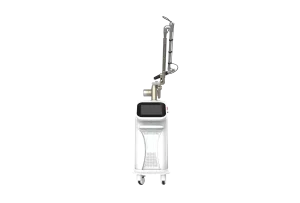
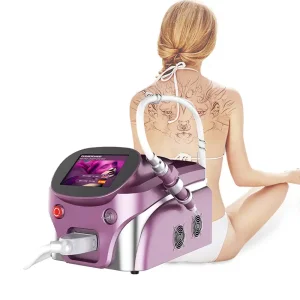
Explore our factory-engineered portfolio of multi-functional medical lasers, body sculpting units, and vascular treatment platforms.
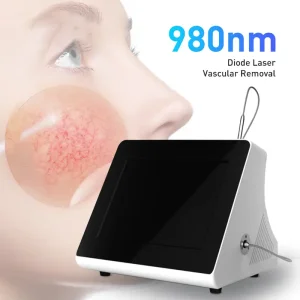
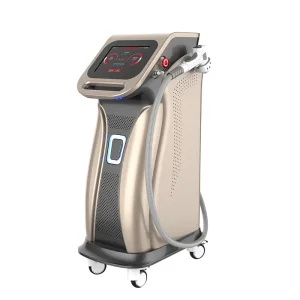
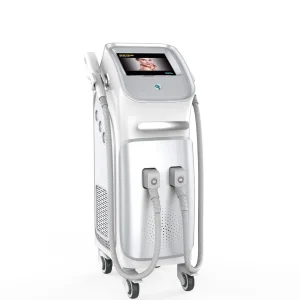
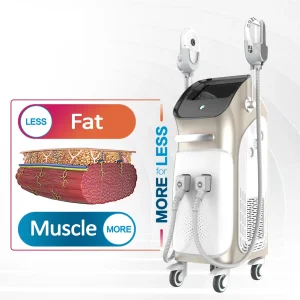
Why do price quotes vary from $1,200 to over $25,000? A granular breakdown of internal optoelectronic components, power supply specifications, and engineering architectures.
| Equipment Category | Price Range (FOB China) | Core Laser Technology | Target Clinical Segment | Key Hardware Components |
|---|---|---|---|---|
| Entry-Level Portable Q-Switched | $1,200 – $3,200 | Passive Q-Switched Nd:YAG (Nanosecond domain, 6-10ns) | Small Beauty Salons, Tattoo Parlors, Tattoo Removal Startups | Single xenon lamp, single rod, internal articulated handpiece, air cooling |
| Professional Vertical Q-Switched | $3,500 – $7,500 | Active Electro-Optic (E-O) Q-Switched Nd:YAG (5-8ns) | High-volume MedSpas, Cosmetic Clinics, Regional OEM Distributors | Dual-lamp dual-rod cavity, 1200W-1600W OPT power supply, water-air TEC cooling |
| Commercial Picosecond Laser | $8,000 – $14,000 | Real Picosecond (Short Nanosecond/Sub-Nanosecond, 600-800ps) | Dermatology Clinics, Multi-Chain Aesthetic Groups | Korean 7-Joint Articulated Arm, Honeycomb Fractional Lens, 2000W Power Module |
| Medical-Grade Ultra-Pico Platform | $15,000 – $28,000 | True Ultra-Picosecond (300-450ps, Seed Laser + Amplifier) | Hospital Laser Centers, Specialist Dermatologists | Imported German/US Laser Cavity, Dual Rods, Real-time Energy Feedback Sensors |
When requesting factory quotes from Chinese laser suppliers, B2B procurement managers must look beyond superficial casing designs and evaluate internal bills of materials (BOM):
Entry-level units utilize internal crystal rods in the handpiece with optical fiber delivery, which leads to energy loss over time. High-end platforms implement imported Korean 7-Joint Articulated Arms with high-transmission gold/dielectric mirrors, maintaining flat-top beam profile consistency and zero energy degradation.
The cost difference between domestic synthetic Nd:YAG rods and premium imported YAG crystals with UK First Light Xenon Lamps is substantial. Dual-rod, dual-lamp configurations double the energy peak (up to 2000mJ) while ensuring a shot lifespan exceeding 5,000,000 pulses.
Achieving true picosecond output (sub-500 picoseconds) requires complex pulse-compression seed laser technology. Standard nanosecond Q-switched units use simpler electro-optic switches, which cost significantly less to manufacture but deliver higher thermal load to surrounding tissue.
A direct factory purchase of a $12,000 Picosecond platform from China translates to an average cost per patient treatment of less than $4.50 (inclusive of power, consumable replacement, and routine maintenance). When charged at commercial clinic rates of $150 to $400 per session, clinic operators amortize capital equipment expenditure within 40 to 75 client treatments.
The scientific principles governing ink particle fragmentation, chromophore selection, and skin safety across diverse Fitzpatrick skin phototypes.
Traditional Q-switched Nd:YAG lasers deliver energy pulses in the nanosecond range (typically 5ns to 10ns). At this pulse duration, energy delivery relies predominantly on photothermal action. Ink particles absorb the laser light, heating up rapidly to induce thermal expansion and fragmentation.
True picosecond lasers deliver ultra-short pulses in the picosecond domain (300ps to 600ps). By delivering energy at a fraction of the thermal relaxation time of ink particles, picosecond technology generates an intense photoacoustic shockwave, shattering ink into dust-like microparticles.
| Wavelength | Target Ink Colors | Melanin Absorption Rate | Ideal Fitzpatrick Skin Types | Clinical Applications |
|---|---|---|---|---|
| 1064nm Nd:YAG | Black, Dark Blue, Dark Brown | Lowest (Deep Penetration) | Fitzpatrick I – VI (Safest for dark skin) | Deep tattoos, dermal nevus of Ota, dark carbon peel treatments |
| 532nm Frequency Doubled | Red, Orange, Yellow, Purple | High (Epidermal Focus) | Fitzpatrick I – III (Use with caution on dark skin) | Red tattoo ink, superficial freckles, solar lentigines, epidermal brown spots |
| 755nm Alexandrite / Pico | Green, Sky Blue, Cyan, Teal | Moderate | Fitzpatrick I – IV | Stubborn green & blue inks, recalcitrant tattoo residual, melasma toning |
| 585nm / 650nm Dye Handpieces | Light Green, Purple, Sky Blue | Variable | Fitzpatrick I – III | Specialty color ink removal in medical dermatology practices |
A step-by-step procurement methodology for distributors, chain clinics, and importers evaluating Chinese aesthetic laser manufacturers.
Ensure the supplier possesses comprehensive ISO 13485 Quality Management System certification for medical device assembly. Verify CE documentation (Medical CE under EU MDR or LVD/EMC compliance directives) and clear FDA 510(k) status where applicable for US importation.
Require factory energy output calibration reports measured using Ophir Energy Meters. Inspect burn-in test procedures (minimum 48-hour continuous pulse cycle testing prior to container packing) to guarantee thermal stability of power supplies and water pumps.
Evaluate factory flexibility regarding OEM branding. Professional Chinese suppliers support custom shell injection molding, localized UI software interface translation, customized screen startup logos, and dedicated housing color choices at structured minimum order quantities (MOQs).
How leading Chinese manufacturers guarantee operational uptime, rapid spare-part dispatch, and regulatory alignment in international markets.
Importing medical aesthetic equipment requires full alignment with destination country health authorities. Top-tier factories maintain detailed Technical Files (TCF) that simplify local registration:
A reliable factory partnership extends beyond initial shipping. High-volume export suppliers provide robust Service Level Agreements (SLAs) designed for zero equipment downtime:
Explore our specialized Q-Switched, Picosecond, DPL, Microneedling RF, and multi-wavelength laser systems.

Next-generation optoelectronic advancements transforming energy delivery, real-time diagnostic imaging, and multi-wavelength automation.
R&D teams are transitioning from picosecond domains toward femtosecond laser systems. Operating in the sub-picosecond range (100-200fs), these upcoming platforms will eliminate thermal energy generation entirely, reducing treatment discomfort to near-zero levels while instantly vaporizing micro-pigments.
Integrated camera sensors combined with real-time AI skin impedance mapping will dynamically adjust laser pulse fluence, spot size, and repetition rates during treatment. This prevents epidermal damage on high-melanin skin phototypes automatically.
Future factory configurations will combine Picosecond Nd:YAG laser resonators with Fractional Microneedling RF and Contact Cooling within a unified mobile chassis, empowering clinicians to perform ink clearance, scar remodeling, and skin tightening in a single session.
Technical and commercial clarity for clinic buyers, medical device importers, and OEM partners.