- +86 136 8127 5833
- [email protected]
- Shunyi, Beijing, China
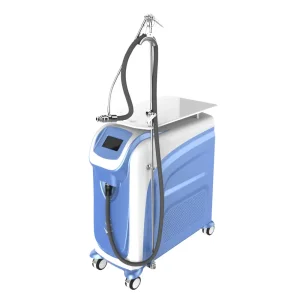
Engineered by Sano Laser in Beijing for high-duty clinical performance and seamless operation with forced-air cooling systems.
Understanding the physics of epidermal thermal protection during high-fluence laser dermatological procedures.
In contemporary dermatological medicine and high-energy aesthetic laser applications, precise thermal mitigation is no longer merely a comfort feature—it is a critical clinical parameter that dictates safety thresholds, therapeutic window expansion, and overall treatment efficiency. As high-power laser platforms (such as 808nm/755nm/1064nm diode lasers, picosecond Nd:YAG lasers, and high-fluence CO2 fractional scanners) push higher energy densities into target chromophores, the risk of thermal diffusion into surrounding non-target epidermal structures increases significantly. This is where forced cold air skin cooling systems—originally pioneered in aesthetic medicine by Zimmer Medical and refined by specialized Chinese manufacturers like Sano Laser—play a pivotal role.
Epidermal protection mechanisms fall into three classic categories: cryogenic spray cooling (CSC), contact sapphire cooling, and continuous forced-air cooling. While cryogenic sprays rely on high-pressure R134a refrigerant bursts directly onto the tissue and sapphire plates depend on physical surface contact, forced-air cooling systems generate a continuous sub-zero airflow (-30°C to -35°C) that maintains convective heat transfer before, during, and after laser pulse delivery without obstructing optical sightlines or inducing mechanical skin shear.
By lowering epidermal temperature prior to photon emission, cold air cooling extends the effective safety margin beyond the natural TRT of the epidermis (approx. 3-10ms), preventing thermal stacking and thermal injury to basal layer melanocytes.
Unlike sapphire contact tips, forced air cooling creates zero interface pressure, preventing vascular blanching during vascular laser treatments (980nm) and permitting unobstructed focal targeting during fractional CO2 ablation.
Continuous cold airflow induces transient neural blockade at the A-delta and C nociceptor levels, reducing subjective patient pain scores by up to 65% and reducing post-treatment edema and persistent erythema.
A rigorous comparison of physical cooling dynamics, operational expenditure, and clinical versatility.
| Cooling Technology | Target Output Temp | Operating Cost / Session | Epidermal Interference | Hands-Free Integration | Clinical Duty Cycle |
|---|---|---|---|---|---|
| SANO Forced Air Cooling | -30°C to -35°C (Controlled) | Zero Consumables | None (Convective Air Stream) | Yes (Universal Laser Adapters) | Continuous 24/7 Operation |
| Zimmer Cryo 6 Benchmark | -30°C Target Air | Zero Consumables | None (Convective Air Stream) | Yes (OEM Bracketry) | Continuous Duty |
| Cryogenic Spray (CSC) | Transient Burst (-20°C) | High (Refrigerant Canisters) | Optics Clouding / Chemical Risk | Pulse-Trigger Dependent | Limited by Canister Volume |
| Contact Sapphire Cooling | +4°C to 0°C Surface | Zero Consumables | High (Surface Compression & Gel) | Handpiece-Integrated Only | Thermal Drift under High Duty |
How Beijing Sano Laser leverages local optoelectronic clusters to deliver world-class medical equipment at high economic value.
Over the past two decades, China’s medical aesthetics manufacturing sector has evolved from component assembly to advanced, engineer-led structural innovation. Located in the high-tech industrial cluster of Shunyi District, Beijing, Beijing Sano Laser Development S&T Co., Ltd. stands at the forefront of this industrial transformation. Sano Laser integrates complete R&D pipelines, optical testing labs, automated refrigeration loop assembly lines, and ISO-standard cleanrooms under one centralized operational footprint.
By sourcing high-efficiency compressors, whisper-quiet motor blowers, and custom heat exchangers locally, Sano Laser eliminates multi-tier agent markups while controlling component tolerances down to microscopic levels.
Every Sano Zimmer-style skin cooling unit undergoes a continuous 72-hour burn-in stress test, thermal drift analysis, and acoustic pressure profiling (<65 dB) to guarantee flawless performance upon global delivery.
Clinics purchasing direct from China factories obtain Western-equivalent refrigeration stability at approximately 30%-40% of European equipment costs, significantly shortening payback cycles.
How dermatology clinics and medical spas integrate skin air cooling machines across diverse treatment workflows.
Skin cooling machines are not isolated devices; they function as core utility amplifiers across multi-technology aesthetic practices. Sano Laser designs its air cooling systems with versatile quick-connect articulated arms and universal handpiece brackets, enabling instant pairing with existing aesthetic setups.
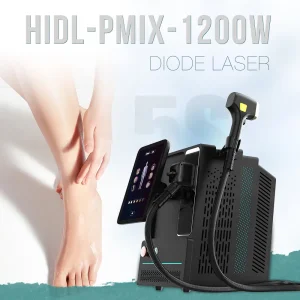
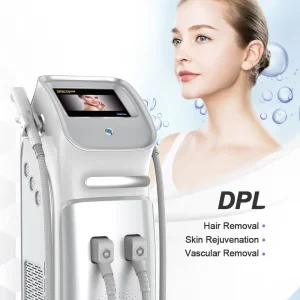
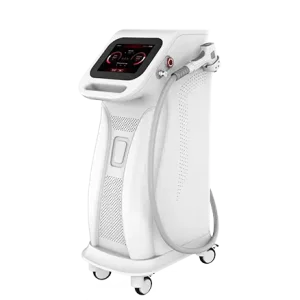
During high-frequency (10Hz) motion-based diode laser treatments (808nm / 755nm / 1064nm), high cumulative energy is absorbed by large surface areas. Directing a -30°C airflow ahead of the laser handpiece maintains patient comfort, reduces reliance on conductive gel, and eliminates downtime.
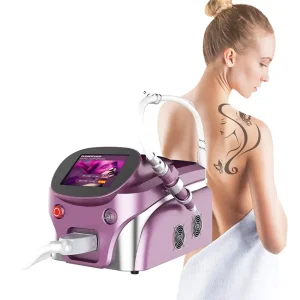
Picosecond lasers shatter ink via high-intensity photo-acoustic shockwaves. The rapid skin relaxation response causes micro-edema and immediate tissue whitening. Pre-chilling and post-chilling the skin with cold air rapidly dissipates epidermal heat, preventing epidermal blistering.
Ablative CO2 resurfacing creates micro-thermal zone (MTZ) channels in the dermis. Post-procedure continuous air cooling instantly soothes severe burning sensations without introducing liquid contaminants or compromising sterile skin micro-wounds.
Targeting telangiectasia and spider veins requires thermal coagulation of blood vessel walls. Air cooling keeps superficial skin cool, preventing thermal damage to epidermal melanin while allowing full optical absorption by oxyhemoglobin.
For needle-phobic patients undergoing minor aesthetic procedures or shallow injections, targeted cold air provides immediate numbing without waiting 30-45 minutes for topical lidocaine absorption.
Broadband pulsed light delivers energy across multiple spectrums. Continuous air cooling offsets broad thermal loading, allowing operators to safely increase energy fluences on recalcitrant pigment spots.
The technological evolution towards smart, eco-friendly, and connected skin cooling devices.
The global aesthetic device market is rapidly shifting toward intelligent, closed-loop systems. Legacy air cooling units operated purely on manual fan-speed dials; however, the latest engineering innovations coming out of leading Chinese factories like Sano Laser incorporate real-time sensor feedback and energy-saving variable compressors.
Key criteria for medical aesthetic equipment distributors, chain clinics, and importers evaluating Chinese manufacturing partners.
Ensure the factory supplies full technical documentation, including Medical CE (EU MDR compliance pathways), ISO 13485 quality management certification, and RoHS electrical safety reports for seamless customs clearance.
Verify compressor brand (e.g., Panasonic, Tecumseh, or high-tier domestic units) and BTU cooling output. A reliable unit must maintain a continuous output temperature of -30°C at fan level 6 without internal icing.
Evaluate custom casing molding options, localized touch-screen GUI branding, custom paint colorways, and custom adapter nozzle designs tailored to your distributor brand identity.
Detailed technical insights from Sano Laser’s senior engineering team.
Pair your thermal management units with high-performance light, laser, and radiofrequency body platforms.