- +86 136 8127 5833
- [email protected]
- Shunyi, Beijing, China
Direct factory-engineered thermal management devices and high-intensity clinical workstations engineered by leading Chinese suppliers.
In high-energy aesthetic dermatology, the primary constraint governing therapeutic efficacy is the thermal damage threshold of the epidermis. High-fluence energy-based devices (EBDs)—including 808nm/755nm/1064nm diode lasers, Q-switched Nd:YAG lasers, Picosecond laser systems, and fractional CO2 platforms—deliver rapid photothermal or photoacoustic energy targeted at subcutaneous chromophores (melanin, oxyhemoglobin, water, or tattoo pigments). However, without concurrent epidermal cooling, localized caloric accumulation quickly leads to thermal diffusion into surrounding non-targeted epidermal tissue, resulting in erythema, edema, blistering, thermal necrosis, and post-inflammatory hyperpigmentation (PIH).
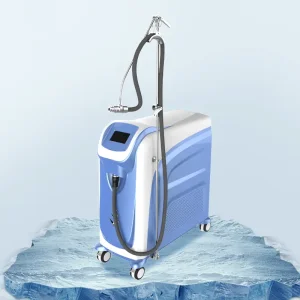
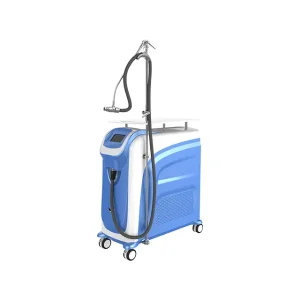
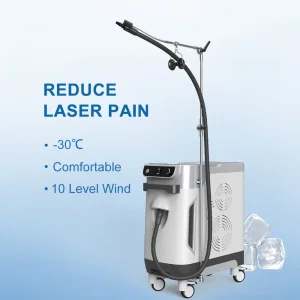
The emergence of specialized China Sano laser cryo skin cooling system machine suppliers represents a paradigm shift in non-contact epidermal protection. Unlike contact cooling methods (such as sapphire chill tips) which can obscure the optical field or compress underlying vascular structures, forced cold-air cryo cooling maintains a continuous, sub-zero laminar air stream (ranging from -20°C to -38°C) over the treatment zone before, during, and after laser emission. This whitepaper analyzes the thermodynamic mechanics, industrial supply chain advances, global market demands, and clinical parameters driving the international adoption of Chinese cryo skin cooling systems.
The global medical aesthetics equipment market is undergoing rapid expansion, projected to reach over USD $35 Billion by 2030. Within this broader landscape, auxiliary skin cooling technology has evolved from an optional luxury into a mandatory standard of care. Premium medical spas, dermatological clinics, and surgical centers across North America, Europe, the Middle East, and Asia-Pacific are increasingly standardizing their treatment rooms with dedicated cold-air cryo machines.
Modern aesthetic lasers deploy ultra-short pulse widths combined with mega-watt peak powers to maximize chromophore disruption. High-power 3000W diode lasers and 2000W picosecond platforms require active air cryo cooling to prevent superficial burn injuries on darker Fitzpatrick skin types (IV-VI).
Patient retention in medical aesthetic practices hinges directly on session comfort. Forced cold air acts as a localized thermal topical anesthetic, desensitizing cutaneous nociceptors and significantly raising client pain tolerance without pharmacological interventions or gels.
Cryogen spray systems (e.g., Tetrafluoroethane canisters) impose heavy operational costs per treatment. High-performance air chillers draw ambient room air, filter it, and supercool it continuously, creating a zero-consumable thermal defense system with superior ROI.
To appreciate why major medical laser manufacturers specify dedicated air cryo units (such as the SANO ICOOL series), one must evaluate the mathematical heat exchange dynamics occurring at the stratum corneum. During laser radiation, the temperature rise ($\Delta T$) of the dermal target depends on fluence ($J/cm^2$), absorption coefficient ($\mu_a$), and thermal relaxation time ($\tau_r$).
Clinical Formula for Epidermal Thermal Safety: Effective skin protection occurs when the rate of forced convective heat extraction ($Q_{conv} = h \cdot A \cdot (T_{skin} - T_{air})$) exceeds the rate of thermal diffusion from the absorbed photon pulse into non-target epidermal structures.
Contact sapphire cooling plates transfer heat via conduction ($Q_{cond}$). However, sapphire tips quickly warm up during extended high-frequency treatments (e.g., 10Hz in-motion hair removal), diminishing their cooling gradient. Furthermore, pressing a chilled tip onto the skin flushes out micro-capillaries (transient ischemia), which paradoxically alters the optical chromophore target in vascular laser sessions. In contrast, sub-zero continuous air cryo chillers provide unrestricted optical access while maintaining a massive thermal gradient ($\Delta T \approx 65^\circ C$ relative to skin baseline), rapidly stripping heat energy away via high-velocity forced convection.
| Cooling Modality | Heat Transfer Mechanism | Cooling Temperature Range | Optical Visibility | Operating Consumable Cost |
|---|---|---|---|---|
| Forced Air Cryo System (Sano ICOOL) | Forced Convection (Air) | Continuous -20°C to -38°C | 100% Unobstructed | Zero (Ambient Air Filtered) |
| Sapphire Contact Tip | Conduction (Direct Surface) | 0°C to +5°C (Drifts with use) | Obscured by Handpiece Tip | Low (System Wear & Tear) |
| Cryogen Spray (DCD) | Phase-Change Evaporation | -20°C (Burst duration ms) | Intermittent Blur | High (Gas Canister Refills) |
| Chilled Coupling Gel | Conduction / Passive Heat Sink | +4°C to +10°C | Refractive Index Distortions | Moderate (Clear Gel Reagents) |
The international competitive edge of OEM/ODM China Sano laser cryo skin cooling system machine suppliers stems from a decade of deep industrial modernization. China's aesthetic equipment manufacturing ecosystem, particularly concentrated in high-tech industrial corridors, has achieved vertical integration—bringing mechanical design, refrigeration engineering, PCB motherboard assembly, and clinical protocol testing into single unified facilities.
Sano skin cooling systems utilize heavy-duty imported twin-rotary compressors coupled with eco-friendly R134a/R404a refrigerants. These ultra-durable chilling plants allow 24/7 continuous operation without thermal throttling or compressor freezing.
Integrated AI microprocessors monitor ambient room temperature, airflow resistance, internal condenser pressure, and output thermal sensors. The machine automatically regulates fan blower speeds (1-6 levels) to maintain dead-steady sub-zero air delivery.
Every machine undergoes 72 hours of uninterrupted stress testing inside environmental chambers, verifying insulation integrity, electrical safety leakage, air-defrost auto-cycles, and structural vibration resilience prior to export packaging.
For medical device distributors, regional aesthetic chain buyers, and clinic directors procuring skin cooling systems directly from Chinese manufacturers, several critical technical specifications and logistical criteria must be evaluated to ensure seamless integration:
Ensure suppliers offer dual-transformer architecture adaptable to AC 220V/50Hz (Europe, Asia, South America) and AC 110V/60Hz (North America, Japan). Built-in surge protection prevents circuit disruption caused by high-power laser firings on the same electrical ring.
Top suppliers supply flexible 360-degree articulating support arms and customized laser handpiece adapters. This allows hands-free locking of the air cooling nozzle directly adjacent to the laser beam target zone, enabling single-operator clinic workflows.
Distributors can leverage Chinese factory OEM programs for custom sheet-metal casing colors, laser-engraved corporate logos, custom startup software boot screens, and multi-language touchscreen user interfaces (English, Spanish, German, French, Arabic, Portuguese).
Forced cold-air cooling devices (Sano Cryo Series) serve as versatile cross-modality assets across various dermatological and aesthetic interventions:
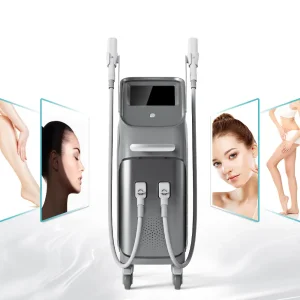
Pre-cooling the treatment zone relaxes cutaneous pain nerves, while concurrent continuous sub-zero airflow dissipates epidermal heat generated by rapid high-frequency 808nm laser pulses. Post-cooling rapidly suppresses follicular edema.
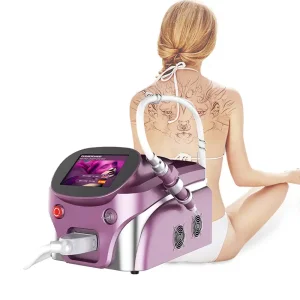
Photoacoustic shockwaves during tattoo ink shattering cause localized thermal micro-explosions. Cold air at -30°C instantly blunts the sharp sting sensation and drastically reduces post-treatment pinpoint vesiculation and epidermal crusting.
Ablative resurfacing removes microscopic columns of tissue, leaving intense heat in surrounding collagen structures. Direct cold air cooling provides immediate comfort, decreases immediate post-laser fire burning sensations, and shortens social downtime.
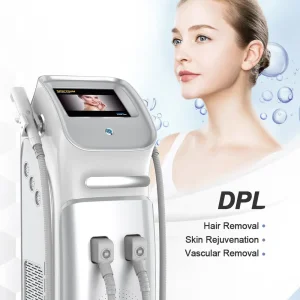
When targeting facial telangiectasias with 980nm or DPL narrow-spectrum light, air cryo cooling prevents epidermal melanin absorption damage without compressing or collapsing the target micro-vessels, preserving photothermal coagulation efficiency.
Explore the full range of OEM/ODM clinical devices available directly from China Sano Laser production facilities.
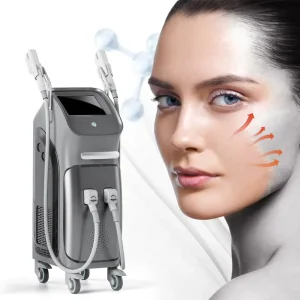
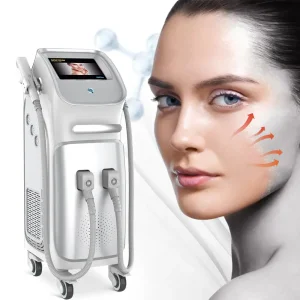
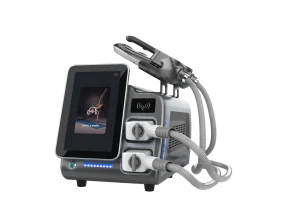
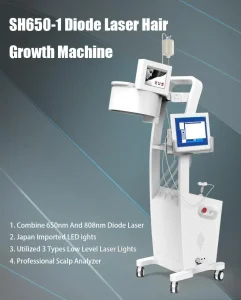
As therapeutic energy densities continue to climb across non-invasive aesthetic medicine, selecting a reliable, high-performance continuous cold-air skin cooling system is vital to safeguarding patients, maximizing clinical results, and enhancing practice profitability. Sano Laser Development S&T Co., Ltd. stands ready to support global distributors and medical clinic partners with direct factory OEM/ODM engineering, robust warranties, and comprehensive international compliance support.