- +86 136 8127 5833
- [email protected]
- Shunyi, Beijing, China
High-performance clinical platforms engineered for multi-wavelength tattoo removal, dermal vascular therapy, and sub-dermal collagen remodeling.
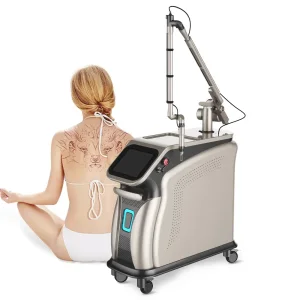

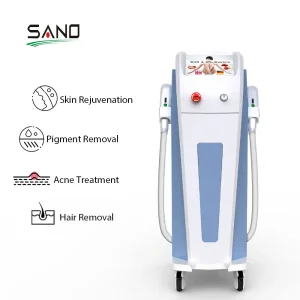
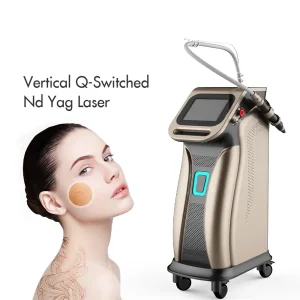
An analytical overview of international commercial shifts, clinical intent, and investment metrics driving the adoption of Chinese electro-optic laser systems.
The global medical aesthetic sector is witnessing a decisive transition from conventional long-pulse thermal devices to ultra-short, nanosecond, and picosecond Q-Switched Neodymium-doped Yttrium Aluminum Garnet (Nd:YAG) solid-state lasers. Modern dermatology clinics demand minimal surrounding thermal damage, driving procurement toward systems capable of generating multi-megawatt peak optical power.
Tattoo removal is no longer the sole ROI driver. Procurement inquiries from North America, Europe, and LATAM heavily emphasize multi-modal capabilities: dermal pigment resolution (Nevus of Ota, Chloasma, Melasma), epidermal ephelides treatment, non-ablative skin rejuvenation via 1320nm carbon peels, and vascular lesion management.
Medical spas and dermatological chains are bypassing western distributor markups. By sourcing direct from verified OEM/ODM medical equipment manufacturers in Chinese precision-manufacturing hubs (such as Beijing, Guangdong, and Jiangsu), global operators secure tier-1 optical specs at a 60% reduction in capital expenditure.
Understanding quantum energy storage, electro-optic switching, optical beam homogenization, and target chromophore absorption dynamics.
Q-Switched Nd:YAG lasers operate on the fundamental principle of selective photothermolysis formulated by Anderson and Parrish. To shatter exogenous ink particles or endogenous melanosomes without heating adjacent tissue, the laser pulse duration ($\tau$) must be equal to or shorter than the thermal relaxation time ($TRT$) of the target structure:
Thermal Relaxation Time Formula Baseline: $\tau_{TRT} \approx \frac{d^2}{8\kappa}$ where $d$ is the particle diameter and $\kappa$ is the thermal diffusivity of the target tissue. For tattoo pigment granules ($d \approx 40\text{–}300\text{ nm}$), the TRT ranges from nanoseconds to picoseconds. A Q-switched optical pulse delivers energy rapidly enough to induce photoacoustic shockwaves, causing mechanical fragmentation rather than bulk photothermal necrosis.
The resulting microscopic fragments are subsequently phagocytosed by tissue macrophages and cleared via the lymphatic system over a 4- to 8-week clinical window.
The fundamental emission of the Nd:YAG crystal occurs at 1064nm in the near-infrared spectrum. Characterized by low melanin absorption and minimal scattering, 1064nm achieves deep dermal penetration (up to 4–6mm). It is the clinical gold standard for treating dark ink pigments (black, dark blue, dark brown) and deep dermal lesions in Fitzpatrick IV–VI skin types with minimal risk of post-inflammatory hyperpigmentation (PIH).
By routing the primary 1064nm beam through a non-linear Potassium Titanyl Phosphate (KTP) crystal, the photon frequency is doubled, halving the output wavelength to 532nm (visible green light). Melanoma and hemoglobin exhibit high absorption coefficients at 532nm, making it hyper-effective for bright warm tattoo inks (red, orange, purple) and superficial epidermal pigmentation (freckles, lentigines).
Utilizing a specialized optical beam deflector and topical carbon suspension, the 1320nm or filtered 1064nm pulse causes micro-explosions of microscopic carbon particles within the pilosebaceous units. This process exfoliates the stratum corneum, shrinks enlarged pores, controls sebum production, and stimulates collagen synthesis through mild photothermal skin conditioning.
| Architecture Parameter | Passive Q-Switched (Dye Cr:YAG) | Active Electro-Optic Q-Switched (Pockels Cell) | Picosecond Engine (True Pico) |
|---|---|---|---|
| Pulse Duration ($\tau$) | 6.0 ns – 10.0 ns | 3.0 ns – 5.0 ns | 300 ps – 800 ps |
| Peak Energy Output | 200 mJ – 600 mJ | 800 mJ – 1600 mJ | 400 mJ – 800 mJ |
| Beam Density Profile | Gaussian (Hot-Spot Central Peak) | Flat-Top / Top-Hat Homogeneous | Flat-Top Ultra-Homogeneous |
| Optical Lifespan | ~ 1,000,000 Shots | > 10,000,000 Shots | > 20,000,000 Shots |
| Primary Mechanism | Photothermal Dominant | Balanced Photoacoustic / Thermal | Pure Photoacoustic Fragmentation |
| Target Buyer Profile | Entry-level Beauty Salons | Professional MedSpas & Distributors | Specialized Dermatological Surgery Clinics |
A strategic framework for international procurement directors to audit manufacturing standards, component provenance, and quality engineering.
The core optical cavity dictates energy stability. Tier-1 Chinese suppliers utilize high-purity single-crystal Nd:YAG rods imported from specialized crystal growth labs or premium domestic electro-optics manufacturers. Verify that the cavity uses gold-plated or ceramic diffuse reflectors, which maximize pumping efficiency and eliminate thermal lensing over extended operational sessions.
Floor-standing, high-power Q-Switched systems require precise articulated arms to transfer optical energy without beam distortion. Premium suppliers incorporate Korean 7-joint spring-counterbalanced articulated arms fitted with high-reflectivity dielectric coated mirrors (>99.5% transmission at 1064/532nm), ensuring spatial energy consistency regardless of handpiece orientation.
Laser power stability relies entirely on the capacitor discharging circuit. Industrial-grade OEM units utilize high-voltage (1500V–1800V) custom power modules matched with dual Japanese/German capacitor banks (capable of storing 1000uF+ per bank). This architecture prevents voltage drop-off during high-frequency firing (10Hz–20Hz continuous repetition rates).
Standardized treatment protocols optimized for color spectrum tattoo clearance, epidermal pigment ablation, and facial skin conditioning.
Different pigment chemistry requires target wavelength matching. By pairing 1064nm, 532nm, and optional dye-impregnated handpieces (585nm for sky blue, 650nm for lime green), clinics provide complete multi-color ink clearance. Standard protocols achieve 85%+ clearance within 4 to 8 sessions spaced 6 weeks apart.
Handling delicate dermal melanosis (such as recalcitrant melasma) requires low-fluence, multi-pass techniques ("Laser Toning"). Using a 1064nm Top-Hat spot at sub-threshold fluences ($1.2\text{--}2.0\text{ J/cm}^2$), operators disrupt melanosome synthesis without triggering melanocyte death or post-treatment rebound hyperpigmentation.
A high-margin express medspa treatment. The micro-carbon particles absorb 1064nm light rapidly. The thermal burst implodes the carbon slurry within pores, stripping superficial dead epidermis, instantly unclogging sebaceous ducts, and leaving skin noticeably brighter with zero clinical downtime.
Future vectors transforming solid-state medical lasers: AI diagnostic integration, DPSS micro-modules, and hybrid photoacoustic delivery.
Traditional flashlamp-pumped systems are gradually giving way to DPSS technology. Laser diodes provide precise, narrow-spectrum pumping of the Nd:YAG rod, increasing energy efficiency by over 300%, reducing thermal cooling requirements, and allowing benchtop footprints without compromising peak energy output.
Integrated optical spectroscopy sensors built directly into handpiece tips will analyze patient skin impedance, real-time melanin index, and target ink depth in milliseconds. The system CPU automatically modulates fluence, pulse duration, and spot size on the fly to eliminate user error and prevent epidermal burns.
By splitting a single high-energy Q-switched pulse into twin micro-pulses separated by microseconds, PTP mode delivers equivalent total energy to dermal pigments while reducing tissue sensation and epidermal thermal stress. This technique substantially elevates patient tolerance in hypersensitive treatment areas.
Establishing a reliable framework for international distributors, OEM brand owners, and multi-location clinic buyers.
China's leading manufacturers offer deep-tier OEM customization. Beyond simple silk-screen logos, distributors can customize:
To ensure zero clinic downtime, professional suppliers deploy modular hardware architectures ("Plug-and-Play" internal harnesses). Under a typical 2-year comprehensive warranty, replacement power modules, water pumps, or optical handpieces are dispatched via express courier (DHL/FedEx) within 24–48 hours, supported by step-by-step remote engineer video guidance.
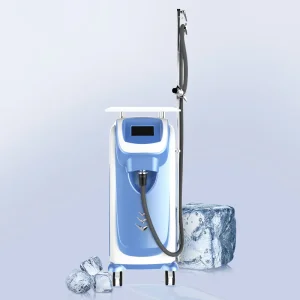
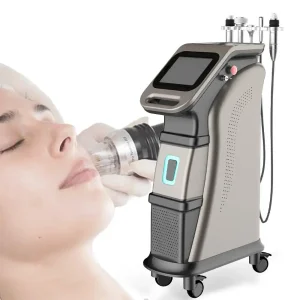
Complementary aesthetic systems including diode hair removal, multi-platform DPL, body contouring, and cold air skin cooling devices.
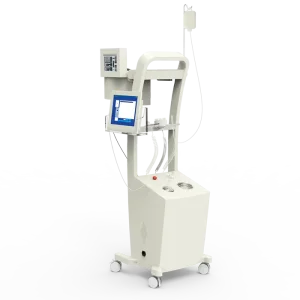
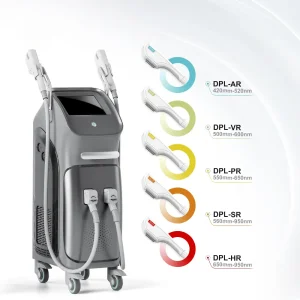
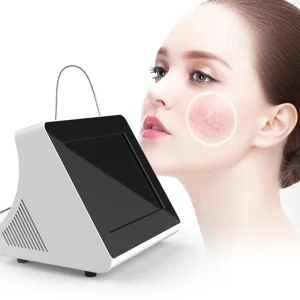

Direct technical and commercial answers compiled by senior optical engineers and international regulatory advisors.
Passive Q-switched systems use a saturable absorber dye (such as a Cr:YAG crystal wafer) inside the handpiece. They are low-cost, compact, but produce longer pulse widths (6–10ns) and lower peak energies (up to 400mJ). Active Q-switched lasers utilize an electro-optic Pockels cell with high-voltage driver circuitry. This generates ultra-short pulses (3–5ns), substantially higher peak power (>1000mJ), flat-top beam profiles, and longer component lifespans, making active systems essential for medical-grade clinics.
Shorter pulse duration directly converts photothermal energy into photoacoustic pressure waves. When the pulse duration drops below 5ns (or into the picosecond range), ink particles undergo Laser-Induced Optical Breakdown (LIOB), fracturing into micro-dust without transferring excess thermal energy to surrounding dermal tissue. This dramatically lowers the incidence of scarring, hypopigmentation, and patient discomfort.
A Gaussian profile delivers an intense central spike of energy surrounded by weak perimeter energy. The center peak can easily exceed the epidermal destruction threshold (causing pinpoint bleeding and scarring), while the edges fall below the therapeutic window. A Top-Hat profile distributes energy uniformly across the entire spot area, ensuring consistent chromophore fragmentation without micro-hotspots.
Q-Switched Nd:YAG platforms are largely consumable-free compared to RF or HIFU devices. Routine maintenance includes: changing the internal distilled water loop every 30–60 days, inspecting and replacing deionized resin filter cartridges annually, calibrating optical alignment of the articulated arm, and replacing xenon flashlamps after approximately 1.5 to 3 million shots (depending on system rating).
Established OEM suppliers maintain comprehensive export compliance dossiers. Machines ship with Medical CE certificates, EMC/LVD electrical safety testing reports, and ISO 13485 documentation. Logistics choices include DDP (Delivered Duty Paid) air freight or ocean freight with customs clearance arranged via regional logistics brokers, ensuring door-to-door delivery directly to the customer's facility.