- +86 136 8127 5833
- [email protected]
- Shunyi, Beijing, China
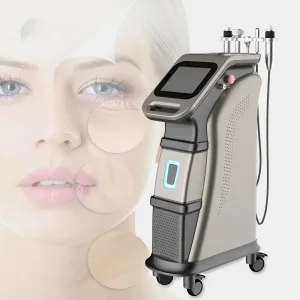
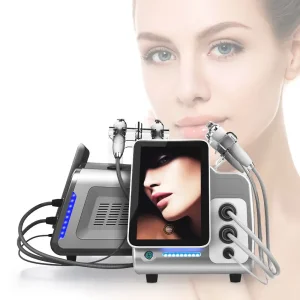

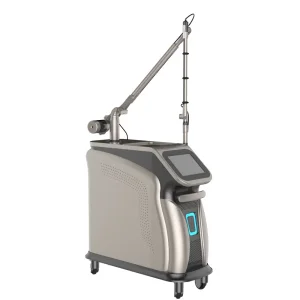
The global aesthetic and medical laser market has undergone a structural paradigm shift over the last decade. As dermatological clinics, medical spas, and equipment distributors seek high-performance laser systems with maximum return on investment (ROI), China Q-Switch Nd:YAG laser equipment suppliers and factories have evolved from low-cost assembly hubs into world-class R&D engineering powerhouses. Today, top-tier Chinese OEMs (Original Equipment Manufacturers) and ODMs (Original Design Manufacturers) leverage advanced optoelectronic crystal growth, precision optical cavity engineering, and automated robotic assembly to deliver medical-grade Q-switched Neodymium-doped Yttrium Aluminum Garnet (Nd:YAG) lasers that rigorously match European and American clinical benchmarks.
This B2B technical whitepaper provides healthcare procurement officers, clinic owners, and international medical device importers with an exhaustive evaluation matrix. We examine the photothermal physics of Q-switching, evaluate supply chain dynamics in China, detail clinical application protocols across diverse Fitzpatrick skin types, outline international regulatory compliance pathways, and address the critical technical queries required to make an informed, risk-mitigated capital acquisition.
To evaluate a supplier's engineering capability, one must understand the underlying physics of selective photothermolysis. A Q-switched (Quality-switched) Nd:YAG laser operates by inserting a variable attenuator inside the optical resonant cavity. This mechanism holds the population inversion of Nd3+ ions at an artificially high energy level before rapidly switching the cavity's Q-factor to high transparency. The result is an instantaneous, giant giant pulse of coherent light emitted in nanoseconds.
Leading Chinese medical laser factories utilize active Electro-Optic (EO) Pockels Cells (Lithium Niobate or KD*P crystals) driven by high-voltage solid-state switches. EO Q-switching enables precise pulse synchronization, pulse energies exceeding 1000mJ to 2000mJ, and razor-sharp square pulse profiles with minimal thermal trailing.
Utilized primarily in compact desktop or portable aesthetic units, passive Q-switching relies on saturable absorbers like Chromium-doped YAG crystals. While cost-effective and compact, passive systems exhibit pulse energy jitter and lower peak power compared to active EO systems.
When laser pulse width is shorter than the Thermal Relaxation Time (TRT) of target pigments (melanosomes ~50-250ns, tattoo ink particles ~10-100ns), thermal confinement converts optical energy into mechanical stress waves. Pigment granules are shattered photo-acoustically into microscopic fragments without damaging adjacent dermal collagen.
The fundamental wavelength of an Nd:YAG crystal is 1064 nm in the near-infrared spectrum. By passing the fundamental beam through a Potassium Titanyl Phosphate (KTP) non-linear crystal, the frequency is doubled to 532 nm (visible green light). Multi-platform China systems also integrate handpieces for 1320 nm (carbon peel), 585 nm (vascular), and 650 nm (green ink removal).
| Wavelength | Target Chromophore | Penetration Depth | Primary Clinical Indications |
|---|---|---|---|
| 1064 nm | Black / Blue Melanin & Tattoo Pigment | Deep Dermis (2.5 - 3.5 mm) | Nevus of Ota, dermal melasma, black/dark blue tattoo removal, skin rejuvenation, post-inflammatory hyperpigmentation (PIH). |
| 532 nm | Oxyhemoglobin & Red/Brown Melanin | Epidermis (0.5 - 1.0 mm) | Freckles, solar lentigines, café-au-lait spots, red/orange/purple tattoo removal, superficial epidermal pigmented lesions. |
| 1320 nm | Exogenous Carbon Suspension / Water | Epidermis & Upper Dermis | Non-ablative skin resurfacing, pore tightening, sebum reduction ("Black Doll" / Carbon Peel protocol). |
| 585 / 650 nm | Sky Blue / Green Synthetic Inks | Mid Dermis | Recalcitrant multi-color tattoo ink removal via dye-impregnated polymer handpieces. |
The global competitiveness of China Q-Switch Nd:YAG laser suppliers is anchored in a highly integrated, resilient manufacturing infrastructure. Unlike Western vendors who rely heavily on outsourced sub-assemblies spread across continents, Chinese laser equipment manufacturers benefit from localized high-tech clusters in Beijing (optic R&D and medical electronics), Wuhan ("Optics Valley" crystal growth and laser sources), and Shenzhen (precision CNC enclosures and power modules).
Top-tier Chinese factories manufacture optical cavities, high-voltage switching power supplies, and cooling systems in-house. By controlling the complete manufacturing process—from crystal cutting and anti-reflective coating to micro-controller PCB coding—suppliers eliminate middleman markups and ensure rigorous quality assurance at every stage.
Leading Chinese manufacturers adopt a hybrid sourcing philosophy. Critical optical components requiring maximum endurance are imported from global leaders: UK First Lamp for high-flash-count Xenon lamps (guaranteed 1,000,000+ shots), Korean Wontech-style 7-joint articulated arms for zero optical loss, and US Coherent optics.
China's mature supply chain enables unmatched flexibility for international distributors. Factories offer custom industrial design, bespoke shell colors, localized UI software supporting 20+ languages, custom firmware parameter limits, and private-label logo integration with minimal lead times (typically 7-14 days).
Not all laser suppliers operate to the same engineering standards. B2B importers and medical buyers must perform rigorous due diligence when inspecting factory specifications. Below are the key engineering parameters that separate commercial aesthetic grade units from genuine medical-grade Q-switched Nd:YAG platforms:
Standard single-rod cavities struggle to maintain energy stability at higher repetition rates (5-10 Hz). Premium factories manufacture Dual-Rod Single-Lamp or Dual-Rod Dual-Lamp optical cavities. Dual-rod systems optically double the amplification medium length, generating up to 2000mJ energy while maintaining uniform beam quality and preventing crystal thermal lensing.
Cheaper lasers project a Gaussian energy distribution (high energy spike in the center, weak at the periphery), which increases epidermal burning and scarring risk. High-end Chinese manufacturers integrate Homogenized Flat-Top Beam Optics via specialized microlens arrays, delivering uniform spot energy across the entire target area.
Laser power stability depends directly on cooling performance. Professional Chinese platforms feature closed-loop Water-to-Air Refrigeration Systems with high-flow Italian pumps, stainless steel water tanks, semiconductor TEC cooling modules, and real-time sensors monitoring water temperature, flow rate, and pressure.
A superior Q-Switched Nd:YAG platform must offer wide clinical versatility across different geographic demographics and skin tones. Chinese manufacturers pre-program intuitive clinical software interfaces calibrated for Fitzpatrick Skin Types I through VI.
Melasma Treatment (Laser Toning): Utilizing low-fluence 1064nm wavelength (0.8–1.6 J/cm2, 7–10 mm spot size, 10Hz), the laser selectively breaks down melanosomes inside melanocytes without destroying the cells. This avoids post-inflammatory hyperpigmentation (PIH), a common complication in darker Asian and Latin skin types.
Nevus of Ota & Hori’s Nevus: Deep dermal melanocytosis requires high-fluence 1064nm delivered through a 3–5mm spot size to reach the mid-to-deep dermis, triggering gradual phagocytosis over 4–8 sessions.
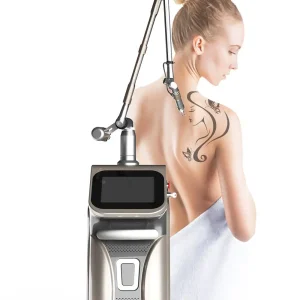
Modern multi-wavelength Q-switched systems handle full-spectrum tattoo clearance. Black, navy blue, and dark green inks respond aggressively to 1064nm, absorbing deep energy with zero epidermal ablation. Bright red, orange, and reddish-brown inks absorb strongly at 532nm. Specialized dye-pack handpieces convert 1064nm to 585nm and 650nm to tackle recalcitrant sky-blue and lime-green inks.
By applying a micro-fine medical carbon lotion over the face, the 1320nm/1064nm laser energy targets the carbon particles deposited inside pores. As the carbon explodes under photo-acoustic impact, it exfoliates dead stratum corneum, shrinks dilated sebaceous glands, stimulates Type I collagen synthesis, and controls active acne breakouts.
For international distributors, importing aesthetic lasers from China requires navigating global regulatory mandates and compliance verification. Legitimate Chinese laser manufacturers operate under internationally audited quality management systems.
Tier-1 factories maintain ISO 13485:2016 certification for medical device quality management. For European market entry, equipment must hold Medical CE (MDR 2017/745 or MDD 93/42/EEC) certificates issued by recognized Notified Bodies (such as TÜV Rheinland, TÜV SÜD, or UDEM), covering safety standards IEC 60601-1 and electrical electromagnetic compatibility IEC 60601-1-2.
Importers into the United States must ensure the manufacturer holds active FDA 510(k) clearances or device listings for specific laser product codes (e.g., GEX, General & Plastic Surgery). FDA-compliant platforms feature interlock safety switches, emergency stop buttons, key switches, and laser warning labels in strict accordance with 21 CFR 1040.10.
Reputable Chinese factories execute a 72-hour continuous electrical and optical burn-in test prior to packaging. Power meters verify that pulse energy fluctuation remains under ±2%. Optics are calibrated under class 10,000 cleanroom environments to prevent dust contamination on optics and crystals.
The aesthetic laser industry is witnessing rapid technological convergence. China's top laser laboratories are bridging the gap between traditional nanosecond Q-switched lasers and ultra-short picosecond laser systems.
By integrating electro-optic pulse slicing and seed-laser technology, next-generation Chinese platforms achieve true picosecond pulse durations (350ps to 600ps). This ultra-short pulse creates higher photo-mechanical stress with even lower fluence, dramatically accelerating tattoo clearance with half the treatment sessions.
Modern Chinese laser software now incorporates skin-type detectors and intelligent parameter recommendation algorithms. Operators select the Fitzpatrick skin type, lesion depth, and target ink color, and the system automatically calculates the optimal fluence (J/cm2), spot size (mm), and repetition rate (Hz).
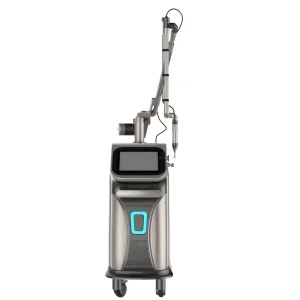
The transition from handpiece-mounted internal motors to high-precision 7-Joint Korean Articulated Arms with weight balancing counterweights allows practitioners to work effortlessly for hours. These arms preserve polar spatial alignment, maintaining uniform spot symmetry across a 360-degree range of motion.
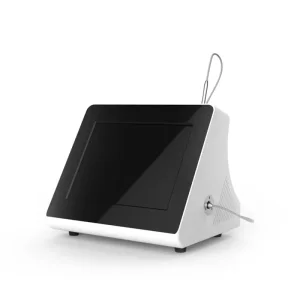
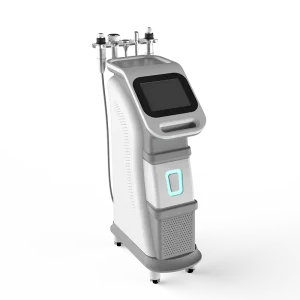
Sourcing high-performance aesthetic and medical equipment from China Q-Switch Nd:YAG laser equipment suppliers and factories provides global distributors and dermatological clinics with an unbeatable combination of clinical efficacy, optical durability, and commercial profitability. By specifying active Electro-Optic Q-switching, dual-rod optical cavities, flat-top beam delivery, and verified ISO 13485/CE compliance, healthcare enterprises can secure world-class laser technology backed by comprehensive OEM/ODM factory support.