- +86 136 8127 5833
- [email protected]
- Shunyi, Beijing, China
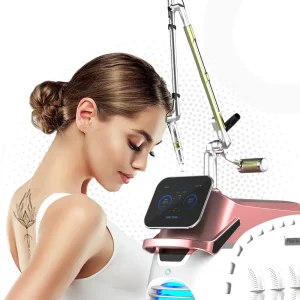
Explore top-tier medical equipment manufactured to ISO 13485 standards, featuring precision optical cavities, active electro-optic Q-switching, and multi-wavelength dermatological coverage.

The global demand for non-invasive dermatological pigment clearance and tattoo removal platforms has expanded exponentially over the past decade. Driven by shifting consumer demographics, rising aesthetic awareness, and a surge in cosmetic procedure adoption across North America, Europe, Asia-Pacific, and the Middle East, the global market for Q-switched Nd:YAG (Neodymium-doped Yttrium Aluminum Garnet) and picosecond laser platforms is projected to grow at a Compound Annual Growth Rate (CAGR) exceeding 8.4% through 2032.
In this global landscape, China has transitioned from an OEM assembly hub into the primary manufacturing epicentre of advanced solid-state optical cavities, high-voltage pulsed power systems, and precision optoelectronic assemblies. Leading Chinese laser equipment manufacturers now produce medical-grade platforms that fully comply with International Electrotechnical Commission (IEC 60825-1) standards, European Medical Device Regulations (CE MDR), and US FDA 510(k) clearances.
Epidermal and dermal hyperpigmentation—including melasma, solar lentigines, Nevus of Ota, and multi-colored tattoo ink removal—account for over 35% of all light-based clinical visits worldwide.
China's optical industrial clusters combine crystal growth (Nd:YAG, KTP, RTP), electro-optic Pockels cell fabrication, precision CNC machining, and automated optical alignment in single economic zones.
High optical efficiency and long-life xenon lamp assemblies ensure that Chinese Q-switched lasers offer an extraordinarily low cost-per-shot ratio, maxing out clinical profit margins.
Understanding the difference between high-tier medical lasers and entry-level aesthetic units requires an examination of the underlying physics: Selective Photothermolysis vs. Photo-Acoustic Chromophore Destruction.
When target pigment particles (melanosomes or tattoo ink granules) absorb optical energy, thermal expansion causes micro-explosions within the cell. If the laser pulse duration is shorter than the Thermal Relaxation Time (TRT) of the pigment particle (typically 10 to 100 nanoseconds for melanosomes, and 1 to 10 nanoseconds for tattoo particles), the dominant stress wave mechanism is photo-acoustic stress fracture rather than pure thermal heating. This pulverizes pigment into micro-debris that is easily phagocytosed by macrophages and drained through the lymphatic system, while sparing surrounding healthy epidermal structures.
Industrial manufacturers utilize two primary mechanisms for Q-switching:
| Specification Parameter | Active EO Q-Switched Nd:YAG | Picosecond Laser Platform | Passive Handpiece Q-Switch |
|---|---|---|---|
| Pulse Duration | 3 ns – 6 ns | 300 ps – 800 ps | 15 ns – 30 ns |
| Peak Power (MW) | 200 MW – 500 MW | 1,000 MW – 2,000 MW | 10 MW – 30 MW |
| Dominant Mechanism | Photo-Acoustic + Photothermal | Pure Photo-Acoustic Shockwave | Photothermal Dominant |
| Beam Spatial Profile | Flat-Top (Top-Hat) Matrix | Flat-Top / MLA Array | Gaussian (Hot-Spot Risk) |
| Target Indications | Tattoos, Melasma, Nevus, Carbon Peel | Complex Tattoos, Refractory PIH | Superficial Freckles, Carbon Soft Peel |
| Optical Delivery | 7-Joint Articulated Arm (Korea/Japan) | 7-Joint Articulated Arm with Vacuum Beam | Direct Handpiece Cable |
A non-negotiable standard for professional dermatological applications is the spatial uniformity of the optical beam. Cheap Gaussian-beam Q-switch lasers concentrate over 70% of energy at the center of the spot, creating localized epidermal tissue charring, pinpoint bleeding, and high risk of Post-Inflammatory Hyperpigmentation (PIH). Modern OEM manufacturers in China employ diffractive homogenizers and micro-lens arrays to reshape the beam into a pristine Top-Hat profile, distributing identical energy density (J/cm²) across every square millimeter of the light spot.
The aesthetic electro-optics sector is undergoing a rapid evolution characterized by pulse-width contraction, multi-wavelength optical tuning, and AI-driven clinical parameters.
Leading manufacturers are combining true picosecond pulse generators (450ps) with nanosecond Q-switched drivers within a single optical optical cavity. This dual-domain capability allows clinicians to shatter heavy ink density with nanosecond thermal shock first, then obliterate remaining micro-pigments with picosecond photo-acoustic shockwaves in subsequent sessions.
By attaching Diffractive Lens Arrays (DLA) or Micro-Lens Arrays (MLA) to the 1064nm wavelength handpiece, the laser beam is split into hundreds of high-energy focal dots. This creates intra-epidermal cavities (LIOB) without breaking the stratum corneum, triggering intense dermal collagen remodelling, acne scar reconstruction, and melasma clearance with virtually zero patient downtime.
While flashlamp-pumped Nd:YAG lasers remain the workhorse of the industry due to low upfront cost, solid-state diode-pumped Q-switched lasers are gaining traction. DPSS offers up to 2 billion pulse lifetimes (vs. 10-20 million for flashlamps), eliminates water cooling pump maintenance, and drastically reduces physical machine footprint.
Smart laser consoles integrated with skin spectral impedance scanners automatically assess Fitzpatrick skin type, underlying epidermal melanin density, and lesion depth. The onboard AI auto-calculates safest spot size (mm), fluence (J/cm²), and repetition rate (Hz) to eliminate human operator error.
The operational versatility of a high-power Q-switched laser platform spans medical dermatology, aesthetic centers, and tattoo removal studios. Below are standardized clinical treatment protocols established across global medical aesthetic practices:
Indications: Solar lentigines, ephelides (freckles), seborrheic keratosis.
Wavelength: 532nm (KTP Frequency-Doubled).
Clinical Goal: Direct photothermal destruction of superficial melanin. Instant whitening (frosting) followed by micro-crust formation that sloughs off in 5-7 days.
Indications: Nevus of Ota, Hori's Nevus, Refractory Melasma.
Wavelength: 1064nm (Sub-thermolytic Laser Toning).
Clinical Goal: Low-fluence, large spot size (7-10mm), high Hz sub-nanosecond pulses fracture deep dermal melanosomes without damaging the basement membrane, avoiding PIH in Fitzpatrick Types III-VI.
Indications: Professional, amateur, and traumatic tattoos.
Wavelengths: 1064nm (Black/Blue ink), 532nm (Red/Orange/Purple ink), Optional 585nm/650nm Dye Handpieces (Green/Sky Blue ink).
Clinical Goal: Photo-acoustic explosion shattering heavy mineral pigments.
For international medical distributors, aesthetic chain clinics, and private-label brand owners, partnering directly with experienced Chinese manufacturers provides unmatched strategic advantages. From tailored mechanical industrial design to modular optical engineering, top-tier factories deliver complete, turnkey manufacturing solutions.
Full CE MDR technical files, IEC 60825-1 laser safety test reports, EMC/LVD electrical certifications, and FDA 510(k) supporting documentation provided for fast local clearance.
Complete OEM customization: sheet metal/ABS chassis redesign, custom pantone color matching, multi-lingual GUI software development, and logo silkscreening.
Robust shock-proof flight-case packaging, real-time express optical part dispatches, and guaranteed 10+ years spare part inventory life cycle (power boards, lamps, optics).
In-depth technical and commercial answers directly from our senior optical R&D engineers and global export directors.
An electro-optic (active) Q-switched laser uses a voltage-controlled Pockels Cell crystal inside the main optical resonator to release accumulated optical energy instantaneously. This produces true high-energy pulses (up to 1200mJ) with ultra-short pulse durations (<6ns) and stable beam quality. Passive Q-switched lasers rely on a saturable absorber crystal inside the handpiece, yielding lower energy (200-400mJ), wider pulse durations (15-30ns), and significant heat accumulation during extended operation.
Top manufacturers utilize imported optical lens sets and custom Diffractive Optical Elements (DOE) combined with precision-aligned optical cavities. Instead of sending an unconditioned Gaussian light profile down the articulated arm, beam homogenizers reshape the spatial energy intensity into a flat-top matrix, ensuring equal energy delivery across the entire spot diameter without central hot-spots.
The 1064nm wavelength penetrates significantly deeper into the dermis and exhibits lower absorption by epidermal melanin compared to 532nm. This allows 1064nm laser energy to reach deep melanosomes or dermal ink while preserving the epidermis, making it exponentially safer for Fitzpatrick Skin Types III through VI and drastically reducing the risk of thermal blistering or Post-Inflammatory Hyperpigmentation (PIH).
Routine maintenance includes replacing internal deionized (DI) water filters every 3-6 months, using pure distilled/deionized water in the cooling loop, and periodically checking mirror alignment inside the 7-joint articulated arm. Xenon flashlamps typically require replacement after 10 to 20 million pulses depending on operating energy levels.
Yes, professional OEM/ODM manufacturers offer extensive customization. This includes custom startup screens, brand logos silkscreened onto machine casings, user interface (UI) design tailoring, multi-language system options (English, Spanish, German, French, Arabic, Russian), and specialized pre-programmed clinical protocol modes.
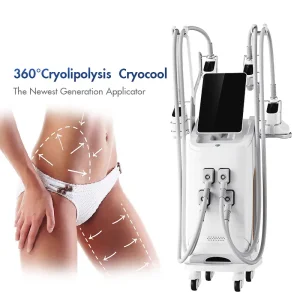
Discover our comprehensive range of medical aesthetic solutions including Microneedling RF, Cryolipolysis fat freezing, Diode Lasers, and CO2 Fractional Resurfacing systems.