- +86 136 8127 5833
- [email protected]
- Shunyi, Beijing, China
Directly sourced from our Beijing manufacturing plant. Inspected for peak energy stability, pulse duration precision, and zero-downtime operation.
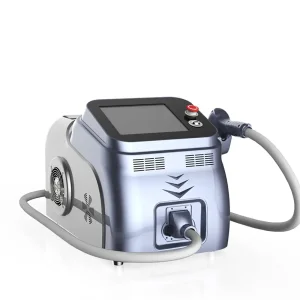
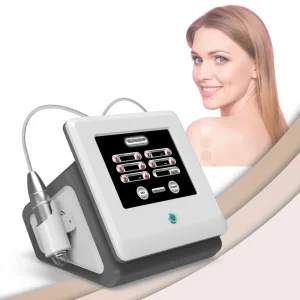
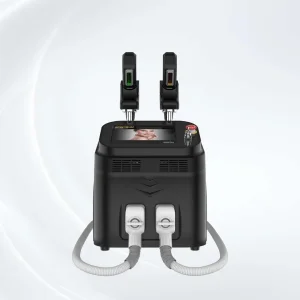
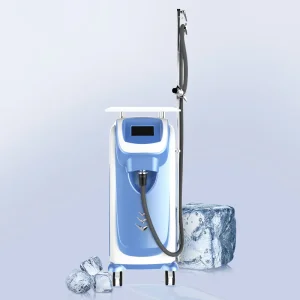
Understanding why picosecond photomechanical disruption outperforms legacy Q-switched nanosecond laser thermal ablation for dermatological and industrial applications.
Traditional aesthetic lasers rely on selective photothermolysis, delivering light energy over nanosecond pulse durations ($10^{-9}$ seconds). This mechanism generates localized heat to coagulate ink particles or melanin. However, because the energy delivery time exceeds the thermal relaxation time of microscopic target particles, thermal energy bleeds into surrounding healthy tissue, elevating risk of post-inflammatory hyperpigmentation (PIH) and tissue scarring.
In contrast, modern China picosecond laser devices operate in the picosecond timeframe ($10^{-12}$ seconds). By compressing multi-megawatt peak optical power into durations below 450 picoseconds, the energy delivery occurs faster than the target chromophore's acoustic relaxation time. This induces a pure photo-acoustic shockwave, pulverizing ink and endogenous pigment into dust-like micro-particles that are rapidly cleared by macrophage phagocytosis without collateral thermal damage.
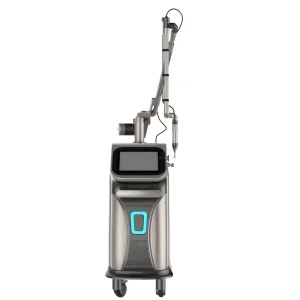
The hallmark of a high-end medical-grade picosecond platform lies in maintaining pulse width stability under continuous high-frequency discharge. Beijing SANO Laser integrates solid-state electro-optic active Q-switching coupled with customized high-voltage pulse power generators.
Our engineered systems achieve a true sub-nanosecond pulse envelope (down to 375–450ps at 1064nm and 532nm), yielding peak power levels exceeding 1.5 to 2.0 Gigawatts. This guarantees consistent photomechanical fracturing across all spot sizes (2mm to 10mm continuous zoom), preventing laser energy decay during heavy clinical schedules.
Microscopic ink pigments in tattoos measure approximately 10 to 100 nanometers in diameter, corresponding to a Thermal Relaxation Time (TRT) of less than 1 nanosecond. Nanosecond lasers (5–10ns) heat the surrounding dermis before heating the center of the pigment particle. Picosecond pulse width matches the TRT of micro-pigments, concentrating 95% of optical energy into stress confinement, achieving complete pigment fragmentation in 40% fewer clinical treatment sessions.
Analysing market demand drivers across North America, Europe, Asia-Pacific, and Latin America for advanced pigment clearance and industrial ultra-precision processing.
Global demand for non-invasive cosmetic treatments has accelerated dramatically. Picosecond platforms have evolved from simple tattoo removal tools into primary dermatological workhorses for melasma, Nevus of Ota, freckles, solar lentigines, and acne scar resurfacing via Diffractive Lens Array (DLA) Focus Handpieces.
Beyond aesthetic medicine, industrial ultra-short pulse (USP) picosecond lasers are expanding into semiconductor wafer dicing, glass cutting for consumer electronics, thin-film solar cell scribing, and medical device micro-drilling where zero heat-affected zone (HAZ) is mandatory.
Global buyers now demand strict compliance. Importers require FDA 510(k) clearances, EU MDR certification, ISO 13485 manufacturing audits, and full technical documentation files to clear local medical device registration protocols smoothly.
How Beijing SANO Laser leverages vertical supply chain integration, rigorous optical testing, and component sourcing to deliver enterprise-grade performance.
We source premium 7-joint optical articulated transmission arms from South Korea, offering 360-degree rotation, minimal polarization loss, and over 92% light transmission efficiency for exact energy delivery at the handpiece.
Our engineering architecture utilizes dual Nd:YAG purple laser crystal rods connected in series, powered by double pulse Xenon flash lamps made in the UK. This structure doubles peak power without overheating the laser cavity.
Incorporating custom optical lens homogenizers, SANO picosecond systems convert standard Gaussian energy beams into uniform Flat-Top beam profiles, eliminating central hot spots and preventing epidermal blistering.
Every device incorporates real-time optical sensor feedback within the arm joint. The central processing unit measures exact energy Output (mJ) at the tip before each shot, auto-calibrating against lamp aging.
A comprehensive technical breakdown for distributors and clinic directors evaluating Beijing SANO Laser platform capabilities.
| Performance Parameter | SANO Professional Picosecond Series | Standard Q-Switched Nanosecond Laser | Clinical Advantage / Benefit |
|---|---|---|---|
| Pulse Duration | 375 ps – 500 ps (Real Picosecond) | 5 ns – 10 ns (Nanosecond) | Pure photomechanical impact, 80% less thermal damage to skin. |
| Wavelength Range | 1064nm, 532nm (Optional 585nm, 650nm, 755nm DLA) | 1064nm, 532nm | Clearance of stubborn green, blue, yellow, and red inks plus melasma. |
| Peak Power Output | 1.5 Gigawatts – 2.0 Gigawatts | 0.2 Gigawatts – 0.4 Gigawatts | Shatters tattoo ink into fine micro-dust for rapid lymphatic drainage. |
| Beam Delivery System | South Korean 7-Joint Articulated Arm | Domestic 5-Joint Arm or Handpiece Laser Rod | Zero optical alignment loss, effortless 360° clinical positioning. |
| Spot Size Adjustment | 2 mm – 10 mm Continuous Zoom | Fixed Spot Tips (3mm, 5mm, 7mm) | Operator can scale spot size without recalibrating handpiece tips. |
| Cooling System | Closed-loop Water + Semiconductor + Air Chiller | Basic Radiator + Fan | Continuous 24-hour non-stop clinic operation without thermal shutdown. |
| Expected Treatment Sessions | 3 to 5 Sessions (Tattoo / Pigment) | 8 to 12 Sessions (Tattoo / Pigment) | Doubles clinic capacity, higher customer satisfaction and ROI. |
From medical dermatology suites to precision industrial laboratories, see how picosecond laser devices are deployed across key international operations.
Treating recalcitrant melasma, post-inflammatory hyperpigmentation, Nevus of Ota, freckles, and age spots on dark skin tones (Fitzpatrick IV–VI) requires low fluence photomechanical stress. The 1064nm wavelength preserves epidermal integrity while fragmenting dermal melanin clusters safely.
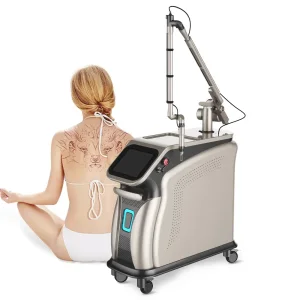
Combining 1064nm (black, blue, dark inks), 532nm (red, orange), 585nm (sky blue), and 650nm (green), picosecond energy shatters complex multi-layer tattoo pigments. Clinical trials confirm high clearance rates even on previously treated, scar-prone ink sites.
Utilizing a Diffractive Lens Array (Focus Lens), the picosecond beam creates Laser-Induced Optical Breakdown (LIOB) in the dermis. This triggers localized cellular signaling, stimulating collagen synthesis and elastin remodeling to smooth acne scars and fine lines without epidermal damage.
Essential criteria medical device distributors and hospital procurement officers must evaluate before selecting a China picosecond laser supplier.
A true picosecond system requires an industrial OPT power supply rated at a minimum of 2000W to 3000W with high-capacitance energy storage banks. Low-cost manufacturers often use underpowered 800W power supplies, leading to severe pulse energy decay when operating at 5Hz to 10Hz firing speeds. Always demand oscilloscope pulse profile documentation from your OEM manufacturer.
Verify that your supplier utilizes certified optical components: UK-manufactured Xenon lamps rated for >1,000,000 flashes, premium Nd:YAG laser crystals with high damage thresholds, and optical lenses with antireflective coatings optimized for 1064nm/532nm wavelengths to maintain optical energy density.
Medical clinics operating 10 hours a day cannot afford thermal shutdown alarms. SANO picosecond platforms incorporate stainless steel water tanks, high-flow Italian water pumps, and TEC semiconductor cooling blocks that keep circulating water temperatures strictly between 20°C and 25°C even during non-stop laser emission.
Select a factory with dedicated engineer-led after-sales channels. SANO provides 2-year full system warranties, modular plug-and-play wiring harnesses for easy field service, fast DHL/FedEx spare parts dispatch, and step-by-step video troubleshooting directly with assembly engineers.
How Beijing SANO Laser is shaping the next era of smart medical devices through hardware innovation, sub-picosecond research, and software intelligence.
Next-generation R&D aims to compress laser pulse widths down to 200–300 picoseconds. Pushing pulse duration closer to 100ps drastically enhances photomechanical shockwave intensity while reducing required fluence levels, establishing unprecedented safety for delicate skin types.
Integrating real-time skin melanin index sensors into the laser handpiece tip allows auto-adjustment of laser fluence, spot size, and repetition rates based on individual patient skin impedance, eliminating operator estimation errors and elevating clinical standardization.
Emerging developments in high-power flexible optical fibers promise to replace traditional articulated arms in select compact portable picosecond systems, dramatically reducing shipping volumes and lowering equipment maintenance costs for mobile medspa operators.
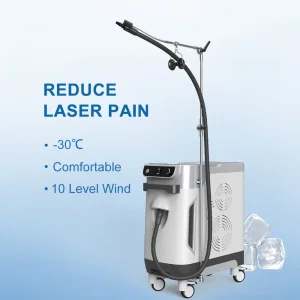
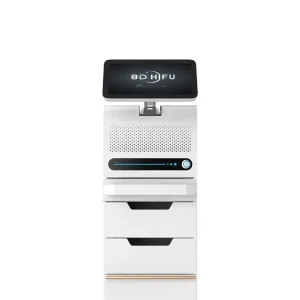
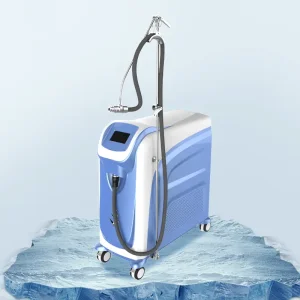
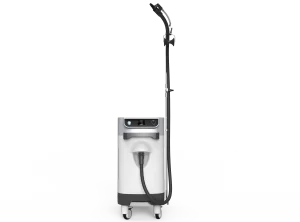
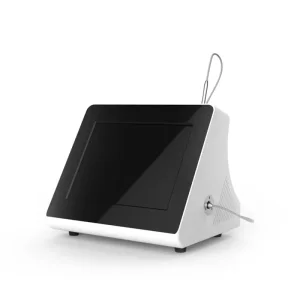
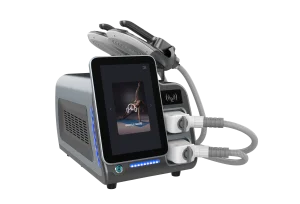
Complementary medical aesthetic equipment engineered for clinic optimization, patient comfort, and maximum return on investment.
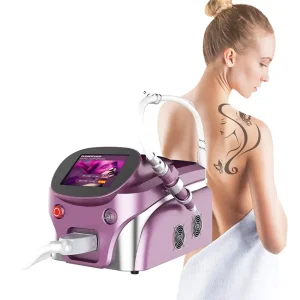
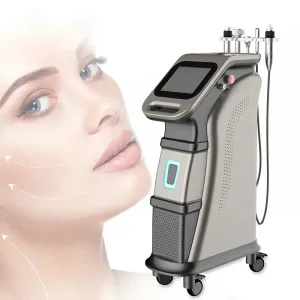
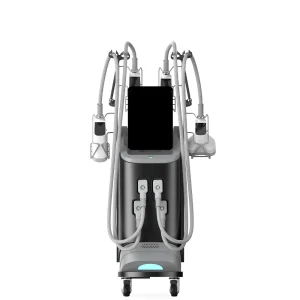
Direct technical, commercial, and operational answers from Beijing SANO Laser senior optical engineering desk.
The main difference lies in pulse duration and mechanism of action. Traditional Q-Switched lasers fire pulses in the nanosecond range (5–10ns), destroying pigment mainly through photothermal action (heat). Picosecond lasers emit pulses in the picosecond range (375–500ps), which is faster than the thermal relaxation time of skin pigment. This generates an intense photomechanical shockwave that shatters pigment particles into microscopic dust-like fragments, allowing faster clearance by the immune system with significantly lower risk of thermal burns or hyperpigmentation.
Beijing SANO Laser combines over 15 years of optical R&D experience with China's complete electronic and precision mechanical supply chain. We use top-tier global components—such as South Korean 7-joint articulated arms, UK Xenon lamps, and German optical lenses—while assembling machines under strict ISO 13485 quality control. This allows us to offer world-class laser stability, higher peak power, and complete OEM/ODM customization at a competitive manufacturing cost.
Our standard picosecond platform includes 1064nm (for black, dark blue, brown inks and deep dermal pigments like Nevus of Ota) and 532nm (for red, orange, reddish-brown inks and superficial epidermal freckles). We also offer optional dye handpieces for 585nm (sky blue ink) and 650nm (green ink), as well as a 755nm Honeycomb Focus Lens Array for non-ablative skin rejuvenation and acne scar treatment.
We back every machine with a 2-year factory warranty. If maintenance is required, our engineering team provides 24-hour remote video diagnostics and dispatches free replacement parts via fast international express delivery. We also provide comprehensive operator training manuals, recommended clinical treatment protocols, and custom video training modules to certify your clinical staff.
Yes. As a direct manufacturer, we offer full OEM/ODM options including custom machine shell industrial design, custom exterior paint colors, localized software touch-screen UI interfaces, embedded company logos, custom hardware parameter presets, and branded packaging materials.
Standard lasers often produce a "Gaussian" energy beam with a intense central peak and weak edges. The central hot spot can cause epidermal tissue hot spots, bleeding, and scarring, while the weak edges fail to break down pigment. SANO's flat-top beam optical system homogenizes the energy evenly across the entire spot area, ensuring consistent pigment destruction with maximum patient comfort and safety.