- +86 136 8127 5833
- [email protected]
- Shunyi, Beijing, China
Direct-from-factory laser platforms, skin cooling systems, and body contouring technologies engineered to international medical standards.
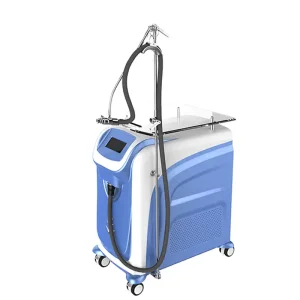
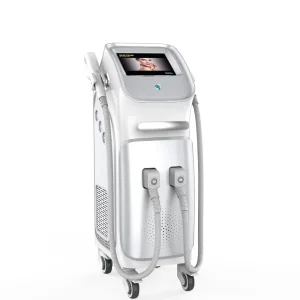
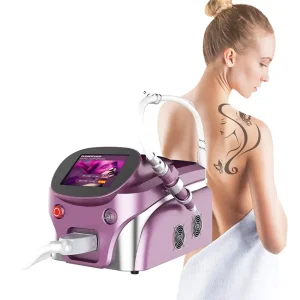

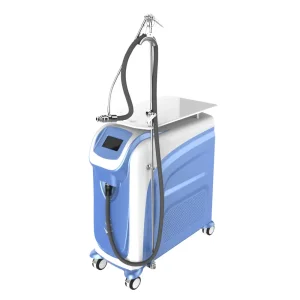
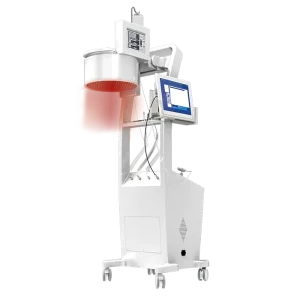
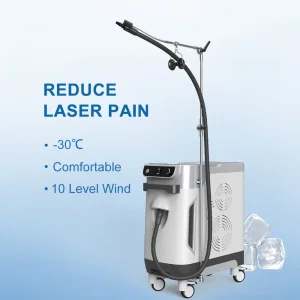
Analyzing the shift in global aesthetic technology purchasing from traditional Q-switched nanosecond systems to ultra-short pulse picosecond Nd:YAG and Alexandrite platforms.
The global dermatological and aesthetic laser market is experiencing a profound structural transformation. Commercial procurement managers across North America, Europe, the Middle East, and Asia-Pacific are increasingly prioritizing medical-grade picosecond platforms built in China. This movement is driven by two major market catalysts: the rapid expansion of body modification reversal services and the economic necessity of lowering the total cost of ownership (TCO) without compromising clinical efficacy.
Historical clinical reliance on nanosecond Q-switched lasers (operating at 3–10 nanoseconds) frequently led to incomplete ink clearance, extensive thermal tissue damage, elevated risk of post-inflammatory hyperpigmentation (PIH), and painful recovery cycles requiring up to 10–14 separate sessions. In contrast, modern picosecond systems output pulse widths measured in trillionths of a second (375 to 600 picoseconds), transforming the primary ink disruption mechanism from a photothermal process into a high-efficiency photoacoustic shockwave process.
China has solidified its position as the global manufacturing engine for high-end electro-optical aesthetic medical equipment. Advanced supply chain integration in key industrial zones like Beijing enables certified factories to manufacture fully compliant, highly durable laser platforms at a fraction of Western capital expenditure.
For international B2B buyers—including medical spa chains, regional equipment distributors, hospital procurement boards, and private labeling OEM partners—sourcing directly from an established China pico machine manufacturer unlocks substantial operational leverage:
A detailed technical examination of laser cavity mechanics, beam delivery optics, wavelength conversion crystals, and pulse timing electronics within industrial-grade picosecond systems.
At the heart of a high-performance China pico machine is an active electro-optic (EO) Pockels cell Q-switch paired with a high-gain Nd:YAG laser crystal. Dual-lamp dual-rod optical resonators maintain uniform energy extraction across high repetition rates (1–10 Hz), maintaining pulse energy stability under continuous commercial load.
Imported South Korean or precision-engineered domestic 7-joint articulated arms feature coated copper mirrors providing >95% transmission efficiency. The counterbalanced rotational joints allow precise manual maneuvering by clinicians without spot distortion, mechanical drift, or optical energy loss.
Utilizing non-linear KTP (Potassium Titanyl Phosphate) crystal modules, the fundamental 1064nm infrared beam is frequency-doubled to 532nm visible green light. Optional dye-pumped handpieces extend capability to 585nm (sky blue inks) and 650nm (green inks), creating a universal spectrum solution.
Understanding how medical aesthetic laser platforms evolved from broad photothermal destruction to hyper-focused photoacoustic shockwave disruption over three technical generations.
Depended heavily on photothermal diffusion. High treatment pain, extensive tissue ablation, slow healing times, and high risk of hypertrophic scarring across Fitzpatrick skin types III–VI.
Pulse durations between 3–10ns introduced preliminary photomechanical effect. Reduced scarring, but limited efficiency on stubborn, dark, or multi-colored professional ink formulations.
Sub-nanosecond pulses (375ps–600ps) yield ultra-high peak power density. Pure photoacoustic shockwave shatters pigment into microscopic particles without epidermal damage.
Emerging femtosecond developments combined with active Micro-Lens Array (MLA) honeycomb optics create Laser-Induced Optical Breakdown (LIOB) for combined ink removal and dermal remodeling.
A rigorous scientific guide for medical operators and clinic directors on matching laser wavelengths to ink chemistry and melanin depth profiles.
| Wavelength (nm) | Target Chromophore / Ink Color | Primary Clinical Indications | Penetration Depth | Epidermal Safety Profile |
|---|---|---|---|---|
| 1064 nm Nd:YAG | Black, Dark Blue, Dark Brown Pigment | Full tattoo removal, Nevus of Ota, dermal melasma, carbon peel toning | Deep Dermis (2.5mm - 3.5mm) | Highest safety on Fitzpatrick IV–VI (minimal epidermal melanin absorption) |
| 532 nm KTP | Red, Orange, Yellow, Purple Ink | Epidermal freckles, lentigines, solar spots, superficial red ink removal | Superficial Epidermis (0.5mm - 1.0mm) | Requires precise cooling on Fitzpatrick skin types III–V to avoid PIH |
| 585 nm (Dye Handpiece) | Sky Blue, Bright Green, Violet Pigments | Refractory colored tattoos, vascular lesions, telangiectasias | Mid-Dermis (1.2mm - 1.8mm) | Moderate absorption; controlled pulse delivery required |
| 650 nm (Dye Handpiece) | Green, Lime, Emerald Ink Pigments | Stubborn green ink clearance where 1064/532nm fail to absorb | Mid-to-Deep Dermis (1.5mm - 2.2mm) | Targeted selective photothermal-shock transition |
| MLA Honeycomb (1064/532) | Sub-dermal Collagen & Micro-cavities | Acne scar resurfacing, pore tightening, fine line reduction, Pico Toning | Fractional Dermal Focus | Non-ablative; zero stratum corneum disruption; 2-hour erythema recovery |
When high peak power density (GW/cm²) is deposited within a sub-nanosecond pulse, thermal expansion within the tattoo ink crystal is instantaneous. This generates a stress wave exceeding the mechanical tensile strength of the pigment particle, shattering it into dust-like fragments (~10-50 nanometers in diameter).
By splitting the uniform beam into hundreds of high-density micro-spots, the MLA handpiece creates localized areas of Laser-Induced Optical Breakdown (LIOB) in the dermis. This triggers a robust wound-healing cascade, stimulating new collagen and elastin production without damaging the top layer of skin.
Once pigment particles are reduced to microscopic debris via photoacoustic shockwave, the body's lymphatic system mobilizes macrophages to engulf and digest the ink fragments. Over a 4-to-6-week post-treatment window, the ink is permanently cleared naturally through lymphatic drainage.
A transparent look at the rigorous manufacturing protocols, quality assurance steps, and customization frameworks of leading Beijing aesthetic equipment factories.
Top-tier China pico machine factories operate ISO 13485-certified cleanroom assembly lines. Every platform undergoes a systematic 72-hour continuous burn-in test regimen prior to international crate packing:
For distributors looking to introduce a proprietary brand into their regional market, factory OEM/ODM programs deliver comprehensive customization options:
Ensuring operational continuity, clinical safety, and rapid technical response for medical aesthetic practitioners worldwide.
Every commercial system is backed by a full 24-month factory warranty covering main optical components, high-voltage power supplies, internal pumps, and system control boards with zero deductible fees.
Direct access to Senior Electro-Optical Engineers for real-time remote troubleshooting, diagnostic log evaluation, and parameter setting adjustments over encrypted video channels.
Essential modular spare parts (Pockels cells, flashlamps, water filters, flow sensors) are stocked in international fulfillment hubs to ensure fast delivery within 3–5 business days globally.
In-depth technical and operational answers to common questions regarding pico machine procurement, technical performance, and maintenance.
Explore additional high-performance body sculpting, IPL hair removal, and laser rejuvenation systems manufactured directly in our factory.