- +86 136 8127 5833
- [email protected]
- Shunyi, Beijing, China
Engineered to ISO13485 standards. Direct factory supply with customizable configurations, certified power outputs, and advanced thermal management systems.
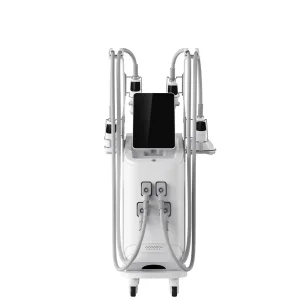
Analyzing market shifts, target demographics, and why medical aesthetic clinics are pivoting toward direct Chinese OEM manufacturing partnerships for fat freezing platforms.
The global medical aesthetics sector has experienced a profound structural transformation over the past decade. Surgical procedures such as traditional suction-assisted lipectomy (liposuction) are increasingly being supplemented—and in many patient cohorts, superseded—by non-invasive localized adipose reduction technologies. Among these modalities, Cryolipolysis (commonly referred to as fat freezing) remains the gold standard in non-surgical targeted lipolysis.
Driven by minimal patient downtime, zero requirement for general anesthesia, and scientifically validated apoptotic mechanisms, cryolipolysis devices have become essential equipment for Medical Spas (MedSpas), plastic surgery centers, and dermatology practices worldwide. However, the commercial landscape is bifurcated: established Western brand names impose exorbitant capital expenditures (CAPEX) alongside restrictive per-treatment consumable transducer fees (gating microchips). This dynamic has accelerated international interest in high-tier Chinese aesthetic equipment manufacturers capable of engineering clinical-grade cryolipolysis systems at a fraction of the total cost of ownership (TCO).
Deconstructing the cost factors from base OEM desktop units ($1,800) to multi-handle 360° medical station platforms ($12,000+).
When evaluating China fat freezing machine cost structures, B2B procurement managers and clinic directors must understand that price differentials reflect critical internal component engineering, thermal dissipation capabilities, and safety hardware design:
The true cost of a cryolipolysis system extends far beyond the initial invoice price. Western legacy manufacturers utilize a "razor-and-blade" monetization scheme, requiring clinics to purchase proprietary freeze cards or single-use gel pads containing RFID security chips that force an ongoing fee per treatment cycle ($150 - $250 per patient session).
This stark 98% operational expense differential enables clinics partnering with Chinese OEM manufacturers to offer competitive treatment rates to patients while maintaining gross operating margins exceeding 85%.
| Equipment Grade | Typical FOB Price (USD) | Applicator Tech & Capacity | Peltier Cooling Specs | Target Operational Scenario |
|---|---|---|---|---|
| Tier 3: Entry-Level Desktop / Portable | $1,500 – $2,800 | 1 to 2 Handles (Dual-Plate Cooling) | Standard -5°C to -9°C limit, single pump | Small beauty salons, mobile aesthetic providers |
| Tier 2: Commercial Multi-Handle Vertical | $3,200 – $6,500 | 2 to 4 Handles (Hybrid 360° Tech) | Japanese Peltier, -11°C, dual water circuit | High-volume MedSpas, regional aesthetic chains |
| Tier 1: Clinical Medical-Grade Platform | $7,000 – $12,500 | 4 to 5 Handles simultaneously active + Chin cup | Precision thermistors (-14°C), quad pumps, RF/EMS combo | Dermatology clinics, surgical centers, OEM distributors |
Understanding selective adipocyte apoptosis, heat-exchange thermodynamics, and hardware safety parameters.
Adipocytes (fat cells) exhibit heightened vulnerability to thermal extraction compared to surrounding dermal microvasculature, peripheral nerves, and muscle tissue. Cryolipolysis operates on controlled local thermal cooling (typically between +5°C and -11°C), triggering crystallization of intracellular lipids within subcutaneous fat deposits.
This crystallization initiates localized paniculitis followed by programmed cell death (apoptosis). Over the subsequent 4 to 12 weeks, the body's lymphatic and macrophage systems phagocytize and transport the lipid debris out of the organism, resulting in a persistent reduction of subcutaneous fat layer thickness by 20% to 28% per application session.
Legacy cryolipolysis equipment relied on two opposing cooling plates embedded within an applicator cup. This left "dead zones" along the sides, resulting in uneven fat reduction, longer treatment times, and potential post-treatment ridging (unnatural contours).
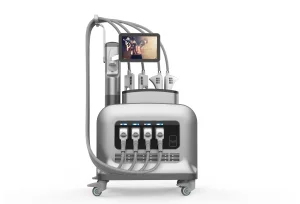
Modern Chinese platforms engineered by leaders like SANO Laser deploy 100% full-surface 360° surround cooling cups. The entire inner wall of the applicator—including contoured contour zones—delivers uniform cryogenic thermal dissipation. This increases effective coverage by over 45%, shortens session duration from 60 minutes to 35-45 minutes, and delivers smoother aesthetic transitions.
To prevent tissue damage while accelerating lipid crystallization, Tier-1 Chinese platforms incorporate dynamic thermal cycling (Heating pre-treatment followed by Rapid Freezing). Elevating tissue temperature to +37°C to +42°C for 3 minutes before dropping to -10°C hyper-sensitizes lipid membranes and increases localized micro-circulation before vacuum induction.
Simultaneously, medical-grade anti-freeze membranes impregnated with high-viscosity thermal protection fluids buffer the epidermis. Coupled with continuous water-flow rate sensors, pump pressure meters, and contact skin sensors, operator safety is guaranteed across all Fitzpatrick skin types.
How international medical importers, distributors, and clinic networks navigate local regulatory barriers when importing aesthetic platforms from China.
Navigating the North American market requires adherence to strict electrical safety and medical device registrations. Importing high-end fat freezing machinery from China involves ensuring units possess UL/ETL electrical safety testing compliance, ISO13485 manufacturing facility certification, and appropriate FDA 510(k) clearance pathways for medical-grade devices, or cosmetic classification for non-medical MedSpa equipment.
North American clinics heavily prioritize ergonomic dual-chin applicators and rapid applicator swapping capabilities to cater to high-density urban clienteles seeking lunch-hour body sculpting treatments.
Under the EU Medical Device Regulation (MDR 2017/745), aesthetic devices with medical intent undergo rigorous scrutiny. Leading Beijing manufacturers like SANO Laser supply technical dossiers supporting CE Marking (Low Voltage Directive 2014/35/EU and Electromagnetic Compatibility 2014/30/EU).
European clinical practitioners demand exact real-time temperature feedback monitors displayable on-screen, along with eco-friendly closed-loop liquid refrigeration systems that comply with EU fluorinated greenhouse gas regulations.
In high-growth aesthetic hubs across Brazil, Colombia, UAE, and Saudi Arabia, client demand per clinic is exceptionally high. Machines must operate continuously in high-ambient temperature room settings without thermal shutdown.
Distributors in these regions prioritize systems equipped with dual independent refrigeration systems (two compressors and separate water loops per handpiece pair) to allow four applicators to run concurrently at -11°C for 10 to 12 hours straight daily.
In competitive markets across Southeast Asia and Australia, low barrier to entry and rapid capital payback are vital. By sourcing directly from verified China manufacturers, new aesthetic startups establish body contouring suites with minimal initial outlay, offering packages at price points that attract younger consumer demographics while retaining profitability.
From initial CAD shell design and PCB micro-soldering to 72-hour burn-in stress testing and global engineer dispatch.
For regional distributors building their proprietary brand identity, Chinese manufacturers offer comprehensive ODM services. This includes custom ABS injection mold chassis styling, bespoke acrylic colorways, company logo silk-screening, and tailor-made GUI touchscreen interfaces in over 15 native languages with custom preset treatment parameters.
Premier medical equipment plants enforce multi-stage quality assurance: component incoming inspection (IQC), line process control (IPQC), and final testing (FQC). Cryolipolysis units undergo a mandatory 72-hour continuous thermal stress test, cycling vacuum pressure and sub-zero temperatures to detect any potential micro-leaks in handpiece coolant seals.
To eliminate international downtime, Tier-1 manufacturers maintain modular spare parts dispatch hubs (quick-swap modular pumps, power supplies, and pre-calibrated handpieces). Video-based engineer support, 24-hour remote diagnostic channels, and comprehensive operator training certification programs guarantee seamless operational continuity for clinics worldwide.
Previewing upcoming technological paradigms that will redefine body contouring efficiency over the next decade.
Integration of real-time bioelectrical impedance sensors directly into applicator rims. The machine automatically measures target subcutaneous fat density and thickness, algorithmically calculating optimal pulse vacuum frequencies and exact target cooling curves per individual patient.
Combining 360° Cryolipolysis with concurrent Low-Level Laser Therapy (LLLT at 635nm) and targeted Radiofrequency (RF) skin tightening inside a single applicator head to simultaneously freeze fat, liquify residual lipids, and prevent post-reduction skin laxity.
Cloud-connected aesthetic platforms providing clinic owners with automated operational metrics, shot-count tracking, predictive component maintenance alerts, and seamless remote software parameter updates directly from the engineering factory desk.
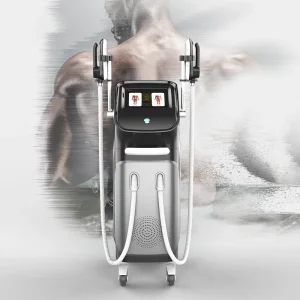
Integrated work-stations running synchronized sub-zero localized fat crystallization alongside Focused High-Intensity Electromagnetic muscle hypertrophy stimulation, achieving dual fat elimination and muscular tone framing in one combined 45-minute treatment visit.
Addressing critical technical and commercial inquiries from aesthetic clinic owners, purchasing directors, and medical equipment importers.
Explore our complete OEM portfolio engineered for multi-specialty aesthetic practices and global medical equipment distributors.