- +86 136 8127 5833
- [email protected]
- Shunyi, Beijing, China
Engineering-backed aesthetic systems direct from China's leading manufacturing hub. Assembled under ISO 13485 quality control standards with complete CE compliance dossiers.

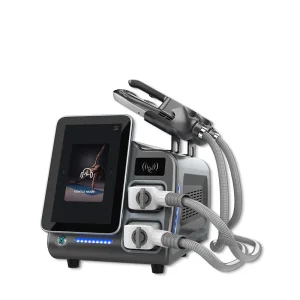
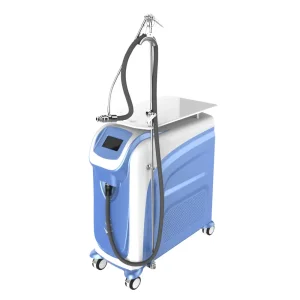
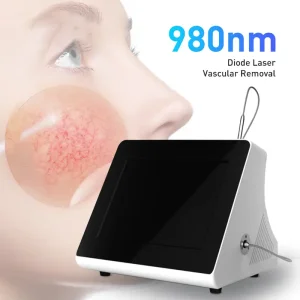
Understanding the physics of continuous epidermal thermal relaxation during high-fluence energy-based device (EBD) therapies.
In modern dermatological laser and light applications, effective target chromophore destruction requires high energy fluences ($J/cm^2$). However, without continuous external cooling, the epidermal basal layer absorbs significant thermal energy, risking transient hyperpigmentation, blistering, or thermal scarring. Cryo skin cooling machines resolve this thermodynamic bottleneck by continuously blowing sub-zero chilled air (ranging from $-20^\circ C$ to $-35^\circ C$) onto the target tissue zone.
Unlike contact sapphire cooling, forced cold air continuously dissipates thermal energy before, during, and immediately after the laser pulse without physically compressing the skin. Compression can inadvertently empty blood vessels—reducing the target chromophore in vascular treatments—making non-contact cold air the gold standard for vascular and pigmentary laser applications.
China's leading cryo skin cooling system factories utilize dual-compressor mechanical refrigeration loops coupled with high-efficiency air filtration and desiccant drying columns. Ambient air is ingested, stripped of moisture to prevent ice clogging within the delivery hose, compressed, and passed through a multi-stage closed-loop heat exchanger.
Advanced PID (Proportional-Integral-Derivative) thermal controllers regulate fan speed across 6 to 10 distinct levels, allowing clinicians to fine-tune air velocity (up to $1500\,L/min$) to balance patient comfort with energy dissipation demands.
Continuous cold air skin cooling systems maintain a consistent thermal gradient across large surface areas without skin deformation. Compared to Cryogen Spray Cooling (CSC)—which carries recurring chemical canister costs—forced air cryo units run strictly on electricity, dropping operational consumable expenses to zero while supporting uninterrupted back-to-back clinical treatments.
| Cooling Modality | Target Temp Range | Consumable Cost | Impact on Skin Compression | Best Clinical Modality Synergy |
|---|---|---|---|---|
| Forced Air Cryo System | -20°C to -35°C | Zero (Electric Driven) | None (Non-contact continuous) | CO2 Fractional, Picosecond, 980nm Vascular, High-Speed Diode |
| Sapphire Contact Cooling | 0°C to +5°C | Zero (Internal Chiller) | High (Requires skin pressure) | Contact Diode Hair Removal, Stamping RF |
| Cryogen Spray (CSC) | -26°C (Pulsed burst) | High (R-134a Gas Canisters) | None | Pulsed Dye Lasers (PDL), Q-Switched Alexandrite |
| Ice Packs / Gel | +4°C to +10°C | Low (Manual prep labor) | Variable | Basic IPL, Light Chemical Peels |
Analyzing procurement requirements across North America, Europe, Asia-Pacific, and emerging aesthetic medical markets.
Focus: FDA Compliance & Low Acoustic Footprint
North American medical spas and plastic surgery centers demand whisper-quiet operation (<60dB) and seamless integration with existing high-energy platforms (such as Syneron-Candela, Cynosure, and Alma units). Procurement prioritizes ultra-durable Panasonic compressors and hands-free custom robotic arm attachments that allow single-operator treatments.
Focus: CE MDR & Eco-Design Directives
European distributors focus heavily on Medical CE certification (MDR 2017/745 compliance), electrical safety protocols (IEC 60601-1), and environmental eco-refrigerant compliance (e.g., R290 or eco-grade R404A). High thermal stability during prolonged 10-hour operating shifts is a mandatory qualification criterion for EU clinic franchises.
Focus: Extreme Climate & High-Volume Operations
Clinics in GCC countries and Southeast Asia operate in ambient room temperatures reaching $28^\circ C$ to $32^\circ C$. Procurement teams demand heavy-duty heat dissipation radiators, dual cooling fans, and anti-condensation delivery hose insulation to prevent water dripping onto clients during intensive laser treatments.
How Beijing and high-tech industrial clusters in China have redefined the price-to-performance ratio for medical-grade thermal management platforms.
China’s advanced manufacturing ecosystem for aesthetic cold-air machines combines local precision sheet-metal stamping, medical-grade ABS plastic injection molding, and localized microcontroller unit (MCU) PCB programming. By co-locating component suppliers within specialized industrial zones in Beijing, Jiangsu, and Guangdong, factories achieve complete component traceability and reduce engineering lead times from months to under 10 days.
Global distributors leveraging Chinese manufacturing partnerships gain immense agility through dedicated OEM/ODM services:
Pairing air cryo cooling systems with energy-based devices to maximize treatment efficacy, speed, and patient compliance.
During ultra-fast in-motion laser hair removal ($10\,Hz$ firing rate), localized epidermal heat buildup occurs rapidly. Blowing $-30^\circ C$ cold air simultaneously allows technicians to safely use higher energy fluences ($J/cm^2$), reducing required session counts while keeping patient sensation virtually painless.
Ablative CO2 lasers ($10,600\,nm$) create micro-thermal zone (MTZ) channels, causing intense post-procedure burning sensations. Immediate post-laser cold air application subdues erythema, shrinks immediate edema, and dramatically shortens social downtime for patients.
Photo-acoustic ink shattering produces rapid epidermal shockwaves and heat release. Pre-cooling the skin numb nerve endings, while continuous post-laser air flow minimizes blistering and epidermal sloughing risks on delicate skin zones.
Vascular targeted treatments require heating hemoglobin inside telangiectasias. Non-contact air cooling protects surrounding dermal collagen and superficial melanin without blanching the target vessel through physical contact pressure.
High-frequency RF energy thermal delivery to deep dermal layers can radiate upward toward the epidermis. Synchronized air cooling protects skin surfaces, enabling intense collagen-remodeling protocols without epidermal burn risk.
Broadband light flashlamps release broad spectrum heat across light-skinned and tanned patients alike. Air cryo systems offer continuous comfort throughout high-speed photo-rejuvenation sessions.
Key technical parameters to audit when selecting a OEM factory partner for cryo cold air machinery in China.
Ensure the manufacturer uses premium hermetic rotary or reciprocating compressors (such as Panasonic or Danfoss) operating on eco-friendly refrigerants. Verify that the unit includes an automatic defrosting cycle (hot-gas bypass valve). Without an active defrost circuit, continuous sub-zero operation causes internal evaporator frost build-up, decreasing airflow by over 60% after 45 minutes of clinical operation.
Insist on multi-stage moisture separators. Cold air containing high humidity forms water droplets at the nozzle tip, which can sputter onto laser optics or patient skin. Delivery hoses must be constructed from multi-layer insulated medical silicone wrapped in a protective anti-kink spiral sheath to maintain low temperatures from cabinet to nozzle tip.
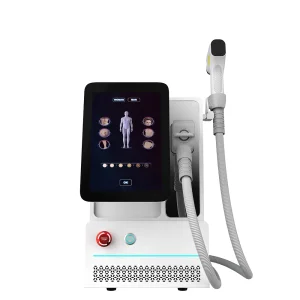
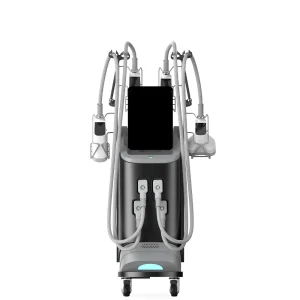
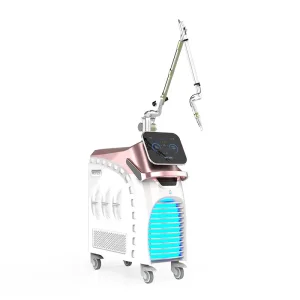
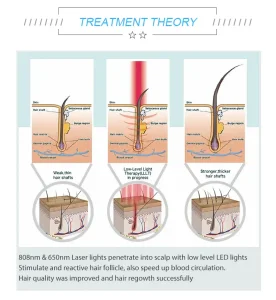
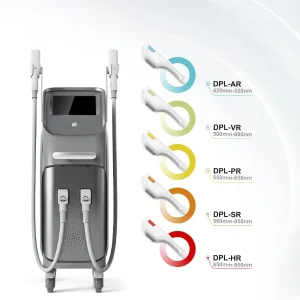
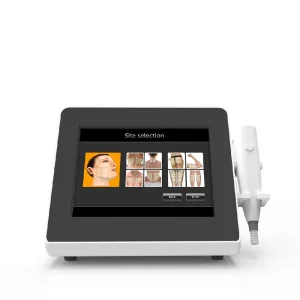
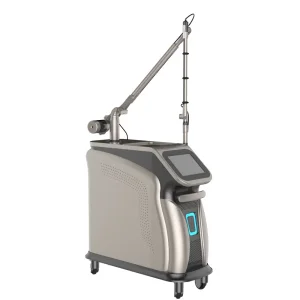
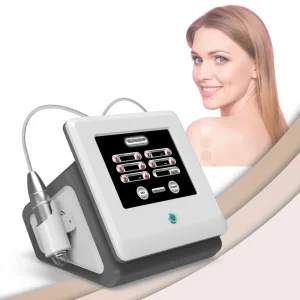
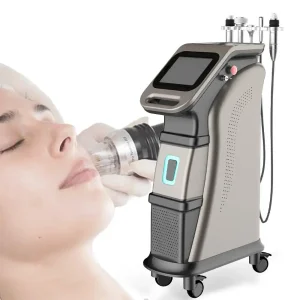
Complementary aesthetic technologies manufactured in our high-precision assembly facilities. Available for direct wholesale and custom OEM brand integration.
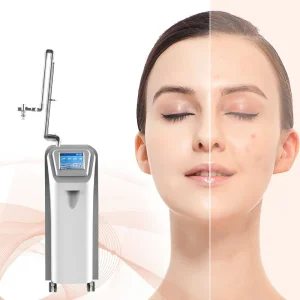
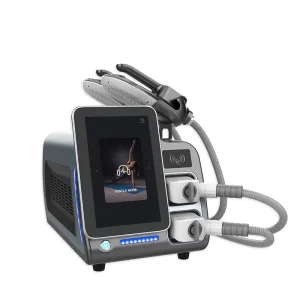
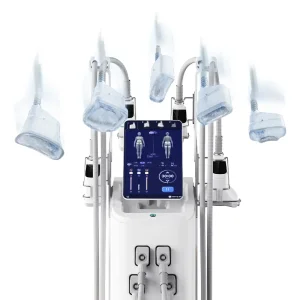
Direct answers from our engineering desk to guide global aesthetic distributors and clinic directors.