- +86 136 8127 5833
- [email protected]
- Shunyi, Beijing, China
Explore our precision-engineered aesthetic platforms manufactured under ISO 13485 quality standards. Designed for high clinical throughput, minimal patient downtime, and robust operational uptime.
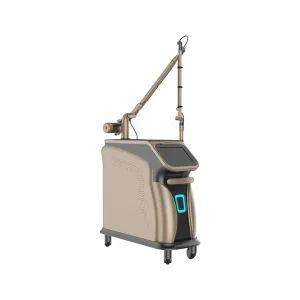
The global medical aesthetic laser market has undergone a fundamental technological evolution over the past decade. Previously dominated by high-cost European and North American OEMs, the industry landscape has shifted significantly toward China's top-tier optoelectronic manufacturing hubs. China's best tattoo removal laser equipment factories have transitioned from cost-effective contract assemblers to pioneer R&D centers that produce medical-grade Picosecond Nd:YAG systems, high-power Q-Switched platforms, and multi-wavelength laser workstations matching or exceeding Western performance standards.
For global procurement directors, medical distributors, and clinic operators, selecting the right Chinese laser factory requires evaluating fundamental laser physics, hardware sourcing, chassis structural integrity, optical arm efficiency, and regulatory compliance (CE MDR, FDA 510(k), ISO 13485). This whitepaper provides a rigorous analytical framework for evaluating China's leading laser factories, helping buyers optimize their capital expenditure (CapEx) while delivering world-class clinical outcomes.
To understand why high-end Chinese laser factories outperform entry-level competitors, one must examine the physics of tattoo pigment breakdown within the dermal layer. Exogenous tattoo ink particles typically range from 20 to 100 nanometers in size. The targeted removal of these chromophores without damaging surrounding collagen structures depends on matching the pulse duration to the target's Thermal Relaxation Time (TRT).
Delivers energy in 5 to 10 nanoseconds. Relies primarily on photothermal destruction. Heat expands ink particles until structural stress breaks them into medium-sized granules. Higher risk of thermal diffusion, leading to epidermolysis, blistering, and post-inflammatory hyperpigmentation (PIH) on darker skin types (Fitzpatrick IV-VI).
Delivers energy in 300 to 500 picoseconds. Energy is delivered so rapidly that the rate of optical absorption exceeds the rate of thermal dissipation. This creates an intense shockwave (photo-acoustic pressure), shattering ink particles into microscopic dust-like fragments easily cleared by macrophages.
Leading Chinese factories utilize optical spatial filters and homogenizer lenses to convert raw Gaussian laser beams into uniform "Top-Hat" profiles. This ensures equal energy distribution across the entire spot diameter, preventing central hot spots that cause scarring and edge drop-offs that leave untreated ink.
A top-tier OEM factory equips its flagship devices with multi-wavelength capabilities to cover the full spectrum of commercial tattoo inks. The physical absorption coefficients dictates specific laser crystal selection:
Why are international medical brands increasingly partnering with top-tier OEM factories in China? The answer lies in the concentrated supply chain clusters surrounding industrial technology zones in Beijing, Guangzhou, and Shenzhen. These clusters allow vertical integration—from crystal growth (Nd:YAG rods) to precision machining of 7-joint articulated arms and custom power supply assembly.
By producing laser cavities, high-voltage SIMMER power supplies, and TEC semiconductor cooling assemblies in-house, Chinese factories reduce Bill-of-Materials (BOM) costs by 40% to 60% compared to Western counterparts without compromising component grade.
Tier-1 factories enforce a minimum 72-hour continuous burn-in test for laser power units and a 500,000-shot pulse stability test for articulated arms before final packing, ensuring absolute field reliability upon delivery.
From customized GUI software (Linux/Android interfaces) and chassis industrial design to tailored handpiece spot-size indicators, Chinese manufacturers provide rapid prototyping within 30 to 45 business days.
The table below presents an objective engineering evaluation comparing Chinese Tier-1 Picosecond Laser Manufacturers against traditional Western OEM platforms across core performance metrics:
| Performance Specification | China Tier-1 Laser Factory | Legacy Western OEMs | Low-Cost Budget Manufacturers |
|---|---|---|---|
| Pulse Width (Picosecond Domain) | 300 ps – 450 ps (Real Measured) | 350 ps – 750 ps | 6 ns – 10 ns (Fake Pico / Pseudo-Pico) |
| Peak Power Output | 1.5 GW – 2.0 GW | 1.8 GW – 2.2 GW | 0.2 GW – 0.4 GW |
| Optical Light Guide | Imported 7-Joint Articulated Arm (Korea/Japan) | Proprietary 7-Joint Articulated Arm | Direct Fiber / Handpiece Internal Cavity |
| Laser Crystal Rod | Military-Grade Nd:YAG (Ø 8mm–10mm) | Premium Nd:YAG Crystal | Small Diameter Nd:YAG (Ø 5mm–6mm) |
| Cooling Architecture | Dual Water + TEC + Compressor Cooling | Compressor / Liquid-to-Air Heat Exchanger | Basic Radiator + Water Pump |
| Average Equipment CapEx | $12,000 – $28,000 USD | $90,000 – $160,000 USD | $3,500 – $6,500 USD |
| Warranty & Parts Logistics | 2–3 Years / Global Express Parts Delivery | 1 Year / Expensive Service Contracts | 6 Months to 1 Year / Limited Support |
Importing medical devices requires strict compliance with international regulatory frameworks. Leading Chinese laser manufacturers invest heavily in international quality certifications to enable smooth customs clearance and legal operation in North America, Europe, Latin America, and the Asia-Pacific region.
Compliance with Medical Device Regulation (EU 2017/745) and ISO 13485 Medical Quality Management Systems ensures every unit leaving the facility adheres to rigorous clinical safety, electromagnetic compatibility (IEC 60601-1-2), and laser safety (IEC 60825-1) guidelines.
Top factories collaborate with US regulatory consultants to prepare 510(k) clearance dossiers, validating substantially equivalent performance to established predicate devices for tattoo removal and benign pigmented lesion treatments.
To minimize downtime, factories establish regional service hubs across Europe and North America, stocking replacement optics, SIMMER flashlamps, power modules, and cooling pumps for 24-to-48-hour delivery.
Deploying high-performance tattoo removal lasers requires calibrated treatment protocols tailored to ink composition, depth, and patient skin phenotype. Chinese manufacturing leaders furnish comprehensive clinical parameter matrixes engineered from thousands of patient trials:
Amateur tattoos feature uneven ink placement in the superficial dermis, clearing rapidly in 3 to 5 sessions using 1064nm at 3.0–4.5 J/cm². Professional tattoos utilize dense, high-grade synthetic pigments deep in the reticular dermis, requiring 6 to 10 structured sessions with progressive fluence ramping.
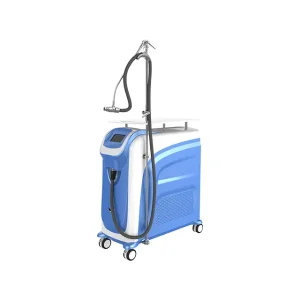
Darker skin types require conservative spot-size selection (5mm to 8mm) combined with longer pulse widths or strictly 1064nm picosecond delivery to prevent epidermal absorption. Epidermis cooling via forced cold-air chillers (-30°C) is mandatory to protect against post-inflammatory changes.
Tattoos previously treated with standard Q-Switched lasers often reach a clearance plateau. Picosecond platforms shatter residual micro-particles that nanosecond pulses cannot break down, successfully resolving resistant ghosting images.
The laser equipment manufacturing sector in China is actively innovating across several emerging technical vectors:
R&D labs are developing mode-locked crystal drivers to achieve ultra-short pulse widths below 200 picoseconds, shifting energy transmission almost entirely into pure photo-acoustic acoustic waves.
Next-generation platforms feature optical skin analysis cameras embedded in the handpiece. Real-time feedback automatically calculates skin phototype, melanin index, and optimal spot fluence, adjusting laser parameters on the fly.
Diffraction Lens Array (DLA) technology creates high-intensity micro-zones surrounded by untreated tissue, stimulating rapid collagen remodeling to treat acne scars, rhytids, and pigment concurrently.
Browse additional high-demand medical aesthetic platforms manufactured for international distribution and clinical excellence.