- +86 136 8127 5833
- [email protected]
- Shunyi, Beijing, China
Engineered for high clinical efficacy, zero operational downtime, and rapid ROI for global medical clinics and distributors.
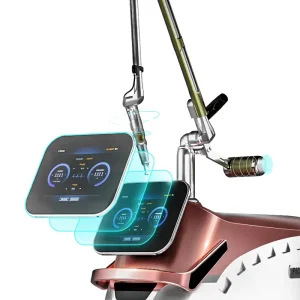
A definitive technical evaluation of modern Q-switched and Picosecond laser platforms engineered in China's leading optoelectronic research centers.
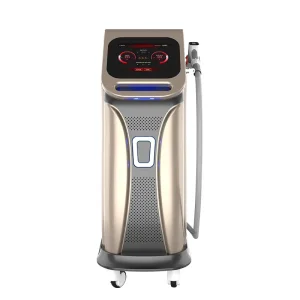
The global demand for laser tattoo removal and dermal pigment correction has undergone a structural paradigm shift over the past decade. Historically dominated by nanosecond-domain Q-Switched Nd:YAG systems, the market is rapidly standardizing around advanced ultra-short pulse picosecond laser platforms. When sourcing the best machine for tattoo removal from China manufacturers & suppliers, B2B buyers—including medical aesthetic clinic chains, dermatological hospital groups, and aesthetic equipment importers—must evaluate the underlying laser physics, optical energy density (fluence), beam profile homogeneity, and pulse-width delivery stability.
Laser tattoo removal operates on the principle of selective photothermolysis, targeting exogenous ink pigments deposited within the papillary and reticular dermis. However, the mechanism of fragmenting ink particles differs radically depending on the laser's pulse width:
| Performance Parameter | Legacy Nanosecond Q-Switched | Advanced China OEM Picosecond Platform | Clinical Impact & Advantage |
|---|---|---|---|
| Pulse Width Range | 5.0 ns – 10.0 ns | 350 ps – 600 ps | Shifts energy transfer from heat-conductive to pure photoacoustic shockwave. |
| Peak Power Output | 0.2 – 0.5 Gigawatts | 1.5 – 3.0 Gigawatts | 10x increase in peak power shatters stubborn pigment into sub-micron dust. |
| Average Treatment Sessions | 10 – 14 Sessions | 4 – 6 Sessions | 50%+ reduction in client clinical visits, maximizing clinic room turnover. |
| Risk of Post-Inflammatory Hyperpigmentation (PIH) | Moderate to High (15-22%) | Extremely Low (< 2%) | Essential for safe application on darker Fitzpatrick Skin Types (IV–VI). |
| Chromatic Absorption Spectrum | Limited to 1064nm / 532nm | Multi-Wavelength (1064 / 532 / 585 / 650nm) | Full-spectrum clearance including green, sky blue, purple, and recalcitrant red inks. |
Why Tier-1 Chinese manufacturers provide an unassailable balance of optical precision, structural reliability, and cost-efficiency.
Leading Chinese laser factories maintain end-to-end control over the optical assembly chain. From precision-grown Nd:YAG laser crystals and electro-optic Q-switches (KD*P / Pockels cells) sourced from top optical institutes to automated cleanroom assembly, quality control is baked into every manufacturing stage.
Top-tier Chinese manufacturers bridge global engineering excellence by integrating high-grade imported sub-assemblies. Premium models feature UK-imported xenon flash lamps, German Heraeus cavity reflectors, and South Korean 7-joint articulated light delivery arms that ensure 98%+ optical transmission energy efficiency without power degradation.
A laser is only as reliable as its electrical driver. Chinese engineering labs have perfected dual-cavity 2000W-3000W high-frequency power supplies coupled with industrial-grade TEC water-air refrigeration units. This guarantees continuous 24-hour non-stop operational stability even in hot tropical clinic environments.
A common pitfall in global procurement is failing to differentiate between passive Q-switched desktop units and active electro-optical Q-switched vertical systems:
A rigorous economic evaluation model for distributors and medical spa directors calculating acquisition cost vs. lifetime revenue generation.
When purchasing aesthetic devices from international vendors, European and North American buyers often confront an ROI dilemma: Western OEM platforms carry exorbitant upfront price tags ($80,000 – $160,000 USD) paired with restrictive recurring consumable costs (e.g., per-shot RFID smartcards). Conversely, partnering directly with leading China tattoo removal machine manufacturers reduces capital expenditure (CapEx) by 60% to 75% while eliminating mandatory consumable software locks.
| Financial Metric | Western Legacy OEM Platform | China Premium Direct Manufacturer | Commercial Savings Impact |
|---|---|---|---|
| Initial Hardware Purchase (CapEx) | $115,000 USD | $12,000 – $24,000 USD | Up to $90,000+ upfront capital preserved for clinic marketing. |
| Cost Per Shot / Consumable Fee | $0.02 – $0.05 per shot (RFID blocked) | $0.00 (Zero consumable locks) | 100% margin retained per treatment procedure. |
| Handpiece Replacement Cost | $8,000 – $15,000 USD | $1,200 – $2,500 USD | 80% reduction in long-term maintenance overhead. |
| Average Payback Period (Break-Even) | 14 – 18 Months | 2.5 – 4 Months | Accelerates positive cash flow generation for practice growth. |
Ensures homogenous energy distribution across the entire spot area, preventing dangerous central hot-spots that burn tissue while avoiding under-dosed peripheral zones.
Internal optical sensors measure joules per pulse output in real-time, automatically recalibrating parameters to adjust for thermal variation during prolonged procedures.
South Korean 7-joint counterweighted arms allow smooth 360-degree rotational operation, reducing operator wrist fatigue during long multi-tattoo sessions.
Adjustable spot sizes from 2mm to 10mm without changing optical lenses enable seamless switching between deep dermal ink targets and superficial epidermal pigmentation.
How cutting-edge optical innovations are expanding tattoo removal platforms into high-demand skin revitalization and scar revision markets.
The modern aesthetic patient demands versatile treatments with minimal social downtime. In response, China's leading R&D facilities have augmented classic 1064nm and 532nm wavelengths with specialized optical dye handpieces and diffractive lens arrays (DLA):
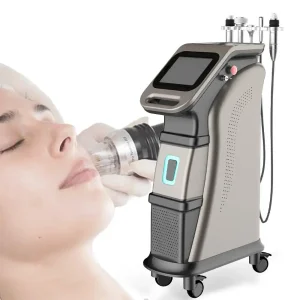
By passing the picosecond laser beam through a Diffractive Lens Array, the beam is divided into hundreds of micro-beams with ultra-high peak fluence surrounded by low-energy background zones. This induces localized Laser-Induced Optical Breakdown (LIOB) in the epidermis without disrupting the stratum corneum. The resulting micro-cavitation shockwaves stimulate a powerful dermal wound-healing cascade—boosting collagen type I & III synthesis, remodeling acne scars, and tightening skin texture.
How specialized practice settings leverage Chinese laser removal machinery to build high-margin revenue streams.
Deployed for medical-grade nevus of Ota removal, traumatic tattoo decontamination, recalcitrant melasma management, and post-inflammatory hyperpigmentation protocols requiring exact pulse energy calibration.
Utilized as dual-purpose workhorses: fast cover-up tattoo fading combined with non-ablative carbon peel ("Hollywood Peel") skin toning procedures for instant event-ready skin radiance.
Targeted correction of failed eyebrow microblading, migrated lip liner, and permanent eyeliner using specialized ultra-small spot handpieces with minimal thermal swelling.
Tattoo artists utilize lightweight Q-switched units to lighten existing dark ink pieces in 2-3 sessions, enabling clean, vibrant cover-up artwork without muddy color blending.
Ensuring frictionless international import, regional medical clearance, and tailored brand identity integration for global distributors.
Navigating global medical equipment imports requires stringent adherence to international regulatory standards. Leading Chinese manufacturers operate under audited ISO 13485:2016 quality management systems, providing comprehensive documentation packages required by regulatory bodies worldwide (including Medical CE under MDR, US FDA 510(k) clearance pathways, Australian TGA, and Brazilian ANVISA).
Direct technical answers from laser physics engineers addressing critical operational and commercial inquiries.
High-end Chinese systems equipped with UK-imported cavity xenon lamps and high-purity single-crystal Nd:YAG rods deliver between 5,000,000 to 10,000,000 pulses before requiring a lamp replacement. Optical energy degradation is kept under 5% over the first 3 million shots due to advanced TEC water cooling.
Safety on dark skin requires using the 1064nm wavelength exclusively, as its epidermal melanin absorption coefficient is significantly lower than 532nm. By coupling 1064nm with true sub-nanosecond pulse duration (under 450ps), peak photoacoustic pressure shatters dermal ink without triggering thermal epidermal burns or Post-Inflammatory Hyperpigmentation (PIH).
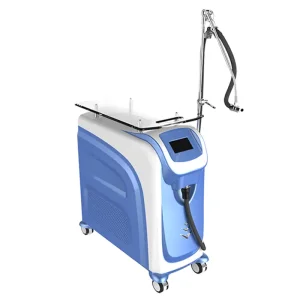
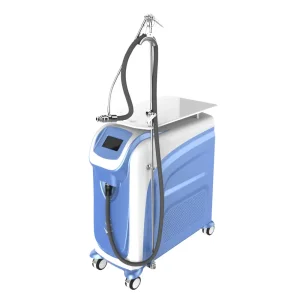
We strongly recommend pairing high-fluence picosecond lasers with a dedicated -30°C Cold Air Skin Cooling Machine (Chiller System). Cold air blowers provide continuous pre-, intra-, and post-treatment epidermal cooling without interfering with laser beam transmission, reducing patient pain perception by over 70% and preventing thermal edema.
A single-rod cavity houses one Nd:YAG crystal, producing standard energy output (typically up to 800mJ). A dual-rod dual-lamp cavity places two laser crystals in series driven by twin flashlamps, doubling energy amplification (up to 2000mJ/2.0J) and allowing ultra-wide spot sizes (up to 10mm) while maintaining massive peak power density.
Daily maintenance involves inspecting the distal lens on the handpiece for dust or carbon flash residue. Quarterly maintenance requires replacing internal deionized (DI) water filters and flushing the cooling loop with distilled water to prevent mineral scaling inside the laser cavity pump chamber.
Standard catalog units ship within 5-7 business days post-payment. Custom OEM/ODM orders (custom chassis color, housing redesign, branding, localized UI) typically require 15-25 business days for engineering prototype validation prior to final batch assembly and flight-case packing.
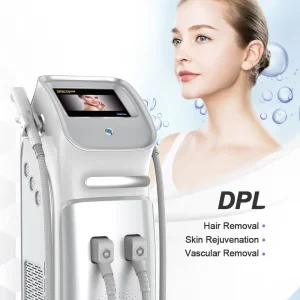
Complementary medical-grade technologies engineered for high performance, versatility, and practice profitability.