- +86 136 8127 5833
- [email protected]
- Shunyi, Beijing, China
Integrate skin analysis insights directly with medical-grade laser, RF, and thermal therapy devices engineered for maximum clinical ROI.
A comprehensive analysis of market growth, clinical adoption drivers, and patient conversion economics powered by high-resolution 3D surface mapping and deep-subdermal spectral analysis.
The global aesthetic dermatology sector is transitioning from subjective visual skin evaluation to objective, metric-driven diagnostic validation. Modern medspas, plastic surgery centers, and clinical dermatology practices are adopting advanced 3D skin analysis systems not merely as diagnostic tools, but as central consultation platforms that convert patient interest into rigorous treatment compliance.
Traditional 2D digital imaging captures surface-level pigmentation and macro-wrinkles but consistently fails to quantify volumetric changes, sub-dermal vascular structures, micro-relief texture, and deep dermal UV damage. Modern 3D skin analyzer systems utilize stereophotogrammetry combined with multispectral light engine arrays to generate sub-millimeter anatomical point clouds, exposing structural issues before they manifest visibly on the stratum corneum.
Deploying state-of-the-art 3D skin analysis hardware delivers a profound impact on clinic operational economics. By converting abstract patient concerns into visual, empirical metrics—such as Pore Volume Indices, Red Area Hemoglobin Concentration Maps, and RGB Pigment Density Scores—practitioners eliminate hesitation during the treatment recommendation phase.
| Diagnostic Modality | Imaging Light Sources | Sub-Dermal Penetration | Primary Clinical Metrics Captured | Clinical Utility Level |
|---|---|---|---|---|
| Standard 2D RGB Digital | White LED (Broadband) | 0 µm (Stratum Corneum surface) | Macro discoloration, visible fine lines | Basic Baseline Screening |
| Cross-Polarized Multispectral | Polarized White + UV 365nm | 100 µm – 300 µm (Epidermis/Papillary Dermis) | Porphyrin, basal melanin density, vascular erythema | Dermatological Diagnosis |
| 3D Structured-Light Spectral (Next-Gen) | RGB + PL + UV + Wood’s + Structured Grid | Up to 2.5 mm (Reticular Dermis & SMAS topography) | Volumetric wrinkle depth, pore volume, skin laxity vector mapping, sub-surface vascularity | Full Clinical & Aesthetic Strategy |
Explore the sensor physics, optical calibration protocols, and deep learning algorithms powering modern OEM skin diagnostic systems fabricated in China's high-tech manufacturing hubs.
High-precision skin analysis relies on custom-engineered optical light engines. China's top-tier manufacturers integrate narrow-band spectrum LEDs ranging from near-ultraviolet (365nm) for porphyrin fluorescence to cross-polarized light for dermal pigment separation.
By eliminating glare through linear spectral filters, the system captures true chromophore distribution—distinguishing between superficial epidermal melanin and deep dermal vascular hemoglobin.
Using dual high-resolution CMOS sensors (20MP+ per channel) aligned at calibrated focal angles, the system projects a invisible structured fringe grid onto the patient's face. Micro-deformations in the light pattern are captured to generate a high-density point cloud mesh.
This optical topography allows precise depth calculation of nasolabial folds, periorbital rhytids, and acne scars down to tens of micrometers.
The diagnostic engine utilizes proprietary deep learning models trained on vast multi-ethnic dermatological datasets. Convolutional networks segment features into discrete diagnostic layers: acne lesion grading, sebum activity, hyperpigmentation, skin age indexing, and moisture barrier integrity.
Continuous edge-computing inference delivers comprehensive algorithmic diagnostic reports in under 15 seconds.
The future of 3D skin analysis lies in real-time dynamic spectral tracking, hyper-spectral imaging integration, and predictive age-progression modeling driven by generative AI algorithms.
How 3D skin analysis equipment transforms daily operations in medical clinics, aesthetic medspas, and cosmetic research institutions worldwide.
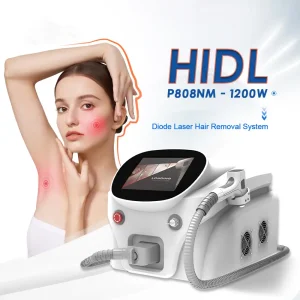
In high-volume medical laser centers, baseline diagnostics are mandatory before firing high-fluence energy devices. 3D skin analyzers provide precise mapping of target chromophores, guiding parameter setting for diode laser hair removal, picosecond pigment removal, and fractional CO2 resurfacing.
Workflow Advantage: Post-treatment scans objectively monitor epidermal healing, inflammation resolution, and thermal response over 30 to 90-day intervals, establishing verifiable clinical standard operating procedures (SOPs).
Surgeons utilize 3D facial surface scanning during preoperative planning for surgical facelifts, blepharoplasty, rhinoplasty, and autologous fat transfer. The 3D topographical mesh reveals underlying volume asymmetries and precise contour depressions.
Workflow Advantage: Volumetric differential software measures exact tissue shifts post-surgery, demonstrating millimeter-level volume restoration and structural repositioning to surgical patients.
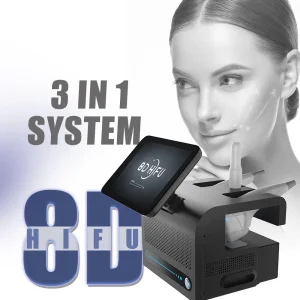
Medspas leverage 3D skin diagnostic devices to design personalized, multi-step facial rejuvenation programs. By combining radiofrequency microneedling, HIFU SMAS lifting, and IPL/DPL photo-rejuvenation, practitioners create targeted treatment plans backed by initial diagnostic data.
Workflow Advantage: Increases patient retention by scheduling milestone diagnostic reviews every quarter, boosting repeat package sales and client loyalty.
Skincare manufacturers and clinical trial organizations utilize clinical-grade 3D analysis hardware to validate active ingredient efficacy (e.g., retinoids, peptides, vitamin C derivatives, hyaluronic acid formulations).
Workflow Advantage: Replaces subjective panel feedback with quantifiable metrics: Percentage Reduction in Wrinkle Area, Sebum Excretion Rate, Transepidermal Water Loss Index, and Pore Tightening Ratios.
Why leading global medical aesthetic brands choose China as their primary OEM/ODM strategic manufacturing hub for 3D skin diagnostic platforms.
China has built an unmatched industrial cluster for precision optics, high-resolution CMOS sensors, and LED light engine fabrication. Key manufacturing centers in Beijing, Shenzhen, and Yangtze River Delta allow rapid sourcing of optical-grade glass lenses, polarized filters, and custom circuit boards.
This localized supply density dramatically reduces raw material lead times and ensures component availability even during global supply disruptions.
Chinese OEM factories offer end-to-end customization capabilities. From custom injection-molded outer chassis designs to deep software re-skinning (white-label UI, custom branding, localized reporting, SDK/API cloud integration), manufacturers rapidly adapt platforms to brand specifications.
Dedicated firmware and software development teams ensure seamless integration with existing electronic health record (EHR) systems.
Modern Chinese production facilities operate under ISO 13485 certified quality management systems. Optical calibration takes place in dust-free cleanrooms, using automated optical bench alignment tools to ensure sub-pixel camera matching and consistent spectral intensity across every manufactured unit.
Rigorous 72-hour burn-in testing and optical drift tests guarantee long-term stability in busy clinic settings.
Ensuring compliance with international medical device regulations, data privacy mandates, and providing worldwide technical service continuity.
Navigating global regulatory landscapes is critical for international distributors. Leading Chinese skin analyzer manufacturers support comprehensive technical dossiers to satisfy regulatory bodies worldwide:
Because modern 3D skin analyzers capture high-resolution biometric facial point clouds and personal diagnostic records, data security is paramount. OEM cloud architectures incorporate robust encryption standards:
To support global deployments, systems feature built-in multi-language translation frameworks (English, Spanish, German, French, Portuguese, Russian, Arabic, Japanese, Korean, and Chinese). Software updates are distributed via cloud Over-The-Air (OTA) channels, allowing instant feature rollouts and algorithmic enhancements.
Direct manufacturer partnership guarantees technical continuity. Support structures include a minimum 2-year hardware warranty, 24/7 direct engineer troubleshooting channels, free modular spare parts shipping, and comprehensive video/onsite operator training modules for distributor technicians.
Expert insights addressing key technical, operational, and commercial questions for medical aesthetic equipment importers and clinic owners.
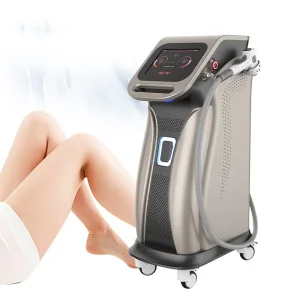
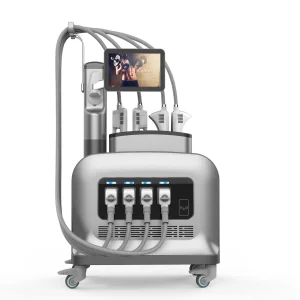
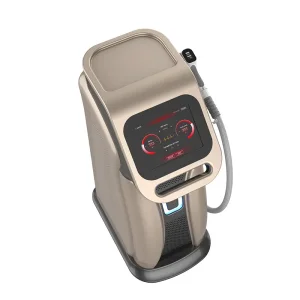
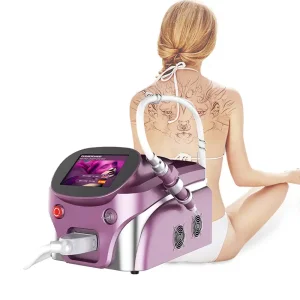
Expand your clinic capabilities with industry-leading body sculpting, laser hair removal, tattoo clearance, and skin tightness platforms.