- +86 136 8127 5833
- [email protected]
- Shunyi, Beijing, China
Explore our flagship certified aesthetic technologies deployed in over 90 countries. Fully customizable via OEM/ODM engineering protocols.
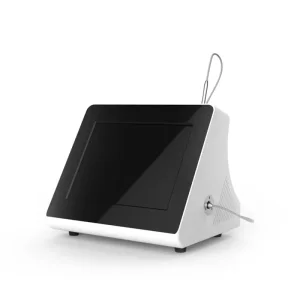
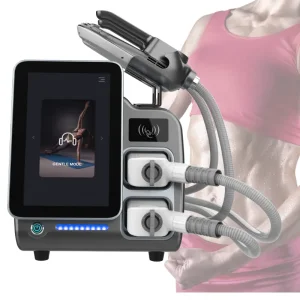
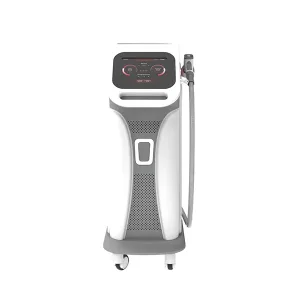
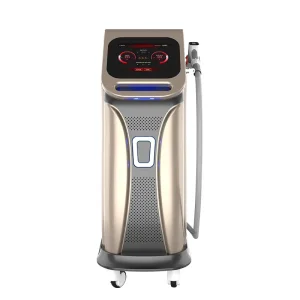
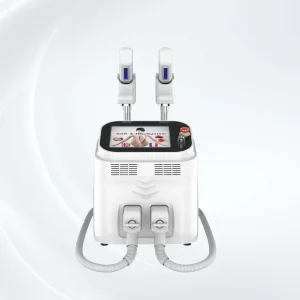
A deep technical evaluation into 10,600 nm wavelength laser physics, micro-ablative thermal zones, and the critical structural shift from traditional glass tubes to medical-grade sealed metal RF tubes.
Portable Fractional CO2 Laser platforms operate at the precise 10,600 nm infrared wavelength, which is absorbed predominantly by intracellular water molecules within dermal and epidermal tissue. Instead of ablating the entire skin surface uniformly (traditional full-field CO2 resurfacing), fractional technology utilizes an advanced galvanometer scanner to fractionate the laser beam into thousands of microscopic treatment zones (MTZs).
Each MTZ penetrates deep into the dermis, creating controlled column-like micro-wounds surrounded by intact, untreated tissue. This intact reservoir of surrounding cells drives rapid re-epithelialization, accelerating collagen remodeling (Type I and Type III synthesis), neocollagenesis, and elastin fiber restructuring while significantly curtailing downtime and post-inflammatory hyperpigmentation (PIH) risks.
The fundamental differentiator of commercial-grade vs. medical-grade portable fractional CO2 lasers lies within the excitation chamber. Traditional lower-tier systems rely on Direct Current (DC) glass tubes filled with gas mixtures that degrade rapidly under continuous pulse loads, requiring frequent water cooling and replacement within 12 to 18 months.
In contrast, elite manufacturers integrate sealed Radio Frequency (RF) metal tubes (typically sourced from leading manufacturers like Coherent or Synrad). RF metal tubes utilize high-frequency electromagnetic energy to excite the carbon dioxide gas mixture, yielding ultrashort pulse durations, ultra-fine spot diameters (<100 microns), symmetrical TEM00 Gaussian beam modes, and complete maintenance-free operation spanning 7 to 10 years without power decay.
| Engineering Spec / Parameter | Medical RF Metal Tube (SANO Standard) | Standard Glass DC Tube (Low Cost) |
|---|---|---|
| Pulse Frequency & Stability | Ultra-high stability (±2% variance over 8h continuous use) | Power output decays as fluid temperature rises (>15% variance) |
| Micro-Spot Beam Quality | TEM00 Gaussian Mode (Spot size < 100 μm for minimal collateral damage) | Higher order modes (Broader spot > 250 μm, increased carbonization risk) |
| Cooling System Architecture | Air-cooled internal structure; zero liquid coolant contamination risk | Requires high-capacity water chillers & internal fluid pump plumbing |
| Operational Service Life | 70,000 to 100,000 hours (7–10 years duty cycle) | 1,500 to 3,000 hours (Requires frequent gas/tube replacement) |
| Clinical Recovery Timeline | 3 to 5 days (Controlled micro-ablation, minimal thermal damage zone) | 7 to 14 days (Excess thermal diffusion, higher risk of PIH in Fitz IV-VI) |
Rigorous international certification ensures seamless import approval, operational legality, and safety compliance across European Union member states, North America, the Middle East, and Latin America.
For medical device distributors importing into the EU, standard LVD/EMC industrial CE certificates are insufficient for clinical operation. Professional portable fractional CO2 laser platforms from qualified OEMs come backed by comprehensive Technical Files complying with Medical Device Regulation (MDR 2017/745) standards. This includes full risk assessment documentation under ISO 14971 and clinical evaluation reports (CER).
Laser equipment must strictly adhere to IEC 60601-1 (General requirements for basic safety and essential performance) and IEC 60601-2-22 (Particular requirements for basic safety and essential performance of surgical, cosmetic, therapeutic and diagnostic laser equipment). Essential safety interlocks, emergency stop switches, real-time power monitoring sensors, and Class 4 laser safety enclosures protect both clinical operators and patients.
Every step of assembly in our Beijing development facility operates under an accredited ISO 13485 Medical Devices Quality Management System. From incoming component validation (IQC) of optical lenses to 72-hour burn-in testing (FQC) of the high-voltage power supply and laser alignment checks via power meters, our end-to-end traceably ensures reliable continuous output.
How localized manufacturing clusters, vertical integration, and direct engineer-to-client support provide global distributors with unparalleled margin protection and custom engineering power.
Beijing has evolved into China’s premier high-tech optic-electronic medical equipment development base. By leveraging localized supply chains for high-precision CNC metal chassis machining, custom optical lens coating, power transformer winding, and specialized software UI development, Beijing Sano Laser Development S&T Co., Ltd. achieves exceptional cost efficiencies without sacrificing component tiering.
We combine premium global components—such as German optical scanners, US RF laser tubes, and Japanese stepping motors—with optimized Chinese assembly processes. This hybrid supply model delivers premium medical laser systems at 40% to 60% lower Capital Expenditure (CAPEX) compared to European or US brands.
Full white-label branding, localized GUI language translations (English, Spanish, German, French, Portuguese, Russian, Arabic), custom shell mold design, pre-programmed treatment parameters, and branded flight-case packaging tailored for regional distributors.
How medical aesthetic chain clinics, medspas, and regional distributors evaluate portable fractional CO2 systems against total cost of ownership (TCO) and rapid pay-back timelines.
Commercial buyers look far beyond the initial procurement price. Operating a laser system involves consumable costs, annual maintenance contracts, and potential downtime. Portable fractional CO2 systems utilizing RF metal tubes eliminate shot-count consumable fees entirely (unlike cartridge-based HIFU or RF needle tips), allowing clinics to achieve a zero-consumable-cost per treatment model.
Modern medspas and boutique clinics often operate with constrained floor space. A compact, portable chassis—designed with robust lightweight aluminum housing and integrated transport handles—allows medical practitioners to share one laser unit across multiple treatment rooms or transport it between satellite clinics safely without optical misalignment.
A single capital investment must solve multiple patient concerns to maximize booking efficiency. Equipping a portable CO2 fractional laser with modular handpiece attachments (Fractional Resurfacing Scan Head, Surgical Cutting Handpiece, and Gynae-Vaginal Tightening Probes) allows a clinic to generate revenue across dermatology, aesthetic anti-aging, and gynecology departments.
Key technological shifts shaping global energy-based aesthetic devices over the coming decade.
Traditional scanning modes emit laser dots sequentially in straight rows, which can build up excessive localized heat in adjacent skin tissue, worsening thermal pain and erythema. Next-generation portable fractional lasers incorporate AI-driven Smart Random Scanning algorithms.
By firing micro-dots non-sequentially across the designated area, the tissue has adequate time to dissipate micro-heat between pulses. This leads to a 40% reduction in patient thermal discomfort, eliminates grid-pattern hyperpigmentation risks, and permits higher energy fluences (J/cm²) for deeper collagen remodeling in fewer treatment sessions.
Historically, high-power CO2 lasers required bulky vertical floor-standing cabinets to house heavy transformers, liquid chillers, and large glass tubes. Advances in high-density switching power supplies and compact metal RF cavities now allow manufacturers to pack 40W to 70W peak optical output into a lightweight, portable tabletop chassis weighing under 30 kg.
This technological leap enables mobile practitioners, home-visit dermatologists, and space-conscious MedSpas to offer hospital-grade ablative resurfacing protocols without dedicating an entire room to a single stationary machine.
Versatile clinical indications supported by precision-engineered handpiece attachments and customizable GUI presets.
Deep rolling, boxcar, and ice-pick scars require high-energy micro-ablation. The 10,600 nm laser vaporizes scar tissue while thermal energy contracts surrounding collagen bonds. Utilizing small spot density settings allows deep dermal ablation up to 1.5 mm, releasing tethered fibrotic bands and smoothing skin topography within 3 to 4 clinical sessions.
Fractional CO2 resurfacing remains the absolute gold standard for moderate-to-severe photoaging, peri-oral lines, and crow's feet. Thermal diffusion into the papillary dermis triggers heat shock proteins (HSP 70 & HSP 47), initiating long-term neocollagenesis that tightens lax skin, restores elasticity, and evens out irregular skin tone.
Using specialized 360-degree reflective conical probes, thermal fractional energy is applied safely to the vaginal mucosa. This stimulates mucosal thickening, glycogen secretion, and collagen synthesis, effectively treating vaginal atrophy, stress urinary incontinence (SUI), and postpartum laxity non-surgically.
Direct technical and commercial answers from SANO Laser’s engineering and compliance directors.
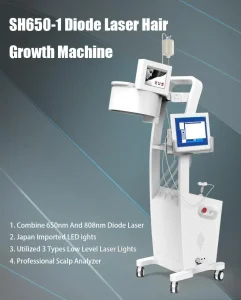
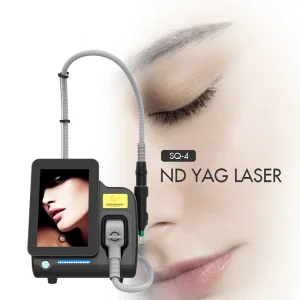
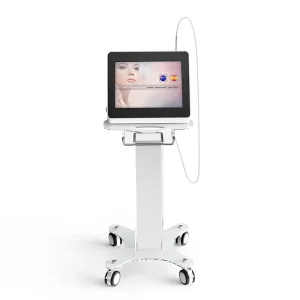
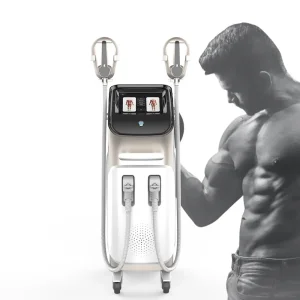
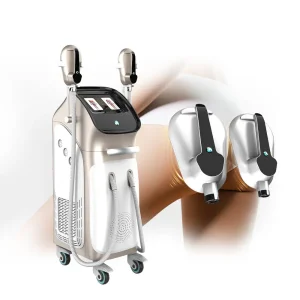
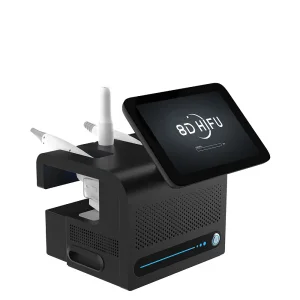
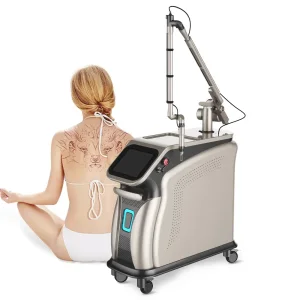
Expand your aesthetic business catalog with our certified range of hair removal, tattoo clearance, and body sculpting systems.