- +86 136 8127 5833
- [email protected]
- Shunyi, Beijing, China
Explore our flagship CE-certified laser, RF, and body contouring systems engineered for clinical efficiency and predictable patient outcomes.
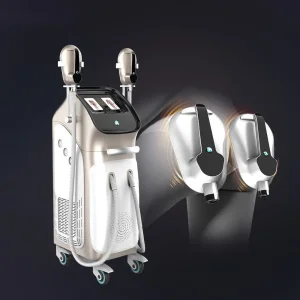


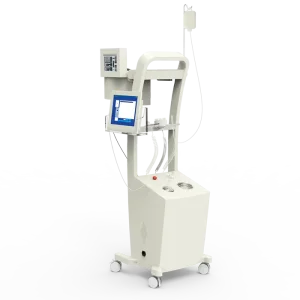

Transitioning from traditional selective photothermolysis to cell-level acoustic shockwave disintegration.
In modern aesthetic dermatology, the engineering paradigm shift from traditional nanosecond Q-switched lasers to picosecond pulse technology represents one of the most vital technological advancements of the past two decades. As a premier CE Certification Pico Laser Device Manufacturer & Supplier, our engineering division focuses on harnessing the photomechanical acoustic effect rather than rely on thermal accumulation. By compressing optical energy delivery into ultra-short pulse durations ranging between 450 picoseconds and 750 picoseconds, picosecond devices generate peak power outputs reaching up to 2.0 Gigawatts (GW).
Delivers acoustic stress waves directly into pigment particles, shattering intracellular melanin and ink clusters into micro-dust without surrounding thermal collateral damage.
Induces Laser-Induced Optical Breakdown in the dermis, creating intra-epidermal micro-cavities that stimulate fresh collagen & elastin synthesis without disrupting stratum corneum integrity.
Drastically reduces post-inflammatory hyperpigmentation (PIH) risks across Fitzpatrick IV-VI skin types by eliminating excess micro-vascular heating.
A high-performance commercial picosecond workstation must combine flexible laser optical paths to address diverse dermatological targets. Our CE-certified platforms incorporate dual-wavelength Nd:YAG resonators (1064nm and 532nm) along with optional 755nm Alexandrite crystal options and dye-pumped handpieces (585nm gold/yellow and 650nm red):
Traditional nanosecond lasers rely on pulse durations of 5 to 20 nanoseconds. During this window, thermal energy diffuses outside the target pigment granule (thermal relaxation time ~10ns for small pigment particles). In contrast, sub-nanosecond picosecond pulses (~450ps) store energy faster than the acoustic relaxation time of pigment granules, causing catastrophic photo-acoustic expansion and fragmentation into particles 10x smaller than those produced by Q-switched lasers.
Quantitative breakdown of technical indicators evaluating treatment speed, clinical safety margins, and long-term operating costs.
| Performance Metrics | SANO Medical Pico Laser Workstation | Traditional Q-Switched Nd:YAG Laser | Fractional CO2 Laser Resurfacing |
|---|---|---|---|
| Primary Mechanism | Photomechanical Acoustic Breakdown | Photothermal Photomechanical Mix | Photothermal Ablation / Micro-Coagulation |
| Pulse Duration | 300 ps – 750 ps | 5 ns – 20 ns | 100 µs – 10 ms |
| Peak Power Output | 1.5 GW – 2.2 GW | 0.1 GW – 0.3 GW | 0.005 GW |
| Average Tattoo Sessions Required | 3 to 5 Treatments | 8 to 12 Treatments | N/A (Not Indicated) |
| Downtime (Rejuvenation) | 2 to 6 Hours (Mild Erythema) | 24 to 48 Hours | 5 to 7 Days Downtime |
| Risk of PIH (Skin Types IV-VI) | Extremely Low (< 2%) | Moderate (12% - 18%) | High (20% - 35%) |
| Handpiece Articulation | 7-Joint Arm (Korean Imported Optical Lenses) | Direct Flex Cable or 7-Joint | Scanner Handpiece Arm |
Tailoring pulse widths, spot sizes, and fluences across global patient demographics and dermatological profiles.
In Asian markets where Fitzpatrick Types III-V predominate, high thermal fluence triggers rebound hyperpigmentation. SANO Pico platforms utilize a low-fluence, multi-pass 1064nm "Pico-Toning" technique combined with a Micro-Lens Array (MLA) focus tip. This acoustic protocol breaks down epidermal melasma and deep Hori's Nevus pigment while maintaining basement membrane integrity, preventing melanin drop-down into the dermis.
Western medical aesthetic practices demand aggressive clearance of stubborn multi-colored decorative tattoos (blue, green, purple, red) alongside non-ablative facial rejuvenation for actinic keratosis and fine wrinkles. Utilizing auto-adjusting spot sizes from 2mm to 10mm with flat-top beam profile delivery, operators clear dense ink loads in half the session count required by standard clinics.
Combining Pico LIOB focus treatments with active cooling systems (such as the ICOOL-III chillers) enables deep dermal micro-injury without epidermal sloughing. This allows high-energy acne scar revisions on tanned or naturally hyper-pigmented skin tones without mandatory post-treatment indoor confinement.
Maximizing patient outcomes often requires layering physical modalities. Our whitepapers detail clinical co-protocols pairing Pico laser pigment toning with Vacuum RF Microneedling for structural dermal tightening, or applying skin cooling equipment during high-fluence tattoo sessions to maintain epidermal temperature below 15°C.
Predictive insights into next-generation pulse compression, AI fluence automation, and optical resonator advancements.
R&D is pushing pulse widths down toward 180-250 picoseconds. Shorter durations boost peak acoustic pressure while completely eliminating micro-thermal diffusion to melanin-rich surrounding skin cells.
Integrating multispectral cameras inside the handpiece to automatically measure epidermal melanin density (Fitzpatrick Index) and dynamically adjust pulse fluence (J/cm²) in millisecond feedback loops.
Replacing flashlamp-pumped optical chambers with Diode-Pumped Solid-State (DPSS) laser modules, extending component lifespan from 3 million shots to over 20 million shots with zero energy decay.
How Beijing SANO Laser integrates precision optical component manufacturing, rapid prototyping, and cost efficiencies.
The global medical aesthetic equipment sector demands high technological precision coupled with reliable supply chain logistics. Based in Beijing's advanced industrial district, SANO Laser leverages China's end-to-end electro-optical manufacturing ecosystem to provide superior price-to-performance advantages for international distributors.
By controlling in-house crystal growth processing (Nd:YAG, KTP crystals), precision mirror coating, and 7-joint articulated arm calibration, SANO eliminates reliance on external component sub-assembly vendors. Every optical cavity undergoes a continuous 72-hour burn-in stress test before chassis installation.
Our modular industrial architecture enables rapid turnaround times for distributors seeking OEM shell redesigns, custom GUI software localization, and custom brand integration. Direct access to regional high-capacity logistics hubs guarantees spare part dispatch within 24 to 48 hours globally.
SANO maintains a strategic safety reserve of critical optical components (including high-voltage capacitors, optical Q-switches, imported flashlamps, and sapphire lenses). This ensures component lead times remain unaffected by global freight disruptions.
Strict adherence to European Union Medical Device Regulations (MDR 2017/745) and international quality systems.
Our manufacturing facilities operate strictly under medical device quality management systems, auditing every step from component sourcing to final energy output calibration.
Comprehensive technical files, clinical evaluation reports (CER), and IEC 60601-1 / IEC 60601-2-22 laser safety test documentation provided to streamline local importer registrations.
Direct access to optical and electrical engineers (not third-party support agents) via real-time remote telemetry diagnostics and step-by-step video assistance.
In-depth technical and commercial answers designed for medical clinic purchasers and device distributors.
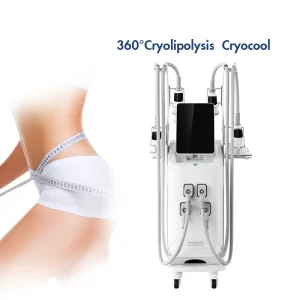
Expand your clinic portfolio with our certified body shaping, laser hair removal, and cooling systems.