- +86 136 8127 5833
- [email protected]
- Shunyi, Beijing, China
Engineered in our Beijing ISO 13485 certified facility. Fully compliant with European CE directives and international safety standards.
An authoritative analysis of market demand shifts, technical evolution, and financial returns for modern clinical aesthetic practices.
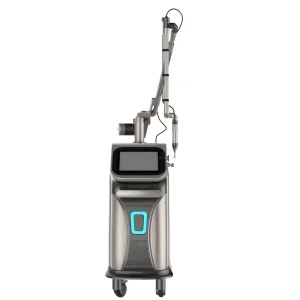
The global market for medical aesthetic laser systems—specifically CE Certification laser tattoo removal devices—is undergoing an unprecedented structural expansion. Driven by evolving lifestyle demographics, workplace cultural shifts, and the rapid growth of the "tattoo regret" metric, dermatology clinics and commercial MedSpas worldwide are prioritizing high-performance, multi-wavelength laser platforms. Recent clinical surveys indicate that over 38% of individuals aged 18 to 45 possess at least one tattoo, with approximately 25% to 30% actively considering partial lightening for cover-up art or total pigment clearance.
Historically, tattoo removal was hindered by archaic nanosecond thermal conduction technologies that frequently resulted in incomplete ink clearance, epidermal scarring, and severe post-inflammatory hyperpigmentation (PIH), particularly across darker skin phenotypes (Fitzpatrick IV–VI). Modern laser optical engineering, led by high-precision original equipment manufacturers (OEMs), has completely transformed this clinical paradigm. The transition from legacy Q-Switched nanosecond platforms to ultra-short picosecond photoacoustic systems allows clinical operators to destroy complex ink matrices in half the treatment sessions previously required.
Understanding the quantum leap from photothermal destruction to stress-wave fragmentation in tattoo ink clearance.
Tattoo pigment granules range from 10 to 100 nanometers in diameter, possessing extremely short thermal relaxation times. Picosecond pulses deliver energy significantly faster than the pigment’s ability to conduct heat, localized within the ink target while preserving surrounding dermal tissue.
Instead of boiling the ink photothermally, picosecond peak power generates intense acoustic pressure waves. This mechanical stress shockwave pulverizes stubborn ink pigment into microscopic, dust-like particles that are swiftly phagocytized by macrophage immune pathways.
SANO’s optical handpiece arrays utilize refractive beam homogenizers to output uniform flat-top spot geometries. This prevents center-spot hot spots, eliminates epidermal ablation, and ensures equal energy density across the entire spot diameter.
A high-performance CE certification laser tattoo removal device must provide multi-spectral laser outputs to target the full chromophore range of modern commercial synthetic inks.
| Wavelength Spectrum | Target Ink Chromophore Colors | Dermal Depth Penetration | Primary Clinical Indication |
|---|---|---|---|
| 1064nm Nd:YAG | Black, Dark Blue, Dark Brown | Deep Dermis (3.5mm–5.0mm) | Standard dark tattoos; ideal for Fitzpatrick IV–VI skin types due to minimal melanin absorption. |
| 532nm Frequency-Doubled | Red, Orange, Purple, Tan | Shallow Dermis (1.5mm–2.5mm) | Warm color ink removal; epidermal solar lentigines and freckle clearance. |
| 755nm Alexandrite Matrix | Green, Teal, Vibrant Blue | Mid Dermis (2.5mm–3.5mm) | Resistant recalcitrant green and blue inks; optimized for low epidermal disruption. |
| 650nm / 585nm Dye Handpiece | Sky Blue, Bright Green, Yellow | Superficial Dermis (1.0mm–2.0mm) | Custom artistic inks and multi-layered professional cosmetic tattoos. |
Customizing laser operating parameters for diverse global demographics, skin tones, and clinical environments.
Clinical practices in Europe and North America predominantly treat complex multi-colored artistic tattoos across Fitzpatrick types I–III, requiring flexible multi-wavelength switching (1064nm, 532nm, and 755nm). Conversely, medical spas across Latin America, the Middle East, and Southeast Asia treat a higher ratio of Fitzpatrick IV–VI patients with dense black carbon tattoos and traumatic pigment deposits.
SANO's localized software presets allow operators to select skin type, ink density, and pigment depth, automatically adjusting spot size (2mm–10mm) and pulse duration to protect epidermal melanin while maintaining peak photoacoustic energy.
A rapidly expanding commercial channel for aesthetic clinics is the "Tattoo Cover-Up Preparation" protocol. Modern tattoo artists frequently require clients to undergo 2 to 4 high-fluence laser sessions to lighten existing dark ink by 60% to 70% prior to tattooing new designs over the site.
By positioning laser tattoo removal as a complementary pre-requisite for cover-up artwork, clinics double their patient conversion rate while reducing total clear time, generating high recurring treatment revenue.
Why top international distributors partner with SANO for medical laser equipment production.
Our Beijing manufacturing center features ISO Class 7 cleanroom optical assembly stations. We integrate premium components—including imported laser rods, optical resonators, and Korean 7-joint articulated arms—ensuring less than 2% energy attenuation over millions of shots.
To withstand continuous daily clinic operation without energy output decay, SANO platforms incorporate semiconductor TEC active water cooling paired with high-pressure Italian pumps, keeping internal water temperatures strictly controlled at 20°C–25°C.
We provide full-scope white-label manufacturing: chassis design, custom paint finishes, localized multilingual UI software engineering, private labeling, and custom parameters tailored for regional market registration.
Ensuring medical-grade electrical safety, optical radiation compliance, and lifelong operational uptime.
A critical prerequisite for commercial importers and clinical buyers purchasing a CE Certification laser tattoo removal device is total compliance with international regulatory frameworks. SANO equipment undergoes rigorous third-party laboratory verification to satisfy the European Union's stringent Medical Device Regulation (MDR) standards and Electromagnetic Compatibility directives:
Beyond regulatory certification, SANO backs every factory device with a robust support framework: a 2-year comprehensive factory warranty, 24/7 technical hotline access, remote diagnostic log analysis, and rapid express dispatch of genuine replacement modules to maintain clinic continuity worldwide.
Anticipating the next decade of optoelectronic developments in tattoo clearance and skin rejuvenation.
Real-time optical cameras combined with machine learning algorithms to auto-detect ink boundary density, automatically matching laser fluence and pulse frequency shot-by-shot.
Pushing pulse durations into the femtosecond domain (<100ps), practically eliminating residual heat generation and enabling total ink clearance in fewer than 3 clinical visits.
Transitioning from flashlamp-pumped laser rods to all-solid-state Diode-Pumped Solid-State (DPSS) cavities, shrinking device footprint by 50% while doubling optic life expectancy.
Discover our extended line of medical laser, RF microneedling, vascular, and body contouring platforms.
Detailed, engineering-backed answers regarding laser specs, clinical protocols, CE compliance, and factory direct ordering.