Follow SANO SANO Laser Facebook page

Who Are the Top Diode Laser Manufacturers in China?

Time:2026-09-30 Author:Mason
0%

China has become an important source of diode laser components and systems, serving industrial, medical, research, and communications markets. Yet identifying the “top” manufacturers is not as simple as comparing company names. Product range, engineering capability, quality controls, and after-sales support can differ sharply between suppliers. A polished catalog is not proof of consistent production.

This overview examines how to assess Chinese Diode Laser manufacturers and what separates established producers from trading companies or smaller specialists. It considers practical details such as wavelength options, output stability, beam quality, thermal management, packaging, and documented testing. For example, a buyer may need a compact module for an instrument, while a factory may require a high-power source designed for steady operation. These needs call for different expertise.

Evidence matters. Buyers should review technical datasheets, sample results, factory information, and the clarity of a supplier’s responses. Ask how performance is measured, what tolerances apply, and whether support continues after delivery. Small details count. A vague test report can leave important questions unanswered.

No ranking can fit every application, and company capabilities may change over time. Some public information is incomplete, too. The manufacturers discussed here should therefore be treated as candidates for careful comparison, not as a universal endorsement. A useful shortlist starts with verified specifications, realistic requirements, and direct questions. Just as important, it leaves room to reconsider assumptions when test data or customer needs do not match the sales pitch.
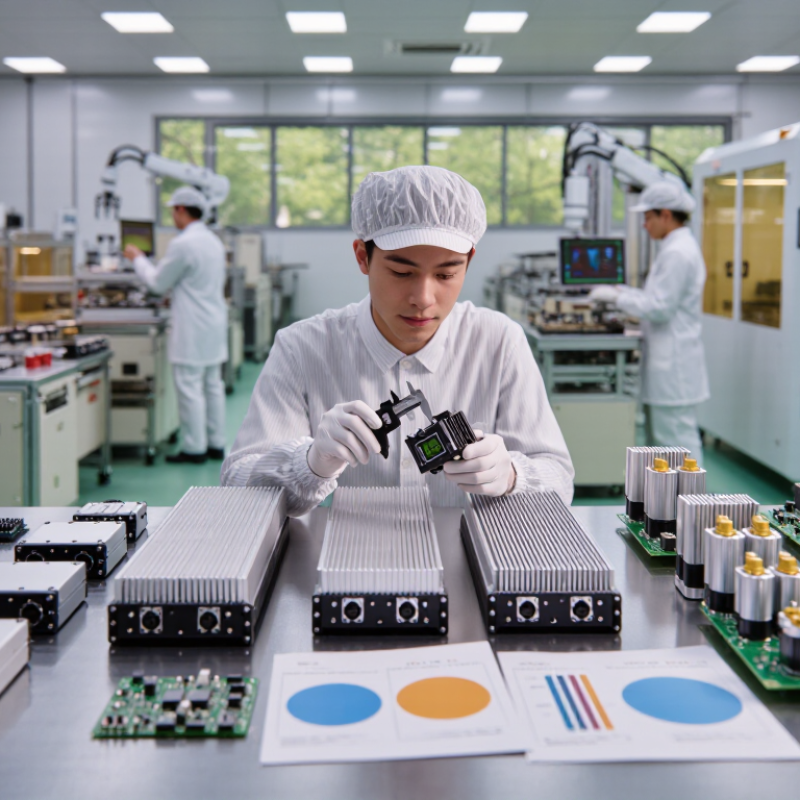
Who Are the Top Diode Laser Manufacturers in China?

Diode Lasers: Technology, Types, and Applications

Diode Lasers: Technology, Types, and Applications

Diode lasers convert electrical energy into focused light through semiconductor junctions. Their compact size supports fiber communication, LiDAR, medical equipment, barcode scanners, and industrial cutting. Common types include single-mode, multimode, edge-emitting, and vertical-cavity designs. Wavelength matters. Near-infrared units suit optical sensing, while blue and red wavelengths support material processing and measurement. According to MarketsandMarkets’ 2024 report, the global diode laser market is projected to grow steadily through 2028, driven by communications, healthcare, and manufacturing demand.

When comparing Chinese manufacturers, technical evidence matters more than production volume. Check wavelength stability, beam quality, thermal control, lifetime testing, and documented compliance. A manufacturer may offer impressive optical power, yet poor heat dissipation can shorten service life. The distinction is not always clean. Some suppliers assemble imported chips, while others develop epitaxial structures and packaging internally. Reports from the International Energy Agency also show continuing expansion in data networks, increasing demand for efficient optical components. Still, market forecasts can differ because analysts use different application boundaries.

Tips: Request test reports with operating temperature, current, output power, and failure-rate data. Ask for samples before signing large orders. Confirm whether the quoted lifetime uses real field conditions or ideal laboratory testing. A lower price can be attractive, but unstable output creates hidden calibration costs. Check the details.

Criteria for Identifying Leading Chinese Manufacturers

A credible assessment of Chinese diode laser manufacturers starts with engineering evidence, not polished product photos. Look for clear specifications covering wavelength, output power, beam quality, and operating limits. Ask how each unit is tested, and whether test records match the delivered product. Details matter. A manufacturer with documented production controls can explain how it handles calibration, component traceability, and inspection failures. Small differences in these steps may affect consistency across a production batch. Review technical documents for precise measurements, stated test conditions, and realistic performance ranges. Vague claims are not enough.

Manufacturing capacity is useful only when quality remains consistent as orders grow. Ask about aging tests, thermal management checks, and inspection procedures for finished units. Request sample reports, then compare their figures with your application requirements. Service also deserves attention: response times, troubleshooting guidance, and access to replacement components can influence a project’s long-term reliability. Look for specific answers rather than broad assurances. A factory visit or independent evaluation may reveal practical details that brochures miss, such as clean assembly areas and organized calibration records. No checklist is perfect. I would still leave room for uncertainty, since published specifications cannot predict every operating condition. Reliable suppliers acknowledge limits and explain what further testing may be needed.

Who Are the Top Diode Laser Manufacturers in China? - Criteria for Identifying Leading Chinese Manufacturers

Evaluation dimension What to verify Reliable evidence to request or check How to compare suppliers fairly
Product specification and application fit Confirm the diode laser type, wavelength, output power, operating mode (continuous-wave or pulsed), package, and intended application. Product datasheets, package drawings, operating limits, and written confirmation that the proposed part meets the application requirements. Compare products with the same wavelength, operating mode, package, and rated conditions. Do not treat different product classes as direct equivalents.
Performance data and test conditions Check which key parameters are reported, such as optical output power, threshold current, slope efficiency, and beam divergence. Datasheets and test reports that state measurement methods, drive current, case temperature, and whether values are typical or guaranteed. Compare like-for-like measurements at the same temperature and drive conditions. A typical value is not the same as a guaranteed minimum.
Reliability and lifetime evidence Assess whether lifetime and reliability claims are supported by defined test conditions and an explanation of the test method. Reliability-test summaries, sample sizes where available, operating conditions, failure criteria, and warranty terms. Give more weight to documented test methods and clearly stated conditions than to an unqualified lifetime figure.
Quality management system Verify the scope and validity of the supplier’s quality-management certification. A current certificate issued by an accredited certification body, with the certified legal entity, site, and scope shown. Check that the certificate applies to the manufacturing site and activities relevant to the product. ISO 9001 is a quality-management-system standard, not a product-performance certification.
Product safety and regulatory documentation Determine which safety and market-access requirements apply to the specific diode, module, or end product. Applicable test reports, declarations, labeling information, and supporting technical documentation. IEC 60825-1 addresses laser-product safety; requirements depend on product configuration and destination market. Verify documents against the exact model and configuration. A component’s documentation does not automatically establish compliance of the finished system.
Manufacturing capability and process control Understand whether the supplier manufactures the relevant product or sources it, and how production and inspection are controlled. Process overview, production-site details, incoming and outgoing inspection procedures, and traceability examples. Assess capability against the required product and volume; do not infer production capacity from a general company profile alone.
Customization and engineering support Check capability to support required wavelengths, power levels, packages, fiber coupling, thermal management, or integration needs. Written technical responses, interface drawings, sample evaluation plans, and documented change-control procedures. Evaluate response quality and feasibility against a defined technical specification rather than broad customization claims.
Supply continuity and traceability Review lot identification, change notification, lead-time communication, and plans for managing supply interruptions. Sample labels or certificates of conformity, lot-traceability procedures, product-change notices, and agreed delivery terms. Confirm that traceability and change-control commitments are documented for the product being purchased.
Commercial and after-sales support Clarify sample availability, minimum order quantities, warranty coverage, technical support, and return procedures. Written quotations, warranty terms, service contacts, and a documented process for handling nonconforming products. Compare total commercial terms and support commitments, not unit price alone.

Note: This table provides due-diligence criteria, not a ranked list or a claim that any unnamed supplier meets them. Verify certificates, specifications, and regulatory documents for the exact product, manufacturing site, and destination market.

Profiles of China’s Top Diode Laser Manufacturers

China’s leading diode laser manufacturers are best compared by engineering depth, not brochure claims. Look for teams that specify wavelength, output power, beam quality, and operating conditions clearly. These details help buyers judge whether a device suits a medical, industrial, or research application. Ask how output stability is checked across repeated operating cycles.

A strong manufacturer profile should also explain production controls. Useful evidence includes component traceability, thermal testing, calibration records, and documented aging tests. A factory tour or technical discussion can reveal how staff handle alignment and heat dissipation. Small details matter. Still, a polished profile cannot replace independent testing, and published specifications may not show performance under every real-world condition.

Tips: Request sample test reports and clarify warranty terms, service response times, and spare-part availability. Compare the same operating conditions across suppliers. Keep written records of answers. A neat brochure is not proof; I would want practical test data before making a decision.

Comparing Manufacturers by Products and Capabilities

Comparing Chinese diode laser manufacturers requires more than checking peak output. Product range matters: some suppliers focus on high-power bars and stacks for industrial pumping, while others offer single emitters, fiber-coupled modules, or compact devices for sensing. Ask for wavelength tolerance, power stability, beam quality, and operating-temperature limits. These details affect whether a part fits a real system, not just a catalog table.

Allied Market Research estimated the global laser diode market at US$7.4 billion in 2020 and projected US$15.6 billion by 2030, a forecast rather than a China-specific measure. The expanding market makes capability comparisons more useful. Check whether a manufacturer provides aging-test conditions, sample test reports, and traceable production batches. Ask how thermal management is handled; a small copper base can behave very differently under continuous operation than under short pulses. Details matter.

Manufacturing depth also varies. Some factories assemble chips and packages in-house; others rely on external chip sources. Neither model is automatically superior, but it changes lead times and process control. Request test data across multiple units, not one selected sample. A neat catalog can mislead. I would also verify how custom wavelengths, connector options, and failure analysis are supported after delivery. Claims of “high reliability” need defined test hours, current, and ambient temperature. Without those conditions, comparisons are weak.

Key Trends in China’s Diode Laser Industry

China’s diode laser industry is shifting toward higher efficiency, tighter wavelength control, and more compact modules.

Manufacturers are refining chip structures and thermal designs to improve output stability. In practical terms, a cooler-running module can maintain performance longer in a crowded equipment cabinet. Integration is also gaining attention. Buyers increasingly want emitters, drivers, and monitoring features that work together, rather than separate parts that require extensive adjustment. Progress is uneven, though. Product specifications do not always reveal how a device performs after long operating cycles. Details matter.

Automation and process control are shaping production, from wafer inspection to package testing. More consistent measurements can help reduce variation between batches, especially in demanding industrial and medical equipment. Meanwhile, demand for customized wavelengths and power levels is encouraging flexible production lines. This can make sourcing more precise, but it may also lengthen development schedules for low-volume designs. Supply-chain resilience is another concern, with manufacturers paying closer attention to critical materials and component availability. Buyers should compare test conditions, lifetime data, and thermal limits—not just headline power. The industry’s pace is real, but claims deserve careful checking.

FAQS

What technical details should I request from a diode laser manufacturer?

Request wavelength, output power, beam quality, and operating limits. Ask for precise measurements. Vague claims are weak evidence.

Why are test records important when comparing suppliers?

Test records show whether specifications match delivered units. Check test conditions, measured values, and batch information. One sample proves little.

How can I evaluate production quality?

Ask about calibration, component traceability, inspection failures, and aging tests. Organized records matter. They reveal process discipline.

Does high manufacturing capacity guarantee consistent quality?

No. Quality can change as order volume increases. Review inspection procedures, thermal checks, and repeated-unit test results. More output is not automatically better.

What product differences should buyers examine?

Compare single emitters, fiber-coupled modules, bars, stacks, and compact devices. Check wavelength tolerance, power stability, beam quality, and temperature limits. The catalog may hide practical differences.

How should thermal performance be assessed?

Ask how the device handles heat during continuous operation. A small copper base may perform differently under short pulses. Request test conditions and operating duration.

Is in-house assembly always better?

Not necessarily. Some manufacturers assemble chips and packages internally. Others use external chip sources. This may affect lead times and process control.

What service details should I confirm before ordering?

Confirm warranty terms, response times, spare-part access, and failure-analysis support. Keep written answers. Memory is imperfect.

Can a factory visit improve the evaluation?

Yes. A visit may reveal clean assembly areas and organized calibration records. Independent testing remains valuable. Brochures cannot show every operating condition.

How should I handle market-size forecasts?

Treat forecasts as context, not proof of manufacturer quality. A growing market does not guarantee reliable products. I would still require practical test data.

Conclusion

This article explains the fundamentals of Diode Laser technology, including its main types, operating characteristics, and uses across industrial, medical, communications, and research settings. It also outlines practical criteria for assessing Chinese manufacturers, such as product range, technical expertise, manufacturing consistency, quality control, customization options, and customer support.

Rather than focusing on brand names, the article compares manufacturers by the capabilities and products they offer, helping readers understand how different suppliers may serve different needs. It concludes by examining key industry trends in China, including ongoing product development, greater attention to efficiency and reliability, and expanding applications. Together, these sections provide a clear framework for evaluating the market and selecting a suitable manufacturing partner.


Mason

Mason

Mason is a seasoned marketing professional with a deep expertise in the company's offerings and a passion for driving brand awareness. With a strong background in digital marketing strategies, he has an innate ability to connect with diverse audiences and effectively communicate product benefits.......