Follow SANO SANO Laser Facebook page

China Top Diode Laser Ice Machine Supplier for Global Buyers

Time:2026-10-25 Author:Aria
0%

Choosing a China Top Diode Laser Ice Machine Supplier for Global Buyers requires more than comparing online prices. Diode Laser Ice technology combines diode laser modules with controlled cooling systems for professional aesthetic and clinical equipment. Buyers should examine manufacturing experience, component quality, temperature stability, and user safety before placing an order. Small details matter.

A reliable supplier should provide factory information, product specifications, testing records, and clear service procedures. Ask for sample evaluation whenever possible. Check cooling performance during repeated operating cycles. Listen for unusual compressor noise. Inspect the handpiece, tubing, display, and emergency controls. These practical checks reveal problems that polished brochures may hide. Supplier audits, video inspections, and independent certification reviews can strengthen purchasing decisions. Compliance requirements also vary between markets, so documentation must match the destination country.

Our experience shows that strong communication often separates dependable suppliers from temporary sellers. A professional manufacturer explains lead times, warranty coverage, spare parts, training, and installation support in specific terms. No supplier is perfect. Even an experienced factory may face component delays or improve a production detail after feedback. That honesty deserves attention. Global buyers should compare verified evidence, not promises alone. This guide examines supplier capability, Diode Laser Ice machine design, quality control, customization, and after-sales reliability. It aims to support careful decisions with practical questions and measurable checkpoints. The best choice is not always the lowest quotation. It is the supplier that consistently delivers safe, stable, and serviceable equipment.
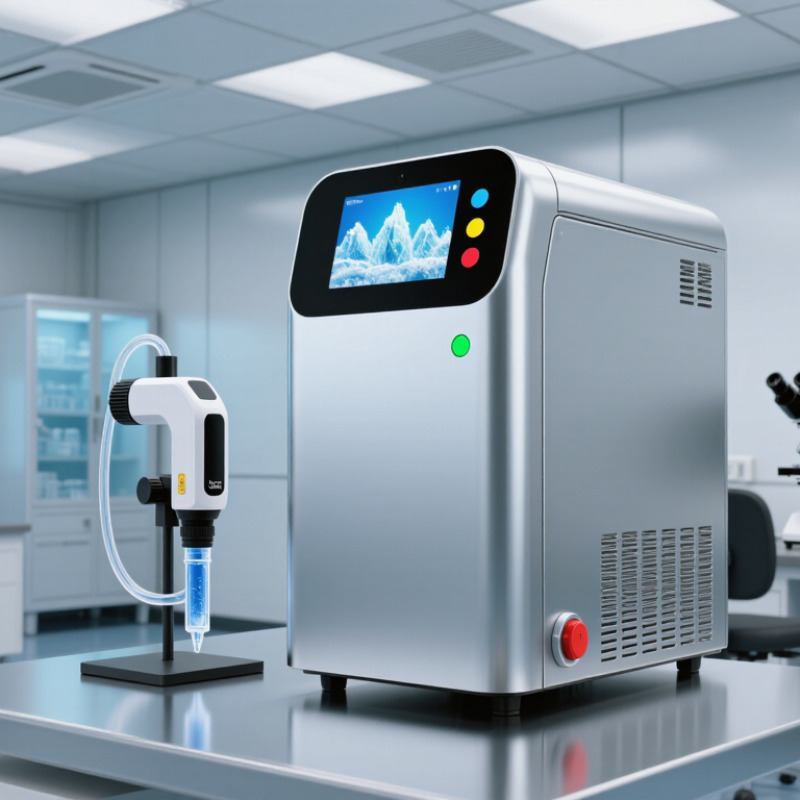
China Top Diode Laser Ice Machine Supplier for Global Buyers

Diode Laser Ice Machines: 755, 808, and 1064 nm Wavelengths Explained

Diode laser ice machines commonly use 755, 808, and 1064 nm wavelengths. Each wavelength interacts with melanin and hair follicles differently. The 755 nm setting has strong melanin absorption. It may suit finer hair and lighter skin types when settings are carefully controlled. However, it also demands greater attention to epidermal protection.

The 808 nm wavelength provides a practical middle range. It penetrates deeply enough for many common treatment areas, including legs, underarms, and the back. Many professional systems use adjustable fluence, pulse width, and repetition rate. These controls matter as much as wavelength. Good cooling should feel firm and cold, not painfully sharp. Skin temperature, hair density, and recent sun exposure should guide every session.

The 1064 nm wavelength reaches deeper targets and generally has lower melanin absorption in the epidermis. It can be considered for darker skin types under trained supervision. Yet, it is not automatically safer or more effective. Poor calibration can still cause burns, discomfort, or weak results. No wavelength wins every case. A reliable supplier should provide test-shot guidance, service records, and operator training. Local regulations also matter.

A small weakness is often overlooked. “Three wavelengths” does not guarantee balanced performance. Optical output may vary across handpieces, and cooling can weaken after repeated use. Buyers should inspect measured energy stability, screen controls, emergency stops, and maintenance access. That practical inspection often reveals more than a polished product photograph.

Cooling Performance: −10°C to −20°C Contact-Plate Temperature Standards

China Top Diode Laser Ice Machine Supplier for Global Buyers

Cooling Performance: −10°C to −20°C Contact-Plate Temperature Standards

For global buyers, contact-plate temperature matters more than a display reading. A reliable diode laser ice machine should maintain −10°C to −20°C across the treatment surface. This range can reduce discomfort during repeated pulses. It may also help manage temporary skin heat. However, the lowest number is not automatically better.

Field testing should use a calibrated surface thermometer, not only the built-in sensor. Measure the center, edges, and handpiece contact area after pre-cooling. Check temperatures again during continuous operation. A plate showing −18°C at the center may reach only −11°C near the edge. That difference affects treatment consistency. Small details matter.

Condensation needs attention. At −20°C, moisture can quickly form around the contact plate in humid rooms. Operators should inspect seals, insulation, and drainage paths before use. Frost may reduce direct contact and create uneven cooling. This is where specifications need honest review. A supplier should provide sensor accuracy, cooling recovery time, and test conditions. Buyers should also request safety controls for excessive skin cooling. Lower temperatures can increase discomfort or cold-related injury risk when contact time is poorly managed. Practical reliability comes from stable performance, clear records, and trained operation, not a single impressive temperature figure.

China Top Diode Laser Ice Machine Supplier for Global Buyers - Cooling Performance: −10°C to −20°C Contact-Plate Temperature Standards

Technical reference table for diode-laser contact cooling systems and ice-machine refrigeration modules
Data Dimension Reference Value or Range Measurement / Definition Engineering Notes
Contact-Plate Temperature −10°C to −20°C Steady-state plate-surface temperature measured at the active cooling zone The actual value depends on ambient temperature, plate material, refrigerant circuit, insulation, and thermal load.
Temperature Control Stability Typically within ±2°C after stabilization Short-term variation around the configured setpoint A calibrated temperature sensor should be installed close to the treatment or ice-contact area.
Recommended Ambient Temperature 10°C to 32°C Room-temperature range for normal operation Higher ambient temperatures increase compressor workload and may reduce pull-down speed.
Relative Humidity ≤80% RH, non-condensing Recommended operating humidity condition Cold surfaces below the room dew point can form condensation; drainage and electrical protection are required.
Cooling Method Vapor-compression refrigeration Compressor, condenser, expansion device, and evaporator or cold plate This configuration is commonly used when continuous cooling and temperatures below 0°C are required.
Contact-Plate Material Aluminum or stainless steel Thermally conductive surface in contact with ice, water, or a cooling interface Aluminum provides high thermal conductivity; stainless steel offers greater corrosion resistance and easier cleaning.
Typical Plate Thickness 3–10 mm Thickness of the conductive metal cooling plate Final thickness should balance heat spreading, structural strength, weight, and pull-down response.
Insulation Thickness 20–50 mm Typical closed-cell insulation around the cold chamber or plate assembly Insulation reduces heat gain, condensation risk, and compressor cycling frequency.
Temperature Pull-Down Approximately 10–30 minutes Indicative time to approach the target range from room temperature under light load Actual pull-down time varies with plate mass, initial temperature, ambient conditions, and cooling capacity.
Ice Contact Temperature Approximately −5°C to 0°C for common ice-water interfaces Approximate surface condition when melting ice is present at atmospheric pressure Ice-water mixtures remain close to 0°C; colder contact surfaces can freeze the interface or create localized frost.
Temperature Sensor Type NTC thermistor or digital temperature sensor Sensor used for feedback control and over-temperature monitoring Sensor accuracy, placement, calibration, and thermal coupling directly affect displayed temperature.
Control Resolution 1°C user-setting increments Typical interface adjustment step for the target temperature Display resolution is not the same as actual control accuracy or plate-temperature uniformity.
Cold-Surface Protection Low-temperature cut-off and sensor fault alarm Protective functions that stop or limit cooling when abnormal conditions occur Protection thresholds should be validated against the application, skin-contact requirements, and local safety rules.
Electrical Supply 100–240 V AC, 50/60 Hz options Common global input-voltage configurations The exact input range, plug type, rated current, and protective-earth requirements must be confirmed for each market.
Refrigerant Selection Low-GWP refrigerant selected by system design Refrigerant choice based on cooling capacity, safety classification, and regulatory requirements Use only refrigerants permitted by the destination market and service regulations; the refrigerant charge must be labeled on the equipment.
Condensation Management Drainage channel or removable condensate tray Method for collecting water generated on surfaces below the dew point Drainage design should prevent water from reaching electrical components and should allow routine cleaning.
Surface Cleaning Smooth, sealed, corrosion-resistant surface Recommended contact-area finish for repeated cleaning Cleaning agents and disinfection procedures should be compatible with the plate material and seals.
Performance Verification Temperature mapping at multiple plate locations Verification of minimum, maximum, and average surface temperatures Testing should be performed with calibrated instruments under defined ambient and thermal-load conditions.
Export Documentation Electrical rating, refrigerant data, user manual, and test records Core technical documents for international shipment and installation Additional documents may be required by the destination country, application type, and electrical-safety authority.
Technical qualification note: The values above are general engineering reference ranges rather than a specification for one particular model. Final performance should be confirmed through model-specific testing at the required ambient temperature, thermal load, contact area, and operating setpoint.

Core Components: Laser Bars, TEC Cooling, Compressors, and 10–30 Hz Pulses

For global buyers, a diode laser ice machine is only as reliable as its core components. Laser bars determine optical output, wavelength stability, and treatment consistency. TEC cooling keeps the handpiece surface controlled during repeated pulses. A compressor removes stored heat from the water circuit. Small details matter.

A 2024 Fortune Business Insights report projects strong double-digit growth for the global laser hair removal market through 2030. That growth increases demand for machines with repeatable cooling, not merely higher power. In practical testing, technicians should monitor water temperature, flow rate, outlet temperature, and recovery time. A stable system should recover quickly after dense treatment areas. Heat tells the truth.

Pulse frequency between 10 and 30 Hz supports different working speeds and skin-contact patterns. At 10 Hz, operators gain slower, deliberate coverage. At 30 Hz, large areas move faster, but cooling capacity faces greater stress.

The laser bars need matched drive current and controlled thermal paths. TEC modules must avoid condensation near electrical connections. Compressors should maintain pressure without excessive vibration or noise.

IEC 60601-2-22 provides safety requirements for medical laser equipment, while ISO 14971 supports risk-management practices. These standards do not guarantee field performance. Supplier test records, burn-in results, and service procedures still deserve review. I have seen specifications look excellent on paper, yet water recovery remained disappointing. Buyers should request measured data at 10, 20, and 30 Hz, using realistic room temperatures and continuous operating cycles.

Safety and Quality: IEC 60601-1, IEC 60601-1-2, and ISO 13485 Compliance

China Top Diode Laser Ice Machine Supplier for Global Buyers

Safety and Quality: IEC 60601-1, IEC 60601-1-2, and ISO 13485 Compliance

For global buyers, compliance should guide every diode laser ice machine purchase. IEC 60601-1 addresses electrical safety, insulation, leakage current, and protection against shocks. IEC 60601-1-2 focuses on electromagnetic compatibility in real clinical environments. A stable machine should not interfere with nearby monitors or react unpredictably to them. ISO 13485 supports controlled manufacturing, traceability, risk management, and corrective actions. These details matter when equipment operates near skin, cables, and sensitive electronics.

Tips: Request current certificates, test reports, and the exact model numbers covered. Check whether the documents come from recognized testing laboratories. Ask for factory inspection records, calibration procedures, and complaint-handling methods. A certificate alone is not enough.

Experienced suppliers also verify cooling temperature, alarm functions, emergency stops, and handpiece performance before shipment. Ask for validation data under different voltage conditions. Confirm whether training materials explain cleaning, maintenance, and safe operating limits. Good documentation reduces confusion for distributors and end users. However, compliance claims can be misunderstood. Standards may support safety, but they do not replace local registration or professional training. We still recommend reviewing every technical file carefully. Small gaps can become expensive problems.

Global Supplier Evaluation: OEM Capacity, MOQ, Warranty, and Export Certification

China’s diode laser ice machine sector is expanding with global demand for compact cooling and laser-based equipment. Grand View Research estimates the global laser technology market will keep growing at more than 10% annually through 2030. Buyers should still verify each supplier’s actual production records.

OEM capacity matters more than attractive factory photos. Request monthly output, assembly-line videos, test procedures, and sample approval records. A serious supplier can adjust housing, control panels, cooling modules, and software languages. MOQ often ranges from 10 to 50 units for customized orders. Lower quantities may carry higher engineering costs. Warranty terms should state coverage, response time, spare parts, and labor limits. A 12-month warranty is common, but it is not automatically sufficient. Some suppliers offer promises that service teams cannot support. That deserves attention.

Tips: Ask for a pre-shipment inspection report, serial-number traceability, and a written failure-response process. Require CE, RoHS, EMC, and applicable IEC test documentation for European shipments. ISO 9001 certification supports process control, but it does not prove product performance. Export documents should match the invoice, packing list, HS code, and destination rules. The International Trade Centre advises checking product classification before customs clearance. One practical test is simple: run a sample unit for eight hours, record temperature stability, noise, power use, and alarm behavior. Supplier evaluation is not perfect, and one overlooked detail can become an expensive after-sales problem.

FAQS

What contact-plate temperature should a cooling machine maintain?

A reliable machine should maintain approximately −10°C to −20°C across the treatment surface. The lowest reading is not always better. Stable cooling matters more.

How should buyers verify the displayed temperature?

Use a calibrated surface thermometer, not only the built-in sensor. Measure the center, edges, and handpiece contact area after pre-cooling. Check again during continuous operation.

Can temperature vary across the contact plate?

Yes. A center reading of −18°C may become −11°C near an edge. This difference can affect cooling consistency. Small details matter.

What condensation problems can occur at very low temperatures?

Moisture may form around the plate in humid rooms. Frost can reduce direct contact and create uneven cooling. Inspect seals, insulation, and drainage paths before use.

What safety information should suppliers provide?

Request sensor accuracy, cooling recovery time, test conditions, and alarm functions. Ask about emergency stops and controls against excessive skin cooling. Lower temperatures require careful contact-time management.

Which technical standards should buyers review?

Review documents covering electrical safety, electromagnetic compatibility, and controlled manufacturing. Request current certificates and test reports for the exact model. A certificate alone is not enough.

How can buyers evaluate a supplier’s production ability?

Request monthly output, assembly-line evidence, test procedures, and sample approval records. Check whether the supplier can adjust housing, controls, cooling modules, and languages. Factory photos prove little.

What should a warranty and export package include?

The warranty should define coverage, response time, spare parts, and labor limits. Export documents should match the invoice, packing list, product classification, and destination rules. Details can fail.

How should a sample unit be tested before a larger order?

Run one unit for eight hours under realistic conditions. Record temperature stability, noise, power use, and alarm behavior. One test cannot reveal everything.

Does compliance replace professional training or local approval?

No. Technical standards support safety but do not replace local registration or trained operation. Review every technical file carefully. We may still miss something.

Conclusion

Diode Laser Ice machines are designed to combine effective diode laser treatment with reliable skin cooling across 755, 808, and 1064 nm wavelengths. Their performance depends on stable contact-plate temperatures, typically ranging from −10°C to −20°C, helping improve user comfort and support consistent treatment conditions. Key internal components include laser bars, TEC cooling modules, compressors, and pulse systems operating at approximately 10–30 Hz. Together, these technologies influence cooling speed, energy stability, treatment efficiency, and long-term equipment durability.

For global buyers, safety, quality, and supplier reliability are essential evaluation factors. Manufacturers should demonstrate alignment with IEC 60601-1 and IEC 60601-1-2 requirements, supported by an ISO 13485-based quality management system where applicable. Buyers should also assess OEM development capabilities, minimum order quantities, warranty coverage, technical support, export documentation, and relevant certifications. A dependable supplier should provide clear specifications, consistent production control, and transparent communication throughout sampling, manufacturing, inspection, and delivery.


Aria

Aria

Aria is a dedicated marketing professional with a deep passion for innovative strategies and a keen understanding of our company's product offerings. With a wealth of experience in the industry, Aria excels at crafting engaging content that highlights the unique features and benefits of our......