- +86 136 8127 5833
- [email protected]
- Shunyi, Beijing, China
Choosing professional equipment in 2026 requires more than comparing laser power and purchase prices. Diode Laser Hair Removal systems now compete through wavelength design, cooling performance, treatment speed, software controls, and service support. Grand View Research estimated the global laser hair removal market at approximately USD 1.03 billion in 2023, with strong growth projected through 2030. Fortune Business Insights also reports substantial expansion, although its estimates differ because market definitions vary. That difference deserves attention.
The right device must match real treatment conditions. A busy clinic may need a large spot size, rapid repetition rate, and stable cooling for continuous appointments. A smaller studio may value portability, simple controls, and lower maintenance costs. Common diode platforms use wavelengths near 808 nanometers, while multi-wavelength systems may combine 755, 808, and 1064 nanometers. However, more wavelengths do not automatically mean better results. Clinical training matters.
Safety evidence should guide every purchase. Review the manufacturer’s test documentation, electrical safety certifications, cooling specifications, handpiece lifespan, and service records. IEC 60601 standards are relevant to medical electrical equipment, while ISO 13485 indicates a structured quality-management system. These credentials support trust, but they do not replace local regulatory checks or operator competence. The U.S. FDA device database and regional health authorities can help verify applicable requirements.
Be practical.
Ask for treatment demonstrations on different skin tones, not only polished videos. Check fluence stability after repeated pulses. Confirm eye protection, emergency procedures, warranty coverage, and replacement-part availability. Some sales claims remain difficult to verify. Therefore, this guide compares technical performance, clinical usability, total ownership cost, and supplier credibility before recommending any Diode Laser Hair Removal equipment.
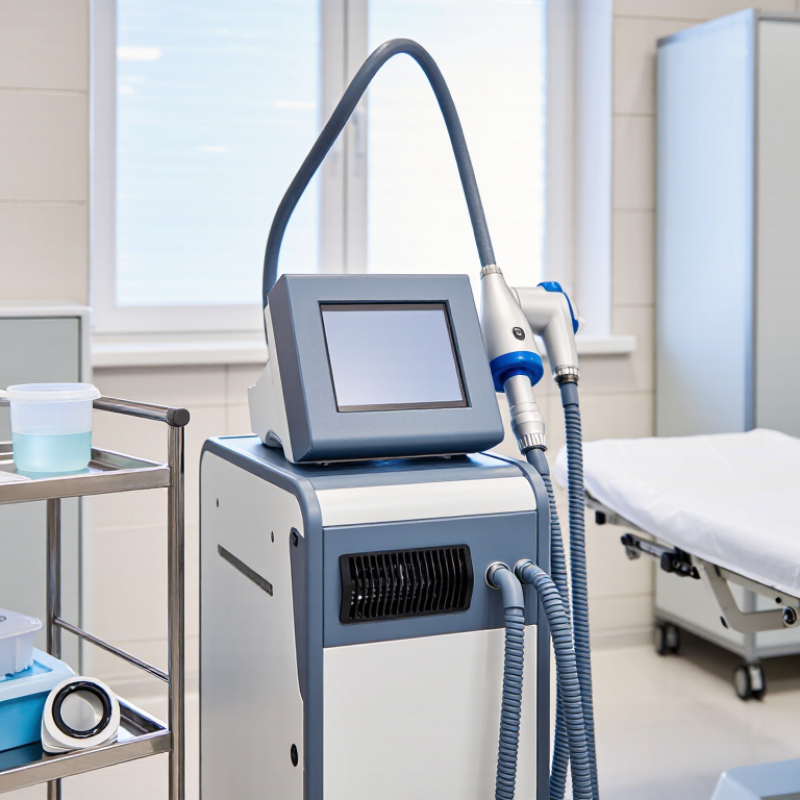
Choosing diode laser hair removal equipment in 2026 requires more than comparing power ratings. The technology uses concentrated light to heat melanin in the hair follicle while protecting surrounding skin. Wavelength selection matters. Common systems use wavelengths near 755, 810, or 1064 nanometers, each offering different absorption, penetration, and safety characteristics. A suitable device should support adjustable fluence, pulse duration, spot size, and repetition rate.
Skin assessment must guide every setting. Darker skin may need longer pulses, lower energy, and stronger cooling to reduce epidermal injury. Thick hair often responds differently from fine hair. That matters. Look for integrated cooling that remains stable during repeated pulses, not only during demonstrations. A temperature sensor, clear treatment display, and emergency stop can improve practical control. Do not guess.
Reliable equipment also depends on calibration, service records, and operator training. Ask whether energy output can be tested regularly with professional measuring tools. Check the handpiece weight, cable flexibility, and screen visibility under bright room lighting. Small details matter. A technically advanced device can still perform poorly when maintenance is neglected or settings are copied without assessment. I would also question impressive claims supported only by marketing language. Clinical evidence, transparent specifications, and realistic treatment protocols deserve greater attention. Results may vary, and even experienced operators must review their decisions after every session.
Concentrated light heats melanin inside the hair follicle. Surrounding skin receives less heat when settings and cooling are appropriate. Results vary.
Systems often use wavelengths near 755, 810, or 1064 nanometers. Around 755 nm may suit finer, shallower hair. Near 810 nm offers a balanced option. Around 1064 nm penetrates deeper and may suit darker skin with careful settings.
Darker skin may require longer pulses, lower energy, and stronger cooling. These choices can reduce excessive epidermal heating. A patch test remains important. One test is not enough.
Coarse, dark hair usually absorbs laser energy efficiently. Fine, light, red, or grey hair may respond less predictably. Facial hair can behave differently from leg hair. Manage expectations honestly.
Check fluence, pulse duration, spot size, and repetition rate. Higher energy is not automatically better. Operators should begin conservatively and adjust after observing skin response.
Cooling should remain stable during repeated pulses, not only during a short demonstration. Contact cooling may feel controlled. Air cooling can help around curved areas. Cryogen cooling may feel sharp. Test the handpiece repeatedly.
Request calibration records and regular energy-output testing. Check handpiece weight, cable flexibility, and screen visibility under bright lights. An emergency stop and temperature sensor improve control. Impressive specifications can still disappoint.
Operators need documented training, maintenance records, emergency procedures, and skin assessments. Treatment notes should include settings, reactions, hair density, and body area. I would review every session, because copied settings can fail.
Choosing the right Diode Laser Hair Removal equipment in 2026 requires more than comparing prices or appearance. Start by understanding how diode laser technology works and how different wavelengths may suit various skin tones, hair colors, hair thicknesses, and treatment areas. Equipment should offer adjustable energy settings, pulse durations, and reliable cooling systems to support effective treatments while improving client comfort. A well-designed device should also include safety features such as stable energy delivery, temperature monitoring, emergency controls, and clear operating guidance.
Budget is another important consideration, but the lowest purchase price may not provide the best long-term value. Evaluate treatment efficiency, maintenance requirements, staff training, warranty coverage, regulatory compliance, and the availability of technical service. Choosing equipment that matches your clients’ needs, business capacity, and professional standards can help promote consistent results and safer treatments. By balancing technology, performance, comfort, compliance, and after-sales support, you can make a practical investment that remains suitable for evolving hair removal needs.