Choosing a Fractional CO2 Laser in 2026 requires more than comparing prices, power ratings, or promotional claims. Clinics must connect device specifications with patient needs, treatment goals, operator skill, and long-term service support. A reliable decision begins with verified clinical evidence, transparent manufacturer documentation, and practical experience from qualified professionals.
Look closely at pulse control, spot size, scanning patterns, energy adjustment, cooling systems, and treatment depth. These details affect comfort, downtime, and the consistency of results. Ask how easily the handpiece reaches delicate areas, such as the nose or around the eyes. Also check whether the interface supports repeatable settings between patients. Small workflow problems become expensive over time.
Consider training, maintenance, consumable costs, warranty coverage, and local regulatory requirements. A powerful Fractional CO2 Laser may not suit every clinic. It can demand careful patient selection, strict infection-control procedures, and realistic aftercare planning. No platform removes clinical judgment. That matters.
Experienced users often describe a gap between laboratory performance and daily practice. A device may look impressive during a demonstration, yet feel slow or difficult during a busy treatment session. Buyers should request supervised demonstrations, review peer-reviewed evidence, and speak with independent clinicians when possible. Marketing materials rarely show every limitation. Reflect on that.
This guide will examine the technical, clinical, financial, and operational factors that shape a responsible purchase in 2026. It will also highlight questions worth asking before signing a contract. The best choice is not always the newest system. It is the one that can deliver controlled, evidence-informed care consistently, safely, and within the clinic’s real capabilities.
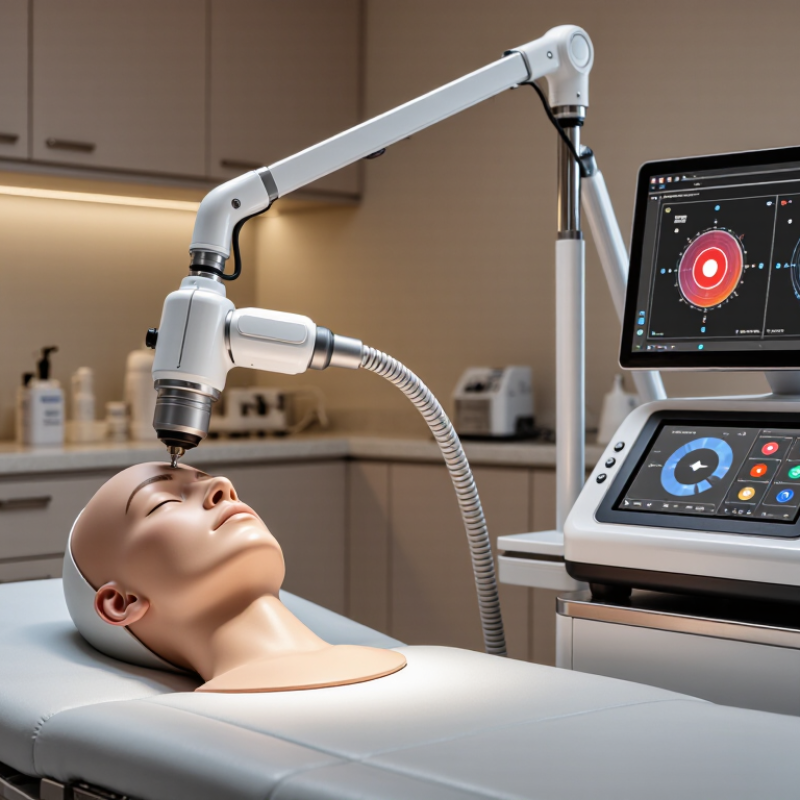
A fractional CO2 laser uses a 10,600-nanometer infrared beam. Water in skin absorbs this energy strongly. The beam creates thousands of microscopic treatment columns, called microthermal zones. Untreated skin remains between them, helping the surface recover faster than fully ablative resurfacing.
The heat vaporizes tiny portions of damaged tissue. It also contracts collagen and encourages new collagen formation during healing. A 2023 review in the Journal of Clinical and Aesthetic Dermatology described fractional CO2 resurfacing as effective for acne scars, wrinkles, and uneven texture, but emphasized variable recovery and pigmentation risks. Results depend on energy, density, skin type, and aftercare.
That last point matters.
The American Society for Dermatologic Surgery reports that laser treatment remains a common nonsurgical procedure category in its annual consumer surveys. However, survey popularity does not prove suitability. I have seen the same settings produce different redness and recovery times between patients. That is why choosing a fractional CO2 laser requires more than checking power or spot size. Ask about pulse duration, scanning control, cooling, treatment density, and clinical training. A qualified clinician should assess active acne, recent tanning, pigment sensitivity, and healing history before treatment. Even professional guidance has limits; darker skin may need conservative settings, test spots, and longer observation.
Fractional CO2 lasers can address several signs of damaged or uneven skin. Their controlled thermal columns stimulate collagen while leaving untreated skin between treatment zones. This design may improve acne scars, enlarged pores, fine lines, rough texture, and selected surgical scars. Mild sun damage and uneven pigmentation may also respond, but results vary.
Acne scars often need several sessions, especially when they are deep or sharply edged. Fine lines may soften gradually as collagen remodels over weeks. However, darker skin tones can face a higher risk of post-inflammatory hyperpigmentation. Active acne, infections, poor wound healing, or recent isotretinoin use require careful medical review. A qualified dermatologist should assess skin type, scar depth, medications, and healing history before treatment. Results are not perfectly predictable.
Tips: Ask which settings will be used and why. Confirm the provider’s medical credentials and aftercare plan. Protect treated skin from sunlight, avoid picking, and report unusual swelling, pus, or worsening pain promptly. One detail is easy to underestimate: recovery can affect work, exercise, and social plans. A conservative treatment may be safer, though it might require more sessions. Even experienced clinicians sometimes adjust the plan after seeing how the skin heals.
How to Choose a Fractional CO2 Laser in 2026?
Comparing fractional CO2 laser types requires more than checking output power. A fractional system delivers microscopic columns of 10,600 nm infrared energy, leaving untreated skin between them. Fully ablative treatment removes the entire surface layer, while fractional treatment usually supports faster recovery. The American Society of Plastic Surgeons’ 2023 National Plastic Surgery Statistics reported more than three million laser skin resurfacing procedures in the United States. That demand makes careful feature comparison essential, not optional.
Look at pulse duration, spot density, scanner accuracy, and adjustable energy. Shorter pulses can limit unwanted heat, but settings must match skin type, scar depth, and treatment area. A 2024 review in Lasers in Medical Science emphasized that clinical results depend strongly on energy, density, and operator technique. Cooling, smoke evacuation, foot-pedal control, and automatic calibration also affect safety and workflow. More power is not always better. I have seen impressive specifications hide awkward handpieces and slow scanning.
Tips: Ask for measured output, not advertised output. Check service records and calibration intervals. Request patient examples with similar skin tones. Confirm the device supports conservative settings. A clear training plan matters as much as the laser. One detail is often missed: downtime affects patient acceptance. A technically excellent system may fail commercially if redness lasts longer than expected. Note that evidence remains uneven across indications, so every setting should be reviewed by a qualified medical professional.
How to Choose a Fractional CO2 Laser in 2026?
Safety should guide the purchase, not dramatic before-and-after photos. The ISAPS 2023 Global Survey recorded more than 15.8 million nonsurgical aesthetic procedures worldwide. That figure shows demand, not guaranteed safety. Ask whether the device supports adjustable energy, pulse duration, and treatment density. These controls help clinicians match treatment intensity to skin type, scar depth, and healing history. In my experience, aggressive settings often create longer redness and more anxiety than expected. More power is not always better.
Downtime needs precise discussion. A clinical review in Dermatologic Surgery reported that redness after fractional ablative CO2 treatment commonly lasts about 5–14 days. Swelling may peak during the first 48 hours. Temporary darkening or lightening can last longer, especially in deeper skin tones. Recovery varies. It is not a fixed promise. Confirm cooling methods, eye protection, infection-control procedures, and emergency support before treatment. The American Academy of Dermatology recommends consultation with a board-certified dermatologist for laser procedures, particularly when pigmentation risk is significant.
Recovery planning matters as much as the laser itself. Ask when washing, sunscreen, exercise, and makeup are allowed. Request written aftercare instructions. Discuss antiviral prevention when medically appropriate. A device can be technically excellent yet unsuitable for a clinic lacking trained operators. That uncomfortable point deserves attention. Data guides decisions, but careful assessment protects real patients.
Evaluating treatment safety, downtime, and recovery by treatment intensity
Typical clinical ranges are shown for fractional CO2 resurfacing. Light treatments commonly involve about 3–5 days of peeling or social downtime, moderate treatments about 5–7 days, and higher-intensity treatments about 7–14 days. Visible redness may last longer, especially after deeper treatments. Actual recovery depends on skin type, treatment settings, cooling, aftercare, and individual healing response.
For safety, compare the provider’s experience with your skin type, pre-treatment screening, eye protection, infection-control procedures, cooling methods, antiviral planning when appropriate, and aftercare instructions—not only the advertised energy level.
Choosing a fractional CO2 laser starts with choosing a qualified provider. The American Society of Plastic Surgeons’ 2023 procedural statistics recorded more than 3.5 million skin resurfacing procedures in the United States. High demand does not guarantee high-quality care.
Ask who performs the treatment, how many similar cases they manage yearly, and whether they hold current medical licenses. Confirm the provider’s training in laser safety, skin assessment, and complication management.
A proper consultation should examine pigmentation, scarring, active inflammation, medication use, and healing history. It should also explain downtime, infection risk, prolonged redness, and possible pigment changes.
The device should match your skin type, concern, and recovery tolerance. Fractional CO2 lasers usually use 10,600-nanometre energy, but pulse duration, density, and treatment depth greatly affect results.
A 2024 review in Lasers in Medical Science reported wide variation in resurfacing outcomes, partly because treatment settings and patient selection differ. That matters.
Ask for the treatment plan in writing, including energy settings, test-spot policy, protective eyewear, sterilization procedures, and follow-up timing. The U.S. Food and Drug Administration emphasizes that medical devices require trained operation and appropriate risk communication.
Request realistic, unedited before-and-after images from comparable skin tones. Avoid providers promising permanent perfection.
No checklist is perfect. I would still choose transparent explanations over impressive equipment.
A lower price may hide limited follow-up, outdated maintenance, or rushed consultations.
It may improve acne scars, enlarged pores, fine lines, rough texture, and selected surgical scars. Mild sun damage and uneven pigmentation may also respond. Results vary between patients.
The laser creates microscopic thermal columns in the skin. Untreated areas remain between these columns. This pattern stimulates collagen and may support faster healing.
Deep or sharply edged scars often need several sessions. Improvement usually develops gradually as collagen remodels. Some scars respond unevenly, which can be disappointing.
Usually, fractional treatment leaves untreated skin between treated zones. Recovery may therefore be faster than fully ablative resurfacing. Redness can still affect work, exercise, and social plans.
Darker skin tones may have a higher risk of post-inflammatory hyperpigmentation. A qualified dermatologist should review skin type and treatment settings. Conservative treatment may reduce risk, but more sessions might be needed.
People with active acne, infections, poor wound healing, or recent isotretinoin use need careful assessment. Medications and previous healing problems also matter. Do not skip this step.
Compare pulse duration, spot density, scanner accuracy, adjustable energy, cooling, and smoke evacuation. Automatic calibration and foot-pedal control can support safer workflow. More power is not always better.
Confirm the provider’s medical credentials and training. Ask for measured output, calibration intervals, and service records. Request patient examples with similar skin tones.
Ask which settings will be used and why. Confirm the aftercare plan and expected downtime. The plan may change after the skin heals.
Protect treated skin from sunlight and avoid picking. Report unusual swelling, pus, or worsening pain promptly. Healing is not always predictable.
Choosing a Fractional CO2 Laser in 2026 requires more than comparing power settings or advertised results. This technology creates controlled microscopic columns of treatment in the skin, stimulating collagen while leaving surrounding tissue intact. It may help improve acne scars, fine lines, uneven texture, enlarged pores, pigmentation irregularities, and selected signs of sun damage. However, results depend on the laser’s wavelength, energy control, scanning pattern, spot density, cooling system, and the provider’s ability to customize treatment for different skin types and concerns.
Before making a decision, evaluate expected downtime, discomfort, redness, peeling, and the full recovery process. A suitable device should offer precise settings, reliable safety features, and flexibility for both lighter and more sensitive skin. Most importantly, choose a qualified medical provider who can assess your skin, explain realistic outcomes, discuss possible side effects, and provide clear aftercare instructions. The best choice is not necessarily the strongest laser, but the one that balances effectiveness, safety, comfort, and your individual recovery expectations.