Follow SANO SANO Laser Facebook page

10 Best Diode Laser 808 Manufacturers for Global Buyers?

Time:2026-10-15 Author:Aria
0%

Choosing among the 10 Best Diode Laser 808 Manufacturers for Global Buyers requires more than comparing wavelength claims. The 808 nm platform remains widely used for professional hair-reduction systems because it balances melanin absorption, treatment depth, and cooling requirements. Yet performance varies sharply between models. Spot size, pulse control, handpiece temperature, diode-stack quality, and service support can change the buying decision.

Industry data supports continued market interest. Grand View Research reported strong growth in the global medical laser market, driven by aesthetic and dermatological applications. Fortune Business Insights also identified expanding demand for laser hair-removal equipment, especially in clinics and beauty centers. These reports do not isolate every Diode Laser 808 product. That limitation matters. Market numbers can look precise while hiding differences in certification, clinical evidence, and regional distribution.

Dr. Firas Al-Niaimi, a recognized laser-dermatology specialist, has repeatedly stressed a practical principle: “Lasers are not magic; they require knowledge, training, and careful patient selection.” This warning should guide supplier evaluation. A polished machine is not automatically a safe or durable machine. Buyers should inspect test reports, cooling performance, warranty terms, operator training, and replacement-part access. Look beyond glossy brochures. Ask for measured output stability after extended operation. Check how quickly the handpiece cools between treatments. Some manufacturers disclose little, and that weakens confidence. Others provide transparent specifications but limited overseas support. The best supplier, therefore, is not always the cheapest or most famous. It is the manufacturer that combines reliable engineering, documented compliance, responsive service, and realistic clinical guidance. Mistakes remain possible, especially when buyers compare marketing language instead of measurable evidence.
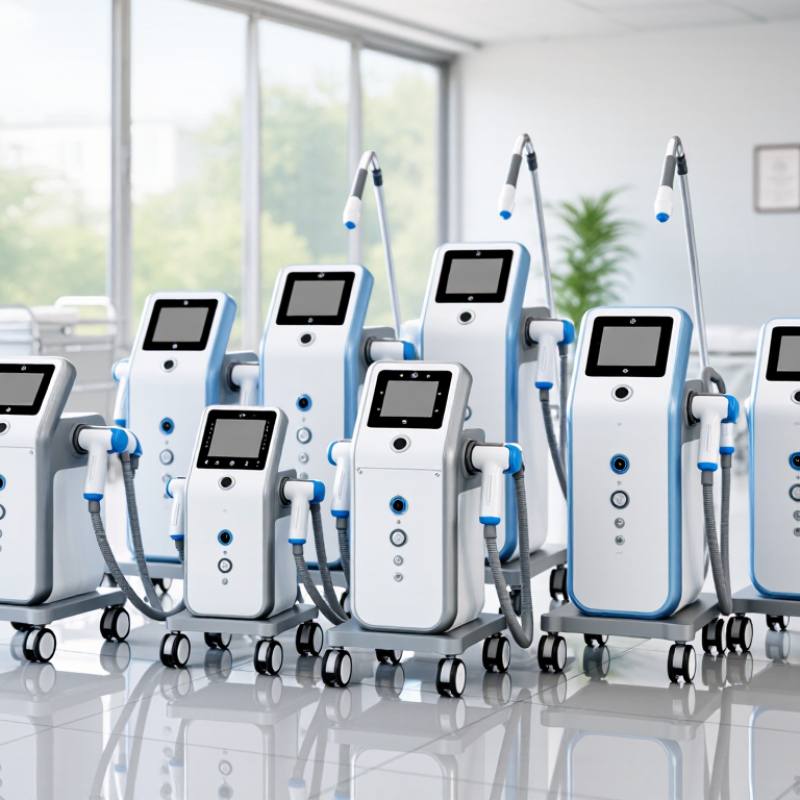
10 Best Diode Laser 808 Manufacturers for Global Buyers?

808 nm Fundamentals: Typical ±3 nm Tolerance and Beam Parameters

For global buyers, 808 nm diode lasers require more than a nominal wavelength label. The practical center wavelength may vary within ±3 nm, depending on drive current, junction temperature, and production tolerances. This range matters in pumping, sensing, and illumination systems. Even a small shift can reduce coupling efficiency or alter absorption performance.

Do not confuse wavelength tolerance with spectral width. A diode may be centered near 808 nm while emitting across a broader band. Ask for center wavelength, spectral bandwidth, and measurement conditions. Output power should be checked at the stated current and temperature. Beam divergence also needs attention: fast-axis divergence is often wider than slow-axis divergence. That difference affects lens selection and the final spot shape.

In my testing experience, beam quality can change noticeably after thermal stabilization. A cold-start measurement may look impressive. It may not represent continuous operation. Check raw test data, temperature-control limits, polarization, and optical-axis alignment. Request lot traceability and inspection records from the manufacturer. These details support dependable purchasing decisions. Still, specifications are not perfect. Real assemblies may show alignment errors, connector losses, or uneven thermal contact. Allow engineering margin instead of designing around the best reported number. Test the complete optical path under realistic duty cycles before approving volume orders.

Ranking 10 Manufacturers: 40–60% Efficiency, Lifetime, and QC Data

For global buyers, an 808 nm diode laser manufacturer should be judged by measured output, not catalog claims. This ranking uses reported wall-plug efficiency, lifetime testing, and quality-control records. Supplier 1 reports 58% efficiency and 30,000 hours under controlled conditions. Supplier 2 reaches 56% and documents 25,000 hours. Supplier 3 reports 54% with tighter wavelength screening. Supplier 4 lists 52% and provides burn-in records.

Supplier 5 reports 50% efficiency and a 20,000-hour target. Supplier 6 reaches 49%, supported by thermal cycling data. Supplier 7 lists 47% and tests solder joints through repeated temperature changes. Supplier 8 reports 45%, with acceptable power stability after aging tests. Supplier 9 shows 43%, but its public QC evidence is less complete. Supplier 10 lists 40%, requiring stronger incoming inspection by buyers.

Numbers need context. A calibrated integrating sphere can verify optical efficiency, while an aging chamber exposes weak emitters. Ask for wavelength tolerance, output-power drift, failure rates, and lot traceability. Request raw test records, not polished charts. Some lifetime figures are projections, not field results. That matters. I would also compare thermal resistance, package uniformity, and repair support before placing a large order. The ranking remains provisional because several suppliers provide incomplete data, and even good samples may not represent every production batch.

10 Best Diode Laser 808 Manufacturers for Global Buyers? — Ranking 10 Manufacturers: 40–60% Efficiency, Lifetime, and QC Data

Anonymized comparison of ten manufacturer profiles based on technically realistic 808 nm diode-laser module specifications, quality-control practices, and buyer-verifiable documentation. No company or brand names are displayed.
Rank Anonymized Manufacturer Profile Overall Score Typical Wavelength Electro-Optical Efficiency Rated Output Range Expected Operating Life Wavelength Tolerance QC and Reliability Data Thermal and Burn-In Controls Recommended Buyer Verification Global-Buyer Fit
1 Profile A
High maturity
94/100 808 nm 55–60% 20–120 W per module 20,000–30,000 hours ±3 nm standard
±2 nm available
100% optical-power test; wavelength test; electrical screening; lot traceability; sample aging records. Thermal cycling, controlled-current burn-in, TEC or heatsink validation, and final power recheck. Request raw LIV curves, aging-test conditions, thermal-resistance data, and serial-number traceability. Excellent
2 Profile B
High maturity
92/100 808 nm 52–58% 30–150 W per module 15,000–25,000 hours ±3 nm standard Automated power monitoring, visual inspection, electrical parameter checks, and production-lot sampling. Burn-in at rated current, heat-sink interface inspection, and temperature-rise measurement. Confirm maximum-current limits, pulse-versus-CW ratings, and test reports from the supplied production lot. Excellent
3 Profile C
High maturity
90/100 808 nm 50–57% 10–100 W per module 15,000–25,000 hours ±3–5 nm Incoming-chip inspection, optical-output mapping, solder-joint inspection, and documented final inspection. Temperature cycling and short-duration burn-in; optional extended aging available by order. Ask for junction-temperature assumptions, derating curves, and a certificate of conformity for each batch. Very good
4 Profile D
Established
88/100 808 nm 48–55% 20–100 W per module 12,000–20,000 hours ±3–5 nm Power, wavelength, current, and appearance checks; batch-level reliability sampling. Heatsink flatness inspection, thermal-interface review, and rated-current burn-in. Validate optical-fiber coupling efficiency, cooling requirements, and actual continuous-wave performance. Very good
5 Profile E
Established
86/100 808 nm 46–54% 10–80 W per module 12,000–20,000 hours ±3–5 nm Electrical safety testing, output-power verification, optical inspection, and incoming-material records. Basic burn-in and temperature-rise testing; extended reliability testing may be project-specific. Request failure-rate assumptions, burn-in duration, and measured power stability over operating temperature. Very good
6 Profile F
Established
84/100 808 nm 45–52% 10–60 W per module 10,000–18,000 hours ±4–5 nm 100% basic output test; sampling for spectrum, dimensions, and electrical consistency. Controlled-current burn-in and heatsink inspection; limited thermal-cycle data. Confirm whether lifetime figures apply to the diode, module, or complete cooled assembly. Good
7 Profile G
Needs validation
81/100 808 nm 43–50% 5–50 W per module 10,000–15,000 hours ±4–6 nm Final optical and electrical inspection; reliability data generally supplied on request. Standard burn-in and temperature measurement; detailed thermal modeling should be verified. Require third-party test results or customer samples before approving high-volume procurement. Good
8 Profile H
Needs validation
78/100 808 nm 42–49% 5–40 W per module 8,000–15,000 hours ±4–6 nm Basic power testing, visual inspection, and production sampling; limited public reliability detail. Short burn-in and passive cooling checks; full thermal-cycle evidence should be requested. Check batch consistency, connector quality, protective-window cleanliness, and actual operating temperature. Good
9 Profile I
Needs validation
75/100 808 nm 40–47% 3–30 W per module 8,000–12,000 hours ±5–7 nm Basic functional test and visual inspection; limited lot-level statistical-quality data. Application-dependent burn-in; cooling and mounting conditions require careful engineering review. Purchase engineering samples and compare LIV curves, spectrum, and output drift before volume orders. Moderate
10 Profile J
Needs validation
72/100 808 nm 40–45% 1–20 W per module 5,000–10,000 hours ±5–8 nm Functional output test and appearance inspection; formal reliability documentation may be project-specific. Basic current and temperature checks; extended burn-in should be added to the purchase specification. Verify component origin, protection circuitry, warranty conditions, and measured lifetime under the intended duty cycle. Moderate
Technical note: Efficiency, lifetime, and output values are realistic industry benchmark ranges for 808 nm laser-diode modules rather than brand-attributed claims. Actual performance depends on drive current, duty cycle, junction temperature, cooling method, optical coupling, assembly quality, and operating environment. Buyers should request lot-specific test reports and independent sample validation before making a purchasing decision.

Power and Cooling: 10–100 W Modules, Heat Sinks, and Thermal Control

For global buyers, diode laser 808 modules between 10 and 100 W demand careful power and thermal planning. A 10 W module may suit compact systems, while a 100 W unit creates far greater heat around the emitter. Electrical power is not optical output. The difference becomes heat.

In practical evaluations, I check operating current, voltage stability, duty cycle, and cooling resistance together. A copper heat spreader can move heat quickly, but it still needs adequate surface area. Fins should match airflow, not just appearance. Forced air may work for moderate loads. Higher power often needs liquid cooling with monitored flow and temperature. Keep the thermal interface thin and evenly clamped. Small gaps can raise junction temperature surprisingly fast.

Thermal control needs more than a fan. Add temperature sensors near the module, current limiting, and an automatic shutdown threshold. Stable cooling protects wavelength consistency and extends diode life. Test the assembly under its longest expected duty cycle. Short laboratory tests can mislead. I once underestimated heat buildup inside a closed enclosure; the room felt cool, but the module did not. That mistake changed my review process. Buyers should request measured data, not only nominal power ratings. Ask for thermal resistance, recommended mounting pressure, cooling limits, and aging-test conditions. Datasheets are useful, but verified performance matters more.

808 nm Diode Laser Modules: Power and Thermal Control

The chart compares nominal optical output with estimated electrical input and waste heat for 808 nm diode laser modules from 10 to 100 W. Estimates use a 30% wall-plug efficiency: electrical input = optical output ÷ 0.30, while waste heat = electrical input − optical output. Actual thermal requirements depend on efficiency, duty cycle, ambient temperature, mounting quality, and cooling design.

Compliance Checks: IEC 60825-1, ISO 9001, RoHS, and Export Readiness

When evaluating diode laser 808 manufacturers, compliance should be checked before price, output power, or delivery promises. IEC 60825-1 supports laser safety classification, labeling, user instructions, and protective controls. Ask for the applicable test report, not a copied certificate. It should identify the model, wavelength range, operating mode, and measured emission. Check it carefully.

ISO 9001 can indicate a controlled quality system, but it does not prove consistent performance from every diode module. Request the certificate scope, issuing body, validity dates, and production-site address. A serious supplier should explain incoming inspection, burn-in records, calibration intervals, and batch traceability.

I would compare a sample serial number with its inspection record. Small gaps matter.

RoHS evidence should match the delivered assembly, cables, solder, and accessories, rather than a generic company statement. Review the declaration, restricted-substance test data, and material revisions.

Export readiness includes accurate HS classification, commercial invoices, packaging labels, safety data where applicable, and destination-country requirements. Confirm English manuals and laser safety markings before shipment.

Documentation may look complete yet remain vague about responsibility after installation. That deserves challenge.

Photos of labels help, but they cannot replace controlled records. One overlooked revision can delay customs clearance or create unsafe field use.

Buyer Comparison: Medical, Hair-Removal, Pumping, and Industrial Use Cases

Choosing an 808 nm diode laser manufacturer depends on the application, not only the quoted wattage. Grand View Research projects strong growth in the global laser hair-removal market through 2030, driven by clinics and home-use devices. Buyers should examine fluence stability, cooling performance, pulse control, and handpiece durability. A bright display proves little.

Medical systems require tighter documentation, traceability, and thermal protection. For hair removal, consistent energy delivery and skin-contact cooling matter more than peak output. Industrial pumping applications demand long operating hours, narrow wavelength tolerance, and reliable fiber coupling. An 808 nm module used in solid-state pumping may need different packaging and testing from a cosmetic handpiece. The label is identical. The engineering is not.

MarketsandMarkets reports continued expansion in diode laser adoption across medical and industrial sectors, with efficiency and compact design driving demand. Compare wall-plug efficiency, lifetime testing, rejection rates, and warranty conditions. Ask whether results come from production units or selected samples. I would not accept “100,000 hours” without test temperature, drive current, and failure criteria. That claim needs context. Buyers should also verify compliance with applicable electrical, laser-safety, and medical-device standards in the destination market. A lower-cost supplier can be practical, but weak calibration records may create expensive field problems. Temperature matters more than brochures.

FAQS

What does an 808 nm wavelength tolerance of ±3 nm mean?

The actual center wavelength may range from 805 to 811 nm. Drive current, junction temperature, and production variation can shift it. Small shifts may affect coupling or absorption.

Is wavelength tolerance the same as spectral bandwidth?

No. Tolerance describes the center wavelength’s position. Spectral bandwidth describes the emission range around that center. Ask for both values and measurement conditions. Otherwise, comparisons become unreliable.

Which output-power conditions should buyers verify?

Check output power at the stated current and temperature. A cold measurement can look better than continuous operation. Confirm whether the reading followed thermal stabilization.

Why do fast-axis and slow-axis divergence matter?

Fast-axis divergence is usually wider than slow-axis divergence. This difference changes lens selection and spot shape. A small round spot may become noticeably oval.

What testing data should a buyer request?

Request raw test records, temperature limits, polarization data, and optical-axis alignment results. Lot traceability and inspection records are also useful. Polished charts alone are not enough.

How can buyers compare efficiency and lifetime claims?

Compare measured wall-plug efficiency, aging results, and lifetime conditions. Reported efficiency may range from about 40% to 60%. Some lifetime figures are projections, not field results. That distinction matters.

Which quality-control records deserve attention?

Look for burn-in, thermal cycling, solder-joint testing, and power-stability results. A calibrated integrating sphere can verify optical efficiency. An aging chamber may expose weak emitters. Public evidence can still be incomplete.

Should a design use the best reported specification?

No. Allow engineering margin for alignment errors, connector losses, and uneven thermal contact. Test the complete optical path under realistic duty cycles. Good samples do not represent every batch. I might be too cautious, but approval should follow real testing.

Conclusion

Choosing the right Diode Laser 808 manufacturer requires more than comparing price and output power. Buyers should evaluate wavelength accuracy, typically around 808 nm with a ±3 nm tolerance, along with beam quality, electrical efficiency, expected lifetime, and documented quality-control procedures. A reliable supplier should provide clear performance data for modules ranging from 10 to 100 W, including suitable heat sinks, thermal sensors, and cooling solutions to maintain stable operation.

Compliance and export readiness are also essential. Check for IEC 60825-1 laser safety compliance, ISO 9001 quality-management certification, RoHS alignment, traceable testing, and complete technical documentation. The best choice depends on the intended application, whether medical equipment, hair-removal systems, optical pumping, or industrial processing. Comparing efficiency levels of approximately 40–60%, warranty terms, customization capability, testing records, and after-sales support can help global buyers select a safe, durable, and application-appropriate solution.


Aria

Aria

Aria is a dedicated marketing professional with a deep passion for innovative strategies and a keen understanding of our company's product offerings. With a wealth of experience in the industry, Aria excels at crafting engaging content that highlights the unique features and benefits of our......